The National Glossary of Common Sign Language and the National Braille Program will be officially implemented on July 1.
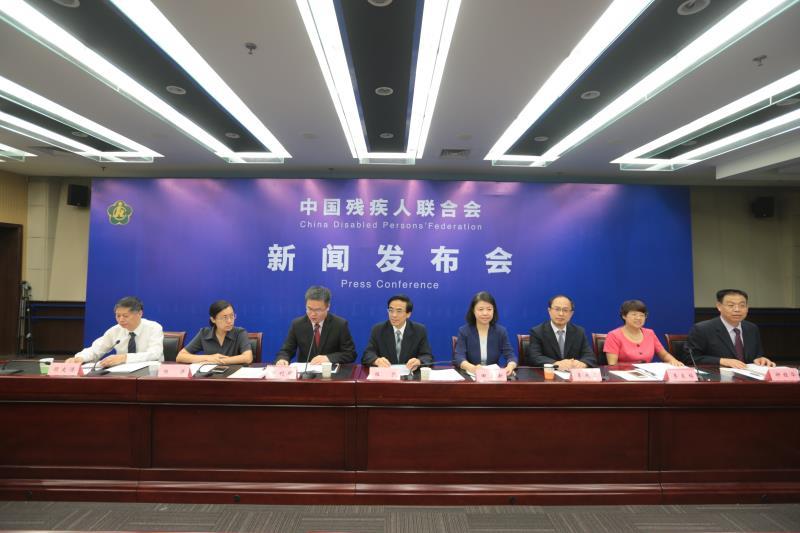
Cctv newsRecently, the reporter learned from the regular press conference of China Disabled Persons’ Federation that the National Glossary of Common Sign Language and the National Braille Program were examined and approved by the Standardization Examination Committee of state language commission, and released as language norms with the consent of the China Disabled Persons’ Federation, the Ministry of Education and state language commission, and will be implemented on July 1, 2018.
The National Glossary of Commonly Used Sign Language and the National Braille Program are important language norms to meet the requirements of the Outline of the National Medium-and Long-term Language and Character Reform and Development Plan (2012-2020) and the Thirteenth Five-Year Development Plan of the National Language and Character, to serve the language needs of special people, and to implement the requirements of the 19th National Congress of the Communist Party of China for "running a good special education" and the "Building a Well-off Society in an All-round Way" of the Supreme Leader General Secretary.
Language is the most important communication tool and information carrier for human beings. There are more than 30 million people with hearing disabilities and visual disabilities in China. Sign language and Braille are the special languages used by them, and they are important components of the national language. Standardizing the use of national common sign language and common Braille is a necessary condition for promoting exchanges between disabled people and regions and promoting the development of education, culture, information technology and other undertakings. Common sign language and Braille are the supplements of the national common language, and their standardization is an important part of promoting and standardizing the use of the national common language, and it is also the basic work of education and cultural undertakings, the development of the cause of the disabled and information construction.
Since the founding of New China, the country has carried out a series of standardization of sign language and Braille, and achieved remarkable results. The 13th Five-Year Development Plan of National Language and Characters puts forward that "the standardization of sign language braille is an important part of national language and character work". In 2010, the State Language Committee and the China Disabled Persons’ Federation jointly set up a major scientific research project to support the development of national standards for common sign language and Braille. In 2015, two major projects, "National Standard for Universal Sign Language" and "National Standard for Universal Braille", were successfully completed, resulting in two achievements, namely, National Scheme for Universal Sign Language and National Scheme for Universal Braille. The pilot project was carried out in 55 units (including special education colleges, special associations for the disabled and braille publishing units) for one and a half years, and was revised and improved on the basis of the pilot project, forming the "National Common Sign Language"
The National Common Words List of Sign Language and the National Common Braille Scheme are the summary, inheritance and promotion of the standardization of sign language Braille since the founding of New China, and also a new starting point for the standardization of sign language Braille in the information age. The publication of the National Glossary of Common Sign Language and the National Braille Program enriches and supplements the national common language, and guarantees the language rights of hearing-impaired and vision-impaired people to use sign language and Braille. Facilitating their equal and full participation in social life and sharing the development achievements of building a well-off society in an all-round way will further accelerate the standardization of sign language and Braille, and greatly promote the prosperity and development of culture and education for the disabled.
The two specifications have recently been published by Huaxia Publishing House and China Braille Publishing House respectively.