What is the integrity and authenticity of the Grand Canal in China?

  [Editor’s note]

  In order to thoroughly implement the spirit of the important instructions of the Supreme Leader General Secretary on the protection of the Grand Canal, our network actively participated in the network theme activity of "Questing for the Grand Canal" organized by the Network Communication Bureau of the Central Network Information Office. With culture as the core, we plan to launch new media products with diverse contents and rich forms, such as "Cloud Appreciating the Grand Canal", "Canal Questions", "Grand Canal March" and "Above the River", and publicize the achievements of canal ecological protection, cultural heritage protection and high-quality economic development in depth, so as to show the new features of the Grand Canal in the new era by comparing the past with the present.

  Question 41: What is the integrity and authenticity of the Grand Canal in China?

  As a series of heritages, the Grand Canal includes all the necessary factors to show its outstanding universal value, and completely shows the development and evolution process of the canal heritage, with a high degree of integrity in the composition of the heritage.The application for heritage vividly depicts the pattern, route and operation mode of the grain transportation system during the two major breakthrough periods of the Grand Canal in China, and jointly outlines the clear and complete evolution process of the Grand Canal in China since the Spring and Autumn Period. It embodies the creativity of traditional canal engineering and the typicality of technical system; It also fully confirms the use and function of the Grand Canal in China in the history recorded in relevant historical materials, and the various social practical values of the Grand Canal in China at present, and shows the great influence of the Grand Canal on the areas along the route in terms of use, landscape and culture.

  The Grand Canal of China meets the requirements of the Operational Guidelines for the Implementation of the World Heritage Convention on the integrity of the heritage.The declared Grand Canal heritage shows the complete historical and spatial evolution pattern of the Grand Canal from the Spring and Autumn Period to the Qing Dynasty. The ten river sections are all representative paragraphs and nodes distributed in the heritage area, with complete and rich heritage types and large enough heritage area to meet the requirements of integrity and no defects.The various components of the Grand Canal heritage have substantial functional connections, making unique and indispensable contributions to the outstanding universal value of the Grand Canal heritage as a whole. Therefore, the Grand Canal heritage meets the integrity requirements.

  Generally speaking, the historical pattern of the existing Grand Canal heritage from the Spring and Autumn Period to the Qing Dynasty is basically complete.The first-line rivers and sites of the Beijing-Hangzhou Canal from Beijing to Hangzhou are basically complete. In the south of Jining, the river is continuous, and some new channels coexist with the old ones. There are still continuous rivers in Beijing, Tianjin and Hebei, which play an important role in water conservancy. The Grand Canal in Shandong Province is discontinuous. According to the existing discontinuous rivers and the river remains confirmed by investigation, the main routes and complete evolution history of the Grand Canal in Yuan, Ming and Qing Dynasties can still be determined. The first line of Tongji Canal from Luoyang to Huai ‘an: about 1/3 of the river channel exists, and the sites are dotted. Among them, the existing continuous rivers and sites in Huai ‘an, east of Shangqiu, Henan Province, have been confirmed by archaeological exploration; Luoyang passes through Zhengzhou, Kaifeng and Shangqiu. Due to the historical impact of the Yellow River’s swing and erosion, it is difficult to completely confirm the river ruins. However, the general route of Tongji Canal can still be clearly defined through the partially preserved revetments, bridges and ancient river ruins. The Weihe River system from Luoyang to Linqing evolved from Baigou, Yongji Canal and Yuhe River in history, and it has been continuously used to this day. From Hangzhou to Ningbo, Xixing Canal, Shanyin Old Waterway, Yuyu Canal, Cijiang River, Shazigang and other rivers, together with some sections of Cao ‘e River and Yaojiang River, constitute the main line of the East Zhejiang Canal in history.

  The Grand Canal has strong authenticity.The elements bearing the outstanding universal value of the heritage have good authenticity in shape and design, materials and entities, location and layout, and all the heritage elements that still have practical functions have the authenticity of use and function. As an organic whole, the Grand Canal also has good authenticity in spirit and feeling.

  At present, the channel in use of the Grand Canal heritage still has vital shipping and water conservancy functions, which reflects the characteristics of the Grand Canal as a living heritage.Due to historical and natural reasons, the remains of rivers, water conservancy facilities and management facilities have real location, environment and materials, which reflect the design, function and technology of the Grand Canal. Urban historical water system, historical blocks and so on have real position, function and pattern, and truly bear the sense of belonging brought by the Grand Canal as the spiritual home of people along the route. The Grand Canal heritage meets the requirements of authenticity.

  The heritage of the Grand Canal is well preserved. The middle reach, the Huaiyang Canal, the Jiangnan Canal and the East Zhejiang Canal are still navigable, while other reaches mainly play the functions of flood discharge, water conveyance and irrigation. Some rivers in Huitong reach, Weihe (Yongji Canal) and Tongji Canal (Bianhe River) are in ruins. All heritage sites, including hydraulic facilities, supporting management facilities and related historical and cultural relics, have been well protected.
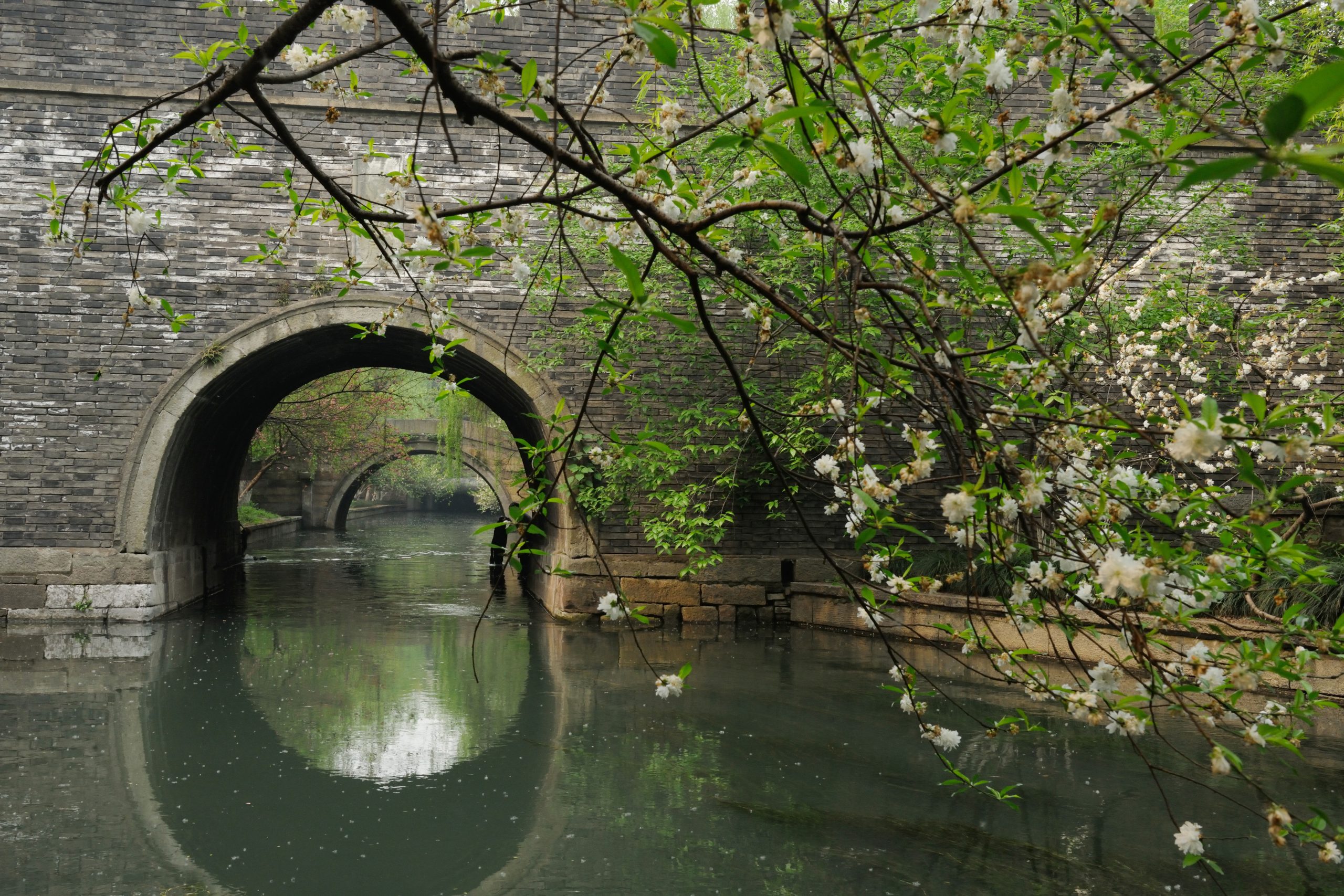
  Jiangnan Canal Jiaxing-Hangzhou Section-Fengshan Water Gate

  Question 42: What is the boundary of the heritage area of the Grand Canal in China?

  The demarcation principle of China’s Grand Canal heritage area refers to the overall planning of China’s Grand Canal protection and the planning of provinces and cities. According to the provisions of the scope of protection of cultural relics protection units and the scope of world heritage areas, the boundary of the heritage area is delineated according to the characteristics of the elements contained in each component and the relationship between the elements. The basic principles of demarcation are as follows:

  (1) Rivers with dikes: In principle, they are demarcated according to the toe line of the outer dike, and the heritage area is a banded area including riverbed, floodplain, dike top and dike slopes on both sides.

  (2) Rivers and lakes without dikes: In principle, they are demarcated according to the extension of the coastline of rivers and lakes by 5 meters, and the heritage area is the area containing rivers and lakes and revetments.

  (3) Hydraulic facilities: they are included in the heritage area of the river where they are located, and are not demarcated separately. If necessary, the river boundary is partially extended to include the whole facility and its lower foundation.

  (4) Related ancient buildings: demarcated according to the external boundaries of the buildings (such as courtyard walls and streets).

  (5) Historical and cultural blocks: according to the regional boundaries with good features and key protection determined in urban planning.

  (6) Sites: In principle, the boundaries of sites (such as river banks and courtyard walls) confirmed by archaeological exploration or excavation are demarcated. River sites include river beds and river banks (if any), warehouse sites include the whole structures, management facilities sites and related ancient buildings sites include the whole buildings, and hydraulic facilities sites include the excavated structures and the distribution range of their underground foundations. [Text of China’s Grand Canal Application for Heritage] chinese heritage Research Institute January 2013] After this division, the area of China’s Grand Canal application for heritage is 20,819 hectares.
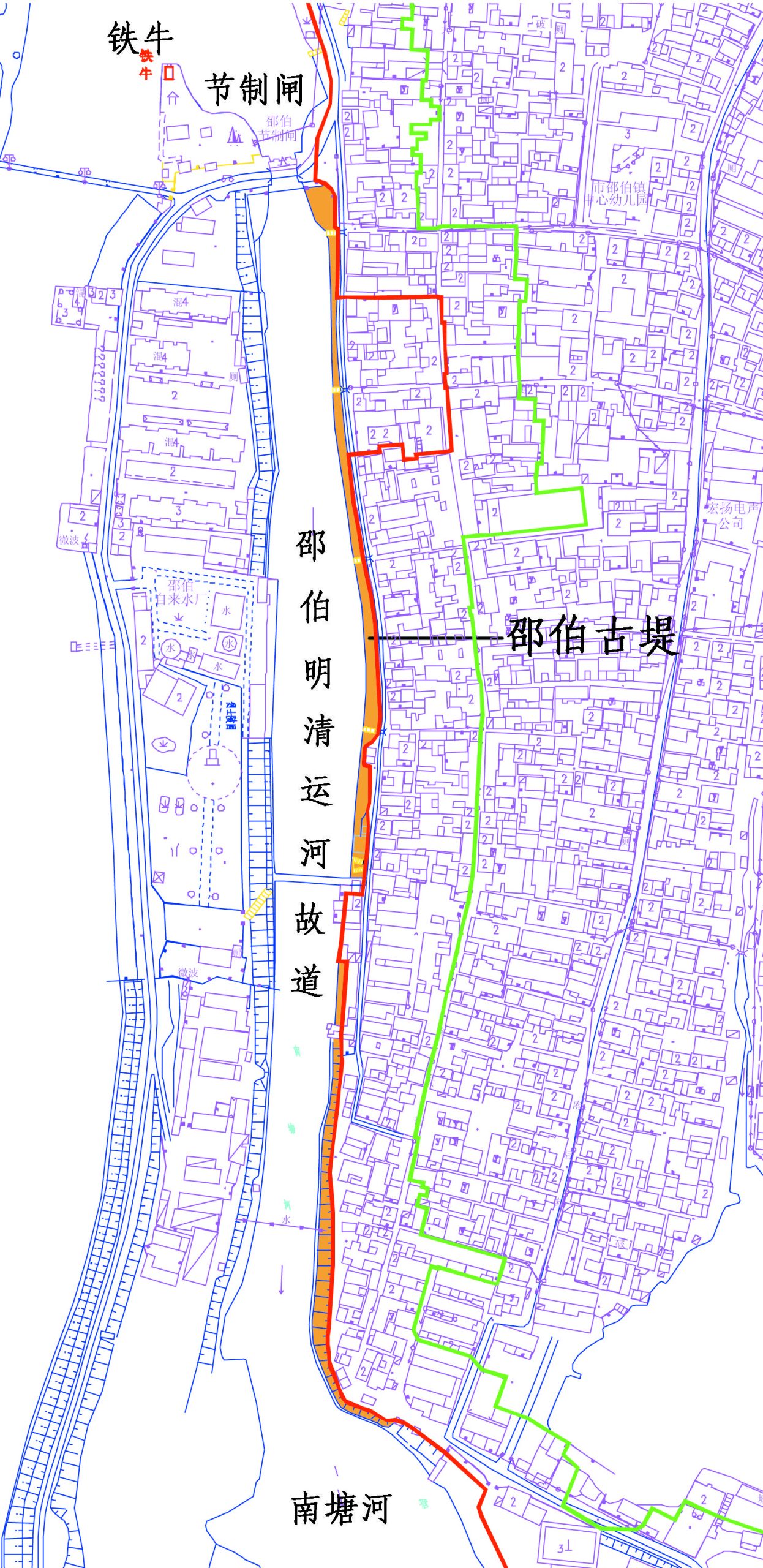
China Grand Canal Heritage Area Map

  Question 43: What are the requirements for the protection and management of China’s Grand Canal Heritage Area?

  The protection and management of China’s Grand Canal Heritage Area has the following requirements:

  (1) In the heritage area of the Grand Canal, except for cultural relics protection, flood control and waterlogging elimination, construction and maintenance of ship locks and navigation channels, protection and maintenance of hydraulic facilities, water conveyance river engineering, port renovation and construction, bridge crossing over the river and other projects, no other construction projects or operations such as blasting, drilling and excavation are allowed.

  (2) No facilities that pollute the Grand Canal heritage and its environment shall be built in the heritage area of the Grand Canal, and the existing facilities that pollute the Grand Canal heritage and its environment shall be treated within a time limit.

  (3) Activities that may affect the safety of the heritage and its environment shall not be carried out in the heritage area of the Grand Canal, and the existing activities that endanger the safety of the heritage of the Grand Canal and destroy the heritage environment shall be investigated and dealt with in a timely manner.

  (4) In the heritage area of the Grand Canal, no historical relics or other cultural relics of the Canal shall be damaged or removed, except for the special circumstances of flood control dispatching, emergency water transfer and engineering emergency rescue.
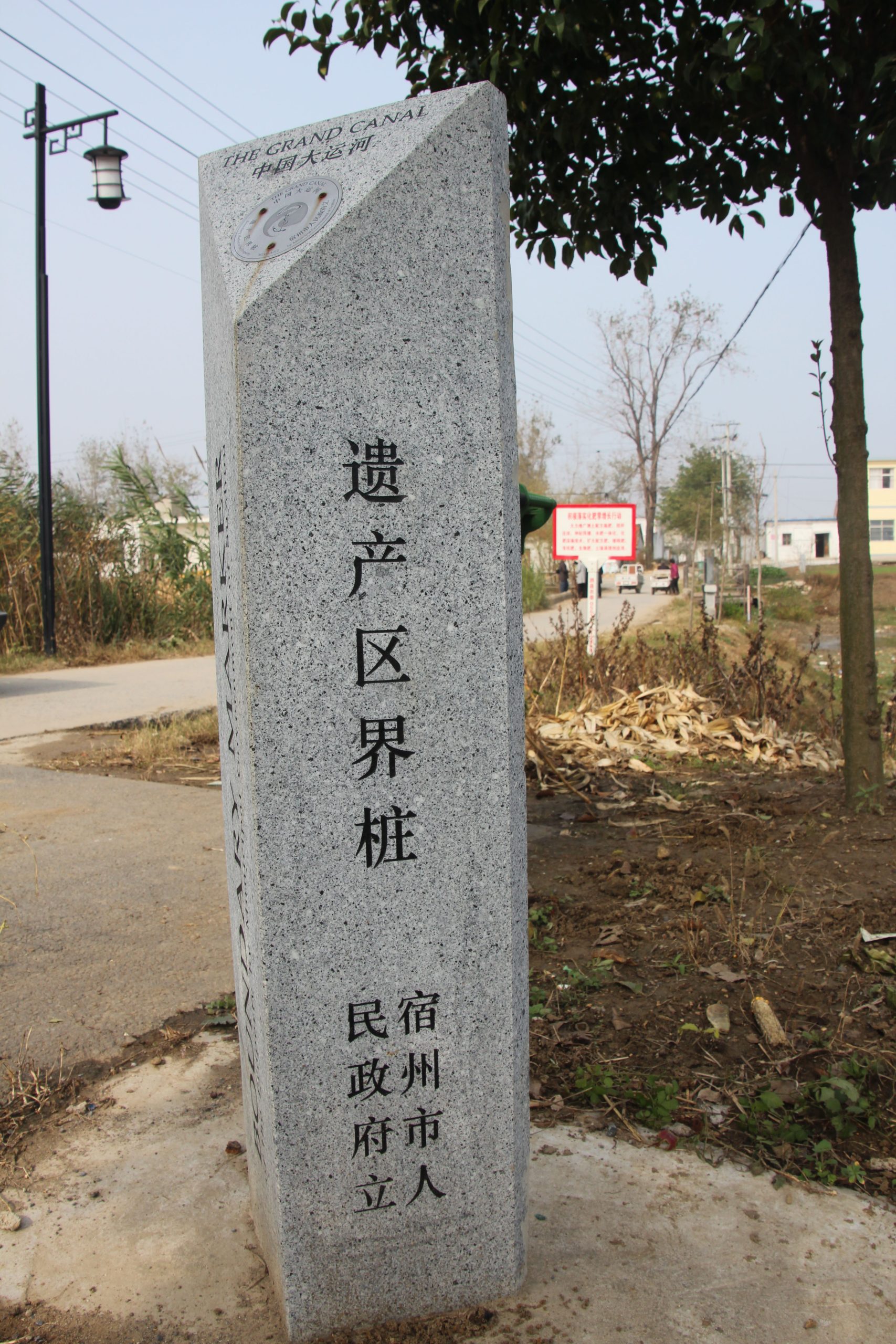
Boundary markers of China Grand Canal Heritage Area

  Question 44: How is the buffer zone of the Grand Canal in China divided?

  The buffer zone of the Grand Canal in China, in accordance with the provisions of the construction control zone of cultural relics protection units and the scope of the World Heritage buffer zone, aims at controlling the surrounding construction pressure and protecting the landscape harmony between the heritage area and the external environment, and comprehensively considers the background environmental factors related to the heritage elements outside the heritage area, and delimits the buffer zone outside each heritage area. The boundary of the buffer zone is defined according to the spatial form of the heritage areas protected by it, combined with the land use and construction status quo, and the basic principles of demarcation are as follows:

  (1) Buffer zone around the banded heritage area: demarcated by extending the boundary of the heritage area by a certain distance to form a corridor-like landscape protection zone along the river, so as to prevent new buildings from oppressing the river and maintain the ecological safety of the river and the harmonious waterfront landscape. In principle, it is located in a densely built-up area (the built-up area of a city or town) and extends 30 meters; Located in the suburbs and rural areas, the expansion is 80 meters; It is located in farmland and a large area of water environment and extends 300 meters. At the same time, if there are more important roads, railways, rivers and heritage areas with appropriate distances, which can be used as boundaries for long-term control and construction, roads, rivers and railways will be used as boundaries.

  (2) Buffer area around the dotted and flaky heritage area (buildings, structures, large-scale hydraulic facilities and their sites): draw boundaries according to the features or topography around the heritage area, such as roads, ditches, ridgelines, bridges, etc., and enclose the whole heritage area to form a heritage landscape of a certain scale, so as to protect the sense of space inside the heritage area from interference and maintain the atmosphere of tradition or sites. After this division, the buffer area of the Grand Canal in China is 52,747 hectares.
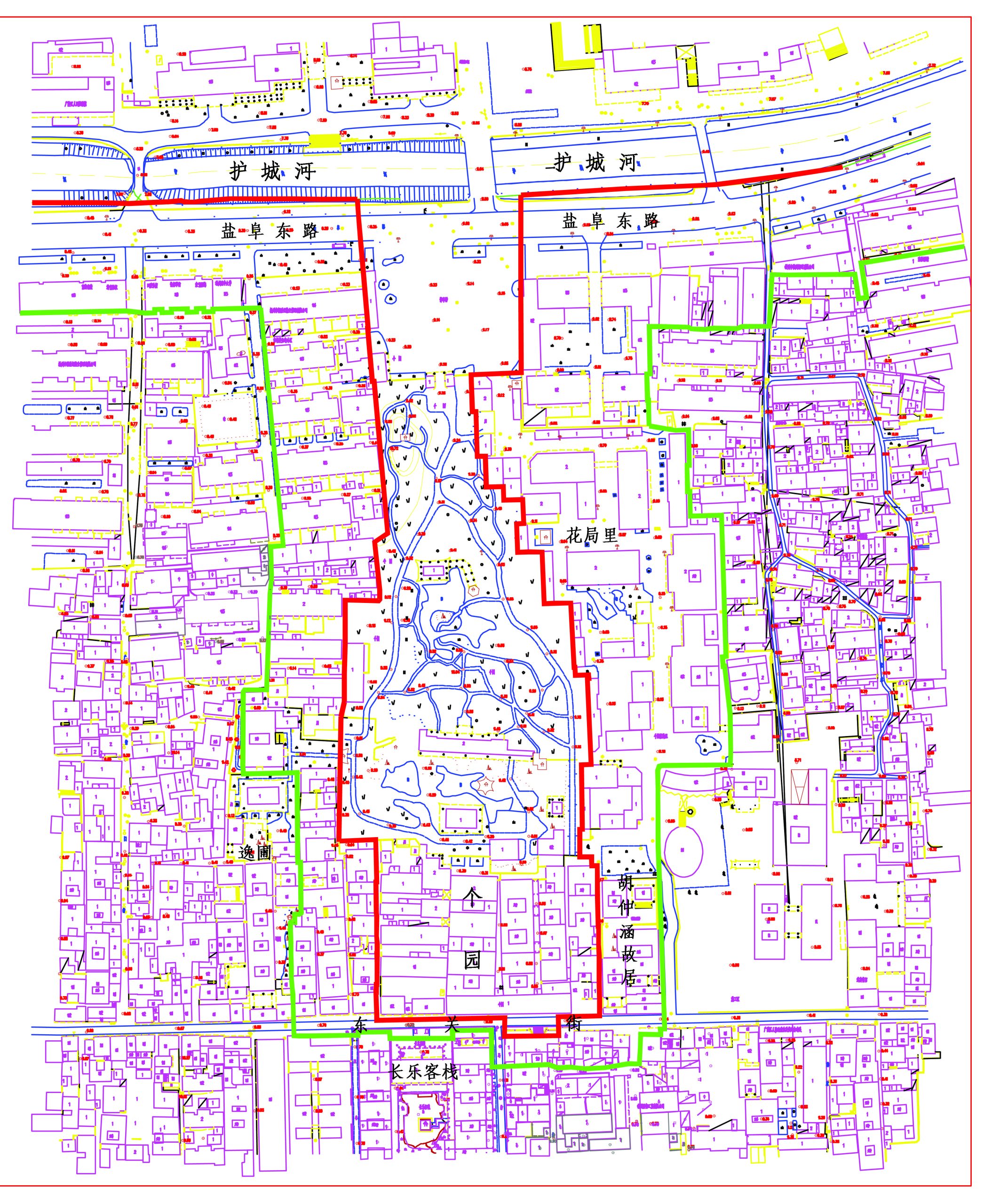
  China Grand Canal Buffer Map

  Question 45: What are the requirements for the protection and management of China’s Grand Canal buffer zone?

  Provisions on the administration of the buffer zone of the Grand Canal in China:

  (1) No facilities that pollute the Grand Canal heritage and its environment shall be built in the buffer zone of the Grand Canal, and the existing facilities that pollute the Grand Canal heritage and its environment shall be treated within a time limit.

  (2) Activities that may affect the safety of the heritage and its environment shall not be carried out in the buffer zone of the Grand Canal, and the existing activities that endanger the safety of the heritage of the Grand Canal and destroy the heritage environment shall be investigated and dealt with in a timely manner.

  (3) To carry out a construction project, the construction unit shall, in accordance with the provisions of Articles 29 to 32 of the Law of People’s Republic of China (PRC) on the Protection of Cultural Relics, report to the cultural relics administrative department of the people’s government of the province or municipality directly under the Central Government in advance to organize the units engaged in archaeological excavation to conduct archaeological investigation and exploration in places where cultural relics may be buried within the scope of the project. If cultural relics are found in archaeological investigation and exploration, the cultural relics administrative department of the people’s government of the province or municipality directly under the Central Government shall jointly agree on protection measures with the construction unit according to the requirements of cultural relics protection; In case of important discoveries, the administrative departments of cultural relics of the people’s governments of provinces and municipalities directly under the Central Government shall promptly report to the administrative departments of cultural relics of the State Council for handling.

  (4) The construction land in the buffer zone of the Grand Canal must be incorporated into the local land use master plan and annual plan.

  (5) No construction activities damaging the heritage, historical environment and space landscape of the Grand Canal shall be carried out in the buffer zone of the Grand Canal.

  (6) In the buffer zone of the Grand Canal, no buildings or structures with styles, volumes, colors and other incongruities with the Grand Canal heritage shall be built.
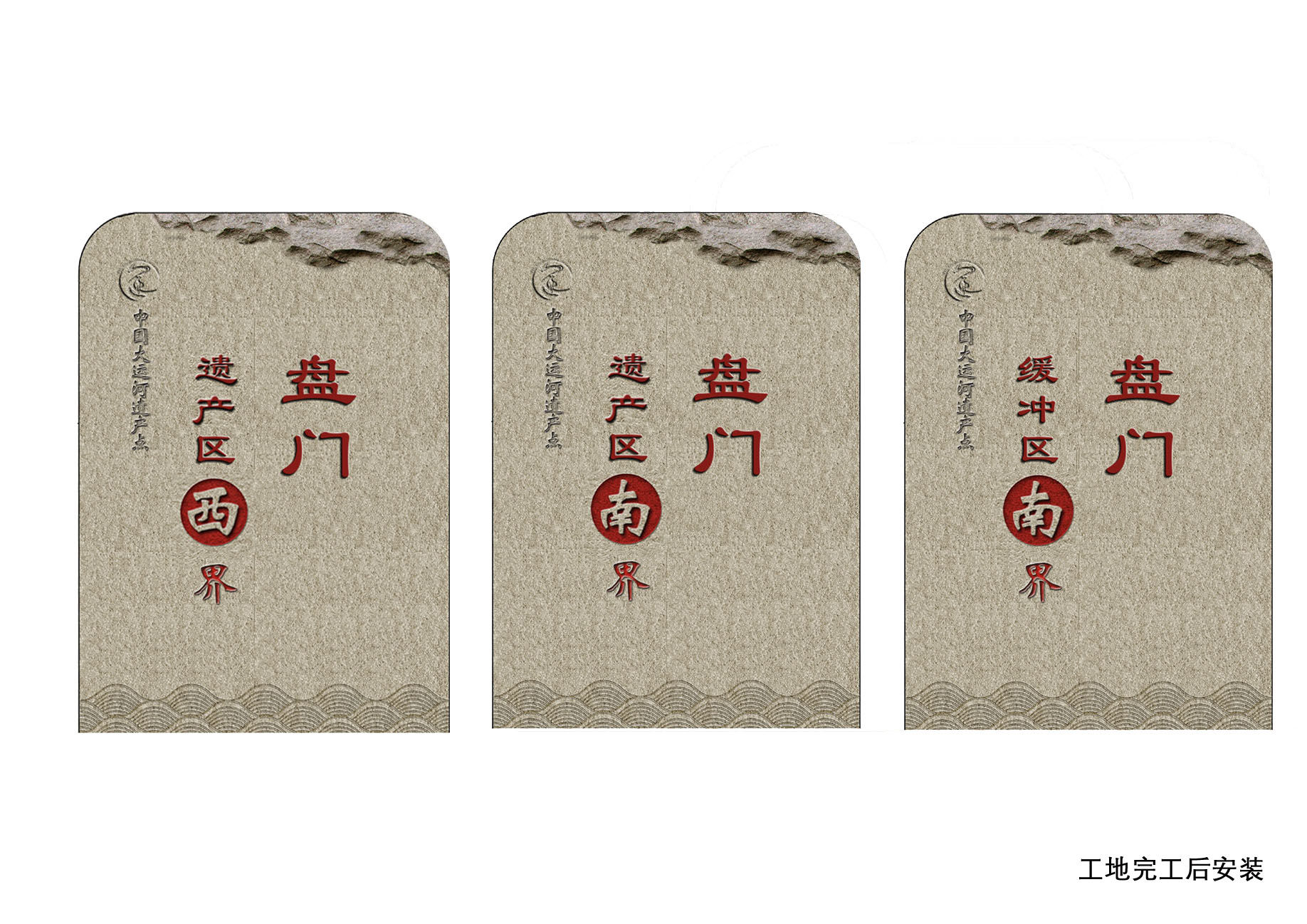
  Boundary markers in buffer zone of China Grand Canal

  Question 46: What development pressures does China’s Grand Canal heritage face?

  With the rapid economic development in China in recent years, the cities along the route are experiencing rapid urbanization and modernization, which makes the Grand Canal of China face certain pressure of urban and rural construction and water conservancy and shipping construction.

  One isUrban and rural construction pressureSince the Grand Canal has been a prosperous area of urban development since ancient times, a certain number of buildings have been built along the Canal since the reform and opening up, in the process of rapid economic development and urbanization in China. With the increase in the number of motor vehicles and the need for convenient transportation between cities, some roads and railway bridges across the canal have also been built along the canal. In view of these situations, since 2008, the people’s governments at the provincial and municipal levels along the Grand Canal have organized and published all kinds of conservation plans for the Grand Canal heritage, in which the scope of protection and construction control zones have been delineated, and strict construction approval procedures have been stipulated. The government of the heritage site strictly supervises the construction of the heritage area and buffer zone according to the plan, effectively controlling the building density, height and the construction of traffic facilities.

  The second isPressure of water conservancy and shipping constructionDue to the continuation of the water conservancy and shipping functions of the Grand Canal in China, more modern water conservancy and shipping facilities have been built one after another to ensure their use functions. These non-traditional facilities have affected the landscape of the heritage to a certain extent, and the local landscape is not harmonious. In order to cope with this pressure, the relevant construction departments have reached a consensus with local governments that in accordance with the Grand Canal Heritage Protection and Management Master Plan (2012-2030), priority will be given to the use of traditional technologies, traditional materials, traditional structures and traditional crafts adopted in various sections of the Grand Canal heritage history in the future, and the appearance, design, materials and entities, uses and functions of water conservancy and shipping facilities will be identified, respected and preserved.
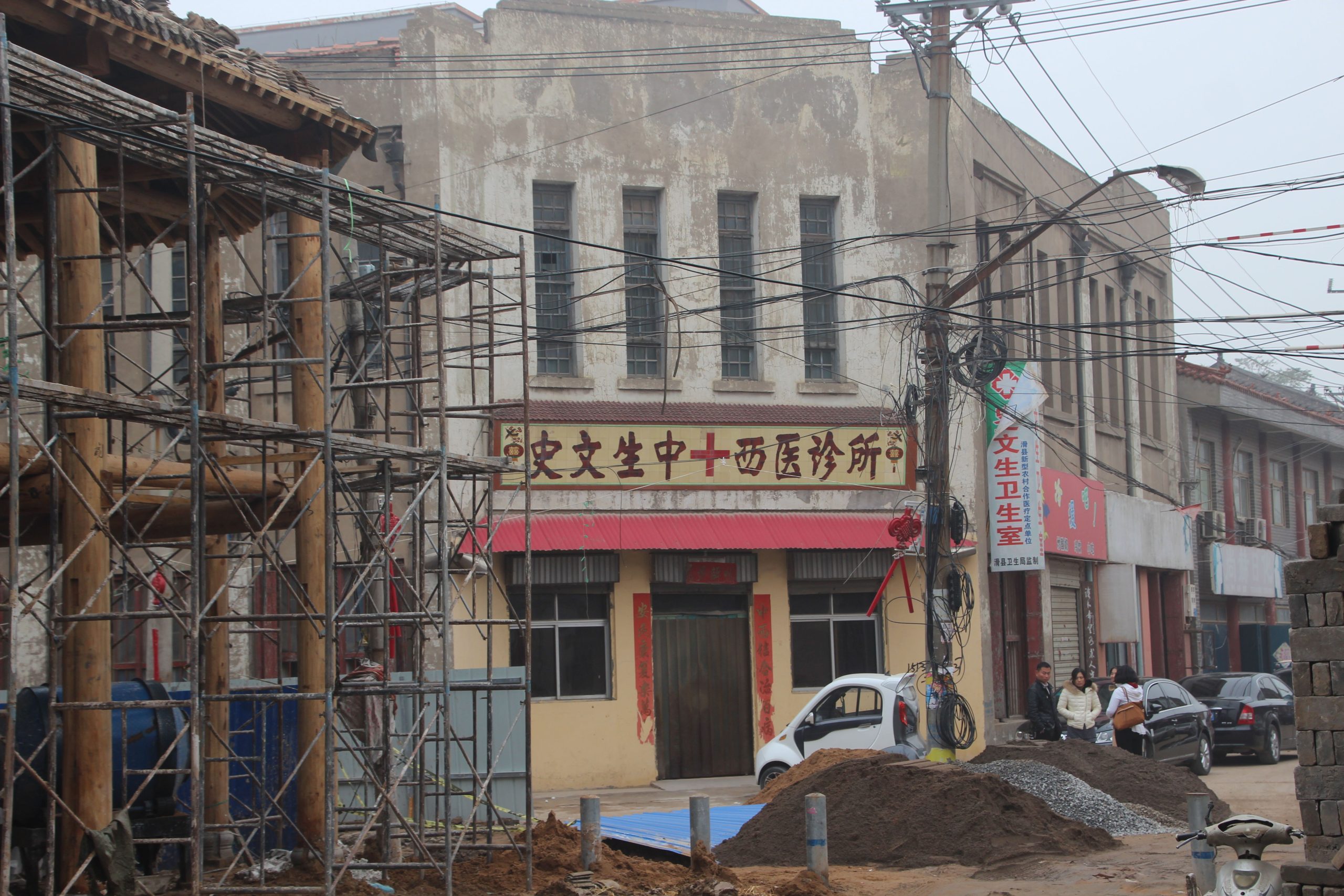
  Dense pole lines in the heritage area

  Question 47: What is the environmental pressure on the Grand Canal in China? What are the countermeasures?

  The ecological environment and environmental quality within the scope of China’s grand canal declaration have been protected in accordance with national standards for a long time, and the overall situation is good.Environmental pressure mainly comes from the changes of water environmental quality, air quality and climate.. According to its functions such as water conveyance and flood discharge, the quality of water environment basically meets the Ⅲ ~ ⅴ standards stipulated in the National Quality Standard for Surface Water Environment (GB3838-2002). The air quality in rural areas and built-up areas reached the first-class standard and the second-class standard stipulated in the Environmental Air Quality Standard (GB3095-1996) respectively.The frequent occurrence of extreme weather, especially rainstorm and drought, caused by climate change has aggravated the pressure of flood control and drainage in the Grand Canal in China, and has had a certain impact on the site.

  China’s Grand Canal heritage protection and management institutions shall, in accordance with relevant protection laws and regulations and the Grand Canal Heritage Protection and Management Master Plan (2012— 2030) implements environmental protection in the chapter of heritage environmental protection planning.It mainly includes: regulating water system, allocating river basin and regional water resources; Protect and repair ecological banks; Improve the environment by wetland construction, water exchange or site protection; Restrict land management and construction within the scope of protection zoning; Strictly control pollutants discharged into water bodies; Strengthen the prevention and control of industrial pollution along the canal; Build urban and rural sewage treatment facilities and centralized garbage collection and treatment facilities, and establish a long-term cleaning system; Scientific monitoring, etc.Flood control planning and comprehensive planning have also been formulated in each basin to cope with the pressure of flood control and drainage brought about by climate change.
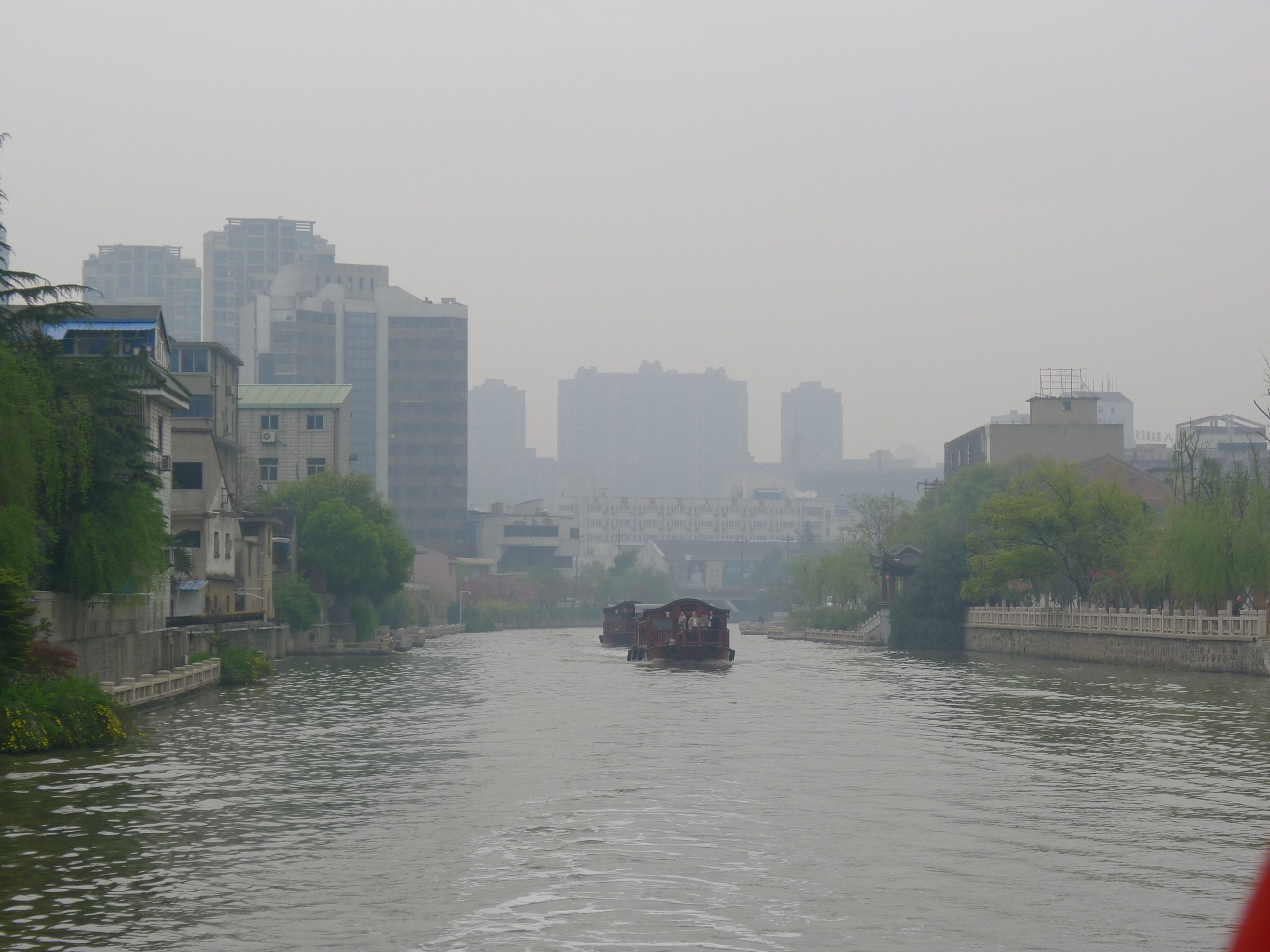
  Wusuo canal

  Question 48: What natural disasters are facing China’s Grand Canal? What countermeasures have been taken?

  The common risks faced by the Grand Canal in China are mainly floods.

  In order to cope with the flood disaster, the Ministry of Water Resources of People’s Republic of China (PRC) and the people’s governments of relevant heritage sites have formulated flood control plans at different levels according to the Flood Control Law of People’s Republic of China (PRC) (1998), and detailed flood control schemes have been formulated in the plans. China’s Grand Canal has successively completed flood control projects in its comprehensive management projects since the 1950s.People’s governments at all levels also strictly follow their respective flood control plans to prevent and control flood disasters at three levels: basin, region and city.The concrete measures are mainly embankment treatment and river regulation: the embankment line and the transverse and longitudinal sections of the embankment are designed according to the flood control scheme to strengthen the flood control embankment; In accordance with the requirements of stabilizing the river to make the best use of the flood and prevent ice, bank protection, branch blocking, water diversion, dredging, river widening project and river bend cutting project are implemented for river regulation. In addition to engineering measures, some non-engineering measures have been taken, such as establishing flood forecasting and warning system, strengthening flood area management, formulating flood insurance and emergency measures for exceeding the standard flood. The Grand Canal in China has established an uninterrupted river monitoring, communication and early warning system, and formulated a flood emergency plan. The emergency plan deals with the flood disaster by improving the level of flood forecasting and early warning, increasing flood discharge, and moderately overstocking inland rivers and lakes in the basin. Through the above measures, the effective prevention and control of flood disaster risk in the Grand Canal has been realized.

  In addition, in view of the fire risk of the buildings in the application elements, in addition to ensuring fire exits, all heritage sites have been equipped with fire prevention equipment, designated responsible persons, and formulated fire safety management regulations and emergency plans. Through these measures, the requirements of minimizing fire risk and reducing disaster losses can be achieved.
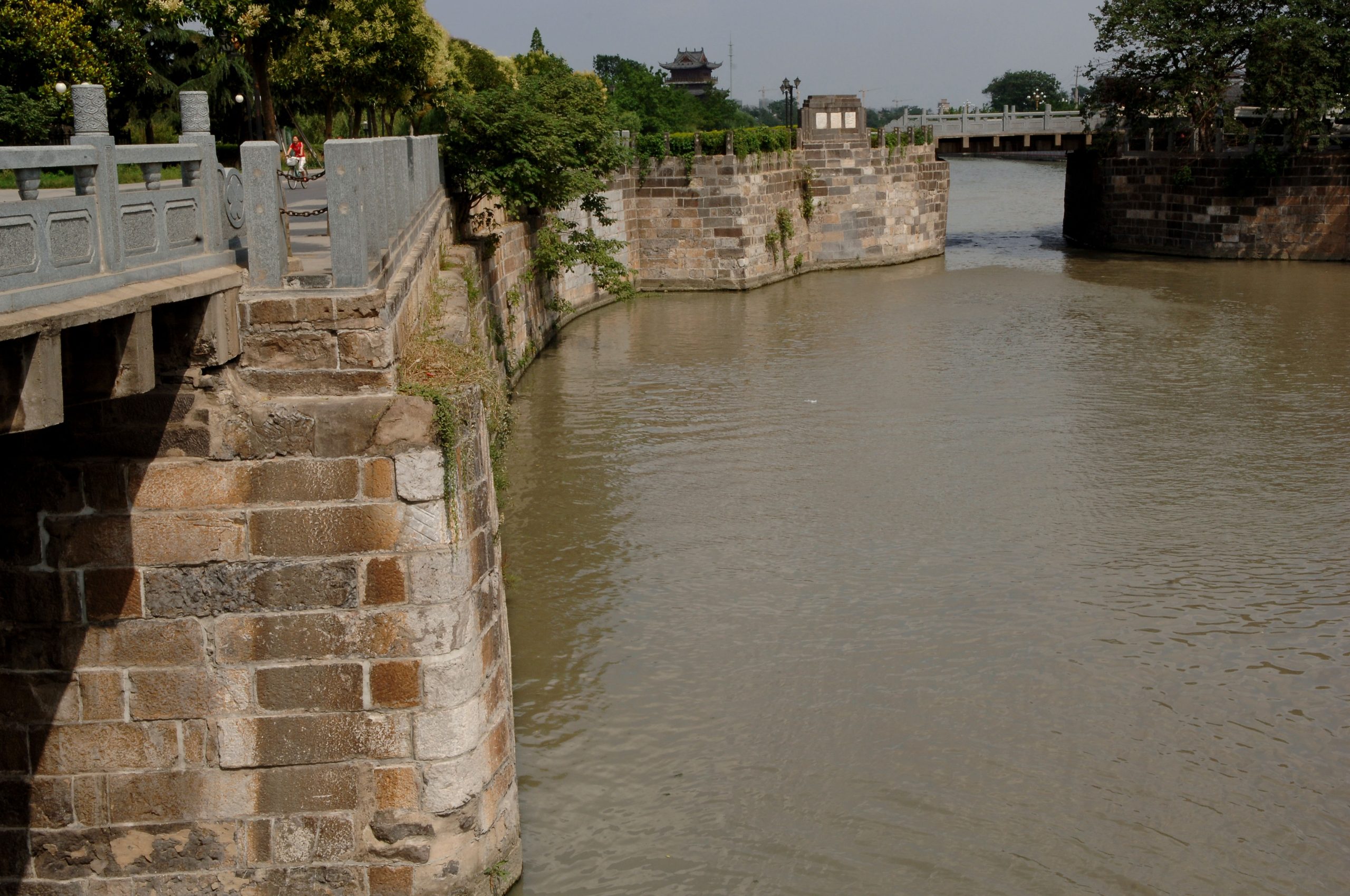
  The only preserved stone gate in Huai ‘an section of Huaiyang Canal: Qingjiang Gate.

  Question 49: What laws and regulations protect the Grand Canal in China?

  As a huge heritage in use, the outstanding universal value, authenticity and integrity of China’s Grand Canal are related to multiple attributes, which makes China’s Grand Canal subject to multiple and three-dimensional legal protection.First of all, we must comply with international conventions such as the Convention for the Protection of the World Cultural and Natural Heritage and the Operational Guidelines for the Implementation of the Convention for the Protection of the World Cultural and Natural Heritage, as well as the requirements of national laws and regulations such as the Law on the Protection of Cultural Relics in People’s Republic of China (PRC), the Regulations on the Implementation of the Law on the Protection of Cultural Relics in People’s Republic of China (PRC), the Administrative Measures for the Protection of World Cultural Heritage of the Ministry of Culture, and the Administrative Measures for the Monitoring and Inspection of China World Cultural Heritage of National Cultural Heritage Administration.. Secondly, the water conservancy management department is responsible for the management of the rivers and embankments of the Grand Canal in China. The Grand Canal in China is also protected by the Regulations on the Management of Rivers in People’s Republic of China (PRC), the regulations on the protection and management of rivers and lakes in provinces and cities along the route, the measures for the implementation of river management and the regulations on the management of water conservancy projects. The heritage elements declared by the Grand Canal in China include five historical and cultural blocks and one historical and cultural town in the national historical and cultural cities, and are also protected by the Regulations on the Protection of Famous Historical and Cultural Cities, Towns and Villages. The heritage elements of the grand canal heritage declaration include a national scenic spot — — Jiangsu Shugang Slender West Lake Scenic Area is protected by the Regulations on Scenic Areas promulgated by the State Council. Nansihu Provincial Nature Reserve is also protected by People’s Republic of China (PRC) Environmental Protection Law and other natural resources protection laws and regulations. The Grand Canal is also protected by various special laws and regulations. For example, the departmental regulation "Measures for the Protection and Management of the Grand Canal Heritage" adopted by the Ministry of Culture in 2012, the Joint Agreement on the Protection of the Grand Canal Heritage jointly formulated and signed by the cities along the Grand Canal in September 2012, and the regional "Measures for the Protection of the Grand Canal Heritage" formulated by the provincial and municipal governments along the route.

  In addition to the law,China’s Grand Canal has a complete protection planning system.Including: China Grand Canal heritage management planning, national protection planning, provincial protection planning, prefecture-level protection planning, important point protection planning and various detailed planning. All stages and levels of planning are connected with each other, and each has its own emphasis. Together, an overall policy of comprehensive protection of the Grand Canal heritage has been constructed, and a comprehensive and instructive protection planning system has been formed. 
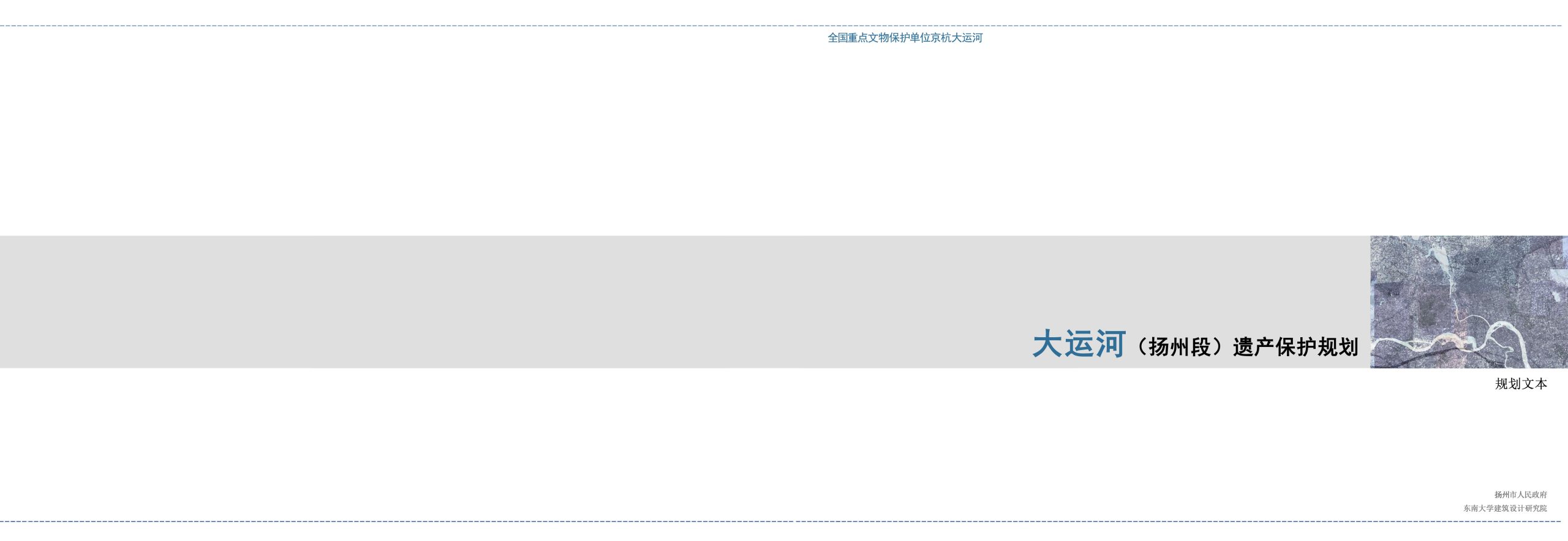
  Cover of Protection Planning for Yangzhou Section of Grand Canal

  Question 50: What are the management institutions of the Grand Canal in China?

  As a linear living heritage, the Grand Canal in China has the characteristics of multi-level and multi-sector management. The declared heritage areas and buffer zones shall be managed by local people’s governments at all levels and river basin management agencies according to their jurisdiction and in accordance with laws and administrative regulations. The competent department of cultural relics in the State Council is in charge of the overall protection of the Grand Canal heritage, and cooperates with the competent departments of land, environmental protection, transportation and water conservancy in the State Council to carry out relevant work within their respective responsibilities according to law.The people’s governments of cities along the Grand Canal shall be responsible for the protection of the Grand Canal heritage within their respective administrative areas, and establish corresponding coordination agencies. The departments in charge of cultural relics, land, environmental protection, transportation, water conservancy, construction, planning, tourism and other cities are responsible for the protection of the Grand Canal heritage within their respective functions and duties.

  The heritage protection of the Grand Canal in China is a cross-industry and multi-field work, involving related institutions and many stakeholders in the fields of cultural relics, transportation, water conservancy, environmental protection, land and construction. To this end, governments at all levels in China have established an effective consultation mechanism to coordinate the major issues of many industries involved in the heritage protection of the Grand Canal in China, clarify the division of responsibilities of relevant departments and regions in the heritage protection of the Grand Canal, and strengthen exchanges and cooperation between different fields. At the national level, an inter-ministerial consultation group for the protection and application of the Grand Canal has been established, and at the local level, a corresponding provincial (municipality directly under the Central Government) and municipal leading group for the protection and application of the Grand Canal (consultation group) has been established. Regular meetings have been held to consider major issues such as draft regulations, planning and key work arrangements for the protection of the Grand Canal heritage, so that these tasks can be coordinated in a timely and effective manner.

  The people’s governments of cities along the Grand Canal in China have established the Alliance of Cities for the Protection and Heritage Application of the Grand Canal. The city alliance jointly formulated and signed the Joint Agreement on the Protection of the Grand Canal Heritage, which clearly defined the cooperation mechanism of the city alliance and the relevant requirements for the protection of the Grand Canal heritage. If the heritage area crosses administrative boundaries, the local people’s governments at or above the county level adjacent to it will study and solve the cooperation and coordination issues in the protection of the Grand Canal in China through joint meetings of relevant departments and city alliance meetings.

  After the successful application of the Grand Canal, on September 26th, 2014, 35 cities along the Grand Canal held a meeting in Yangzhou, renaming the Grand Canal Protection and Heritage Application Cities Alliance as the Grand Canal Heritage Protection and Management Cities Alliance. At the same time, the Grand Canal Joint Declaration World Heritage Office was renamed as the Grand Canal Heritage Protection and Management Office, which was unveiled by National Cultural Heritage Administration.
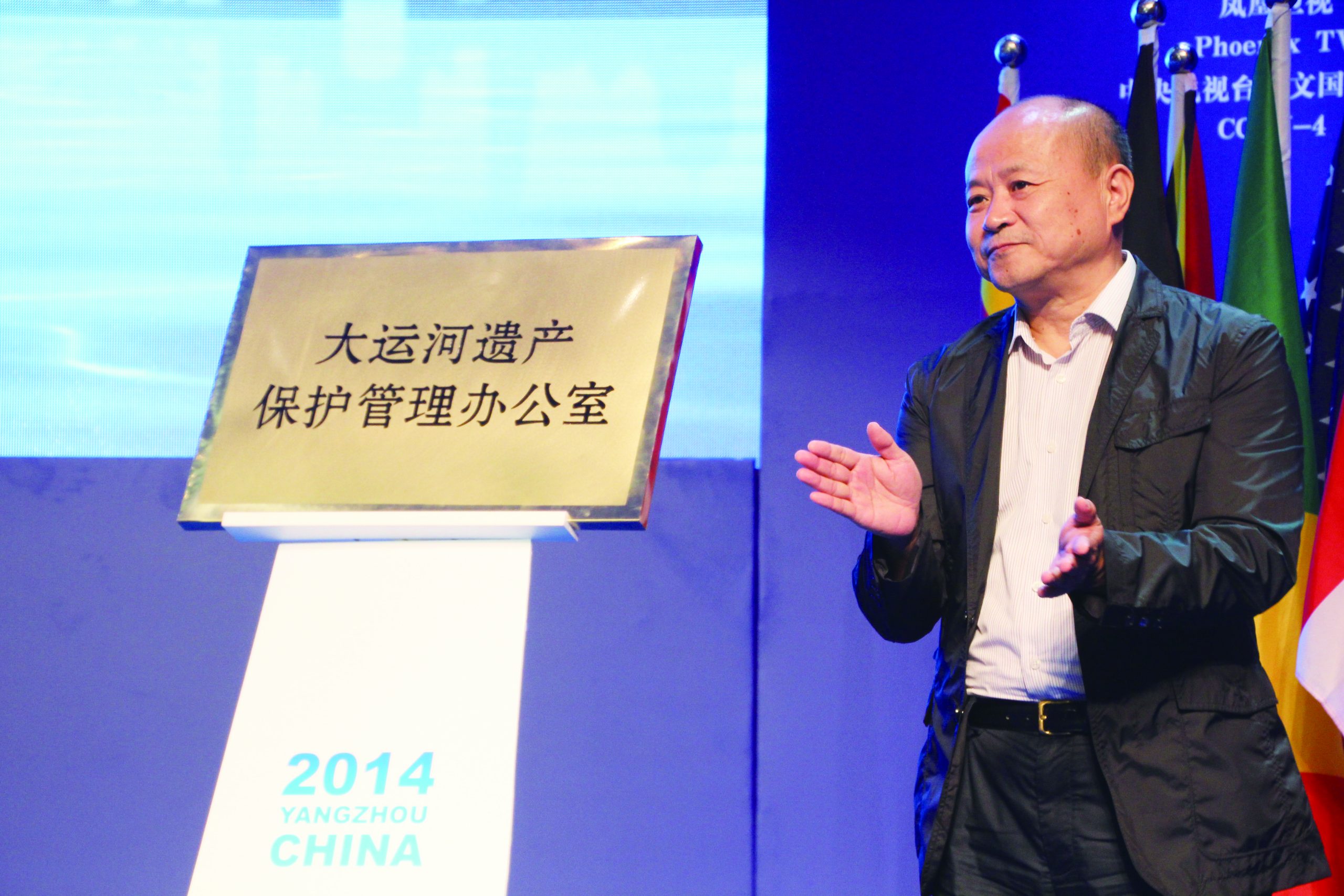
  National Cultural Heritage Administration leaders unveiled the Grand Canal Protection Office.

  Author Jiang Shili:

  Deputy Director of Yangzhou Press and Publication Bureau.During the application for the World Heritage of the Grand Canal in China, he served as the full-time director of the World Cultural Heritage Office of the Grand Canal and the deputy director of the World Heritage Office of Yangzhou, the leading city, and experienced the process of applying for the World Heritage of the Grand Canal.

  (Jiangsu Radio and Television General Station "My Su Net Special",Refuse to reprint, reserve the right to pursue legal responsibility. )
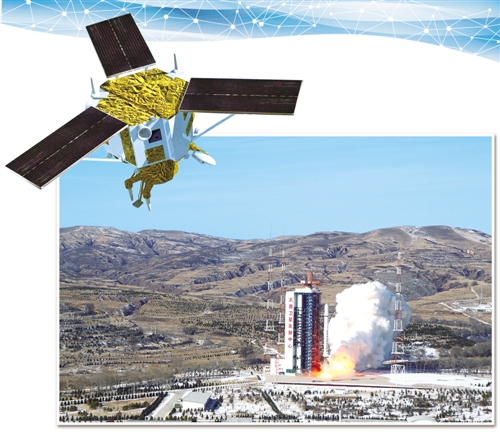
Revealing the strongest commercial remote sensing satellite in the history of China: the resolution reaches 0.5 meters.

  On December 28th, 2016, two satellites of Group 01 of Gaojing-1 were successfully launched in Taiyuan Satellite Launch Center with one arrow and two stars. (Xinhua News Agency)

  On December 28, 2016, two satellites in Group 01 of Gaojing No.1 in China were successfully launched in the form of one arrow and two stars. As of January 10, 2017, the ground system has successfully received and processed 15 tracks of 1241 images. Since then, there have been two China-born "space detectives" in the vast universe.

  As China’s first self-developed 0.5-meter high-resolution commercial remote sensing satellite, what unique skills does Gaojing-1 have and what is the significance of its launch? Please follow the footsteps of the Economic Daily reporter and approach the strongest commercial remote sensing small satellite in China’s history.

  Break through the monopoly of remote sensing market

  Looking down at Gaofen No.1, which covers 800 kilometers, we can bring the spatial resolution of China remote sensing satellite into Gaofen No.2 in the Ami era, and we can observe and image Gaofen No.3 & HELIP; …

  Looking back at the remote sensing satellites launched in recent years, many people still remember them. However, the "protagonist" Gao Jing No.1, who is going to appear today, belongs to the remote sensing family, but it is more grounded. "In the past, China’s remote sensing satellites mostly provided public welfare services for the government and other departments, and Gaojing No.1 will provide more professional and quantitative remote sensing data for various commercial users." Xu Wen, general manager of China Siwei Surveying and Mapping Technology Co., Ltd., a specialized company of China Aerospace Science and Technology Corporation, which is responsible for the commercial operation of Gaojing No.1, said.

  This positioning is not only the requirement of realizing the independent supply of data, but also has practical considerations. With the continuous development of technology application, the value of remote sensing has been continuously explored. The commercial remote sensing satellite companies, such as Digital Earth and Airbus, which have stood out from the market several times, have monopolized the high-resolution commercial remote sensing market in China.

  According to the data provided by Xu Wen, China’s annual direct consumption of satellite raw data with resolution better than 2.5 meters is about 500 million yuan, and the growth rate is about 8%, of which foreign satellite data accounts for 75% of the market. What is even more difficult is that in the remote sensing data market, data with sub-meter level or above, especially with resolution better than 0.5 meters, is the mainstream consumption index. However, in the past, due to the performance of independent commercial remote sensing satellites, none of China’s commercial remote sensing satellites had a resolution of 0.5 meters.

  In the 21st century, the application industry of remote sensing satellites serving various fields of national economy and social development is showing great growth. Xu Wen frankly said that because there is no right to speak, sometimes, even at a high price, you can’t buy much-needed sub-meter data.

  Faced with some heavy reality, in September 2015, with the approval of the Ministry of Finance, Aerospace Science and Technology Group established a commercial remote sensing satellite company. Since then, Aerospace Dongfanghong Satellite Co., Ltd. has completed the development of two satellites in the 01 group of Gaojing-1 in 17 months. At the end of 2016, with the launch of these two satellites in Taiyuan, the situation that China’s commercial remote sensing was controlled by people came to an end.

  "The successful launch of Gaojing No.1 has achieved a breakthrough in the commercialization of China’s domestic remote sensing satellite operation mode. Since then, China has owned independent remote sensing data with a resolution of 0.5 meters high." Jia Ke, director of the Party-mass Work Department of China Aerospace Science and Technology Corporation, said.

  What does a resolution of 0.5m mean? This is a watershed in the global high-resolution commercial remote sensing satellite market. Previously, only the United States and South Korea reached this level. "The successful launch of Gaojing-1 marks that domestic commercial remote sensing satellites have officially entered the international first-class ranks." Zhang Xiaomin, deputy general manager of Aerospace Dongfanghong Satellite Co., Ltd. said.

  For the general public, the most intuitive feeling is that the satellite is smaller and smaller. Taking crop monitoring as an example, it can not only identify the growth of crops, but also distinguish the subtle differences of crop colors in different periods. Compared with ordinary remote sensing satellites, the clarity is like the difference between high-definition TV and ordinary TV.

  This special feature determines that Gaojing-1 is different. "It can not only collect more delicate details of ground objects, but also be suitable for high-precision map making, change monitoring and impact depth analysis. It can also shoot in a large width, which has unique advantages for large-area surface observation and environmental monitoring." Zhang Xiaomin said.

  Small expert in space "gymnastics"

  Resolution is only one of the parameters to measure the level of a satellite. For the satellite, it is also very important to make a large-angle attitude turn according to the actual needs, and quickly restore stability, image the target, and then obtain high-quality images.

  To realize this feature, the satellite needs to "turn fast" and "turn steadily". However, it is not easy to have both fish and bear’s paw. In order to rotate fast, the torque output by the satellite’s actuator has to be large, but the inertia is small when the torque is large, and the satellite is not easy to stabilize quickly, which can not provide the necessary attitude stability conditions for high-resolution imaging.

  Gaojing-1, with a single star weighing only 500 kilograms, did it. Zhang Xiaomin said that Gaojing-1 adopted the newly developed variable-speed control moment gyro in China. In the past, the combination of momentum wheel and control moment gyro was used for satellite attitude control. Momentum wheel is like the open arms of a balance beam athlete. It can adjust or stabilize the attitude of the satellite by adjusting the speed of the internal high-speed rotating wheel. Although it has high accuracy, its strength is small and its adjustment speed is slow. The control moment gyro can adjust the attitude of the satellite by adjusting the direction of the rotating shaft of the high-speed rotating wheel, which can provide "the power of the wild" and speed up the adjustment, but the accuracy is slightly poor.

  The variable speed control moment gyro combines the advantages of both, which can be used as both a control moment gyro and a momentum wheel. When working in the "control moment gyro" mode, the attitude of the satellite can be adjusted quickly, and when working in the "momentum wheel" mode, the satellite can be stabilized accurately, and it can also be switched smoothly between the two modes. In this way, in the aspect of attitude control, Gao Jing-1 is like an all-around space gymnast, who can "move like a rabbit" or "be quiet like a virgin" instantly.

  The two satellites launched this time are only some members of the Gaojing No.1 family. According to the established plan, two satellites of Gaojing-1 Group 02 will be completed and put into the market before the middle of 2017. "Four commercial remote sensing satellite constellations with a spatial resolution of 0.5 meters are the first in the world." Xu Wen said.

  The so-called constellation is a name relative to a single satellite. What is the significance of this multi-star combination? Xu Wen has a relatively popular explanation: the earth is turning, and the satellites are also turning. It usually takes several days for a single satellite to repeatedly observe the same feature. Because common remote sensing satellites operate in low orbit to ensure spatial resolution, the observation area is relatively small, and it is impossible to continuously observe the same place, so they can only take photos when passing over the point. With the constellation, it is easier to revisit the old place in a short time.

  Xu Wen said that the design of Gaojing-1 constellation aims to solve two main problems, one is to repeatedly observe the same feature, and the other is to realize dynamic observation. In terms of disaster and environmental monitoring and forecasting, the 0.5-meter high-resolution remote sensing satellite constellation has more advantages. For example, when an earthquake occurs, it may take a day or two to receive the data of the disaster area. Now, after forming a constellation, it takes only one or two hours to know the situation of the disaster area.

  According to the design, after the four remote sensing satellites with a resolution of 0.5 meters are networked and operated in 2017, they can revisit any place in the world once a day, which means that as long as the weather conditions are good, the landscape of any region in the world can be panoramic.

  Going abroad will be expected.

  Moreover, in terms of the number of satellites, types of earth observation, collection capacity, etc., the constellation will also have the international first-class level: the daily collection capacity will reach 3 million square kilometers, and it can cover ten domestic cities (Beijing, Shanghai, Guangzhou, Shenzhen, Tianjin, Chongqing, Shenyang, Chengdu, Xi ‘an and Wuhan) once every three days.

  More importantly, thanks to the construction of constellations, the spatial resolution of Gaojing-1 will be increased from the current 0.5 meters to 0.4 meters or even 0.3 meters. This index will approach the highest level of commercial remote sensing satellites at present, that is, 0.31 meters.

  Of course, this is only the first step. According to Yang Yike, director of the Aerospace Department of China Aerospace Science and Technology Corporation, Gaojing-1 is only the first star of the first phase of commercial remote sensing "16+4+4+X" system construction. According to the plan, the "16+4+4+X" commercial remote sensing satellite system will be built around 2022. The system includes 16 high-resolution optical satellites with 0.5m resolution, 4 high-end optical satellites, 4 synthetic aperture radar satellites and several remote sensing satellite constellations combined with hyperspectral and video satellites. After the system is finally completed, the daily collection capacity will reach 12 million square kilometers, and it can cover ten major cities in China once a day. With the all-weather and all-day observation ability of radar satellites, it can achieve hourly high-resolution remote sensing data acquisition.

  Talking about the future of Gaojing-1, Xu Wen said that Gaojing-1 will be delivered to Beijing Aerospace Shijing Technology Co., Ltd., a subsidiary of China Siwei Surveying and Mapping Technology Co., Ltd., for data promotion. Satellites will provide high-quality services in land and resources investigation, surveying and mapping, environmental monitoring, etc., and may also be used in new markets — — Urban construction planning, real estate investment, industrial facilities evaluation, finance and insurance, Internet industry and many other aspects show their talents, providing satellite data for industry-level and individual consumer users. For example, in the insurance field, Digital Earth has worked together with its partners to help insurance companies quickly and accurately estimate losses after disasters.

  "Thanks to the improvement of resolution, Gaojing No.1 can send back a large number of valuable high-definition remote sensing images as needed, bringing the public into the era of reading pictures in space." Xu Wen said.

  On the basis of consolidating the domestic market, Gaojing No.1 will also actively go abroad. Xu Wen revealed that Gaojing-1 will provide global users with all-weather remote sensing data services and application system solution services, accelerate the transformation of existing domestic remote sensing satellites into "market business", and lead the marketization, industrialization and internationalization of independent remote sensing satellites. In the future, it will also provide high-quality remote sensing satellite data and value-added services to domestic and foreign customers. (Shen Hui)

Shapingba: full chain disposal to prevent garbage "three mixed"

The "three-mixed" problem of domestic waste (mixed input, mixed collection and mixed transportation) is a persistent problem that affects the efficiency of domestic waste classification and recycling. In recent years, Shapingba District has focused on the outstanding problems in the delivery, collection and transportation of domestic waste classification, carried out special rectification work in the front end, middle end and law enforcement end of domestic waste classification, gradually improved the long-term management mechanism, and made effective progress in domestic waste classification.

The front end is accurate.

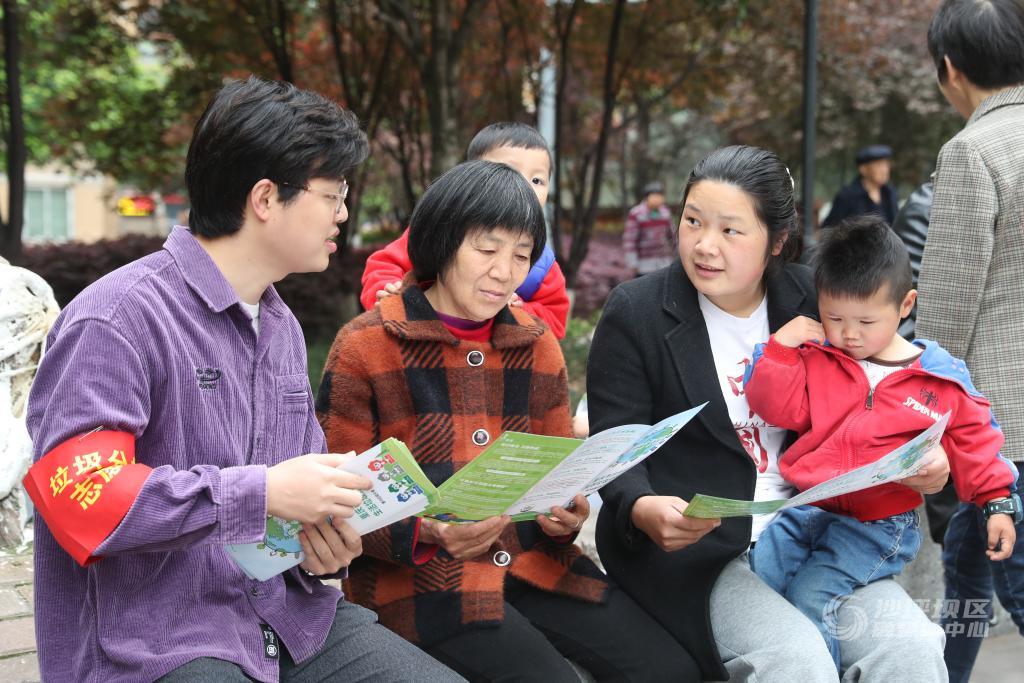
At 7: 00 a.m. on February 28th, in Qingyue Community, Fengwen Street, Shapingba, Peng Bin, a garbage sorting instructor, put on a volunteer vest and armband, and stood beside the centralized garbage sorting point to guide residents to put garbage in a classified way. "Contaminated napkins belong to other garbage and cannot be thrown into recyclable garbage bins." Peng Bin patiently explained the classification to the residents. "Every day from 7: 00 am to 9: 00 am and from 7: 00 pm to 9: 00 pm, it is the peak period of domestic garbage delivery and our busiest time." Peng Bin told reporters. Xuefu Yueyuan public rental housing area has a large population. In order to make the knowledge of domestic waste classification a household name, Peng Bin will also carry out door-to-door publicity and knowledge lecture hall training in his spare time, and strive to pass on the knowledge of domestic waste classification to every resident.

Nowadays, the residents of Yueyuan public rental housing community in Xuefu have gradually developed the habit of sorting domestic garbage. "Now there are three garbage bins standing in the home, which are placed in the kitchen, living room and bedroom respectively. Every time I go out, I will pack them and throw them into the corresponding garbage bins." Resident Yu Xinhui told reporters.

At present, Shapingba District focuses on improving the quality of accurate delivery of kitchen waste, and continues to deepen the publicity of "knocking at the door", strengthen the guidance and persuasion of residents’ classified delivery, and at the same time, support positive incentives such as red and black lists, and strive to improve the quality of front-end classified delivery.

Mid-range transportation is not mixed.

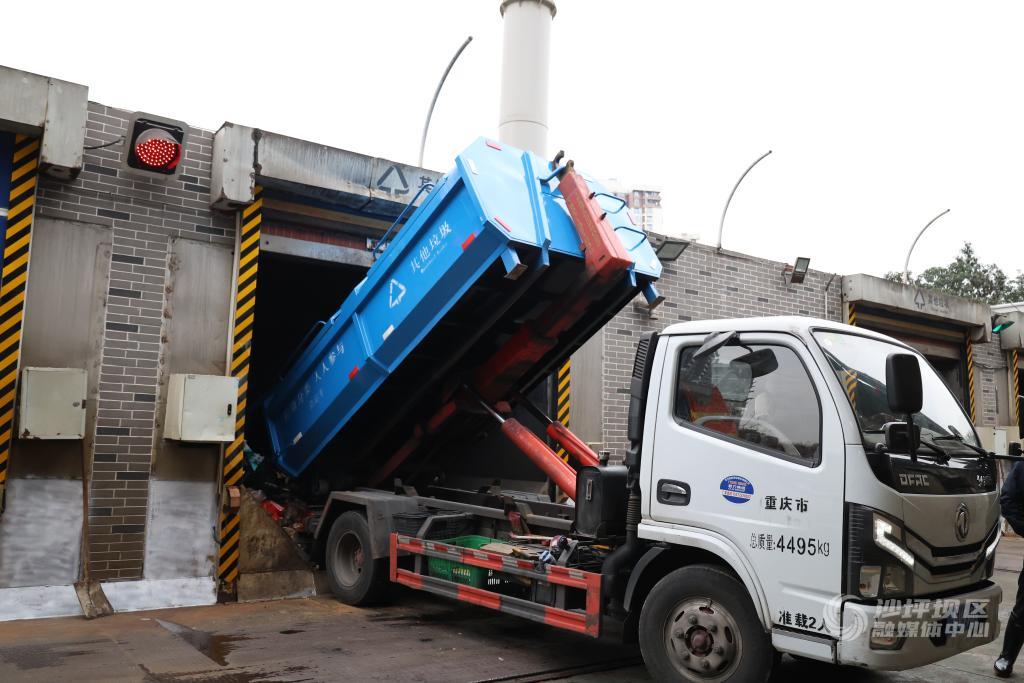
At 8 o’clock in the morning, the kitchen waste collection and transportation vehicle driven by Wang Ping arrived at Xuefu Yueyuan public rental housing community on time and began to prepare for the collection and transportation of kitchen waste. I saw Yang Jun take out a piece of white film and spread it flat on the ground at the rear of the car. This step is to prevent the oil of kitchen waste from dripping on the road. "If non-kitchen waste is found in the bucket during recycling, we will refuse it and dump it into the garbage truck after the cleaning staff reclassifies it." Wang Ping introduced to the reporter.

It is understood that the collection and transportation of kitchen waste in Shapingba District is currently carried by Chongqing Solid Waste Transportation Co., Ltd. The company sends more than 20 professional vehicles for "one-stop" collection and transportation service, and the kitchen waste collected from various communities will be transported to Xiyong garbage primary transfer station and Zouma garbage secondary transfer station for back-end treatment.

The front-end delivery is accurate, and the middle-end delivery is not mixed. The collection and delivery of other garbage will come to the solid waste transfer station on Zhanxi Road from another route. This transfer station is one of the four other garbage transfer and collection stations in Shapingba District, and the domestic garbage trucks near the business circle of Three Gorges Square in Shapingba will be cleared and transferred here.

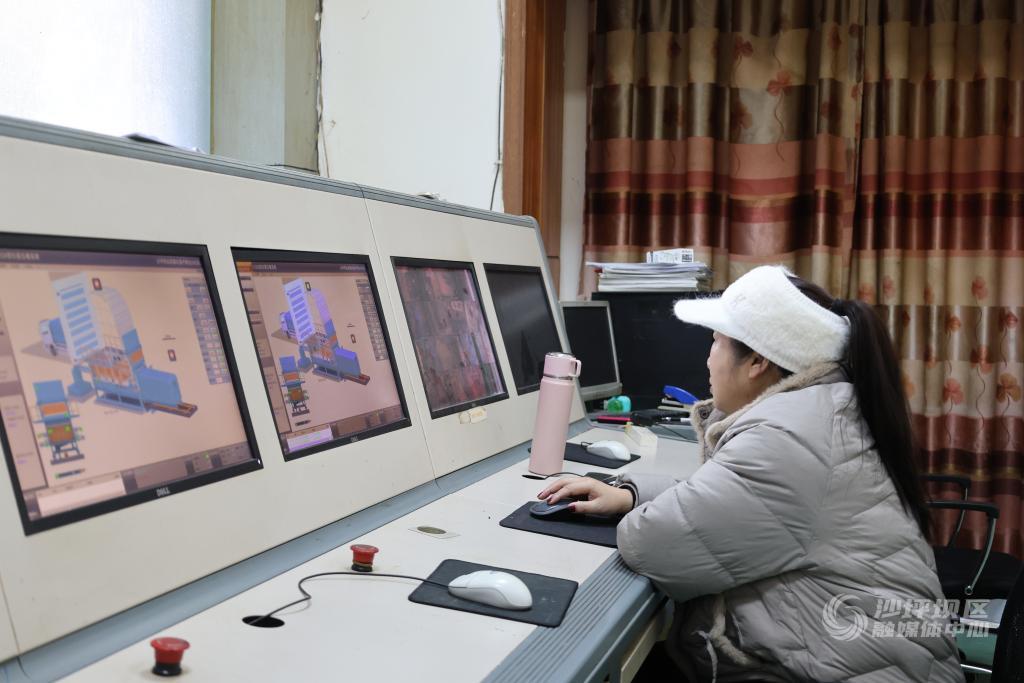
In the main control room of the transfer station, several display screens are lined up, and the operators keep an eye on each screen and observe the dumping port in real time. "If the vehicle is observed to have non-other garbage such as construction waste residue, branches and leaves when it is dumped, the staff will suspend the work of the vehicle and inform the driver to clean it up immediately. The site with serious mixed transportation will refuse the vehicle garbage." He Jian, the stationmaster, pointed to the screen and said.

It is reported that the solid waste transfer station on Zhanxi Road will compress nearly 220 tons of other garbage in one day, and the other garbage after classification and compression will be transferred by designated vehicles to the Zouma garbage secondary transfer station to complete the whole chain collection and transportation process of domestic garbage classification.

Strict law enforcement and supervision

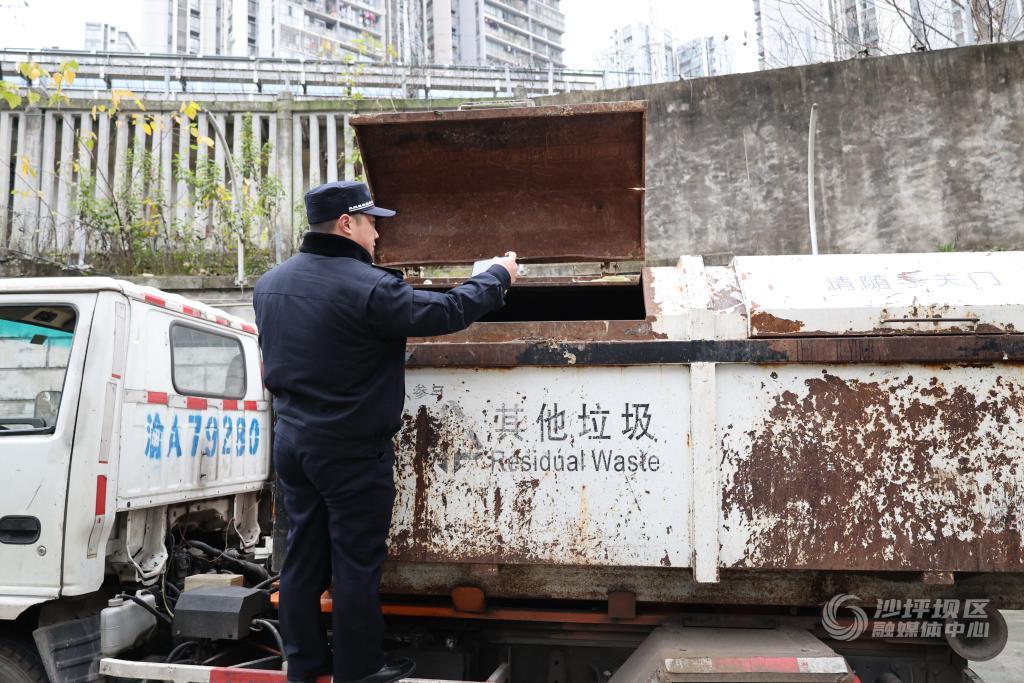
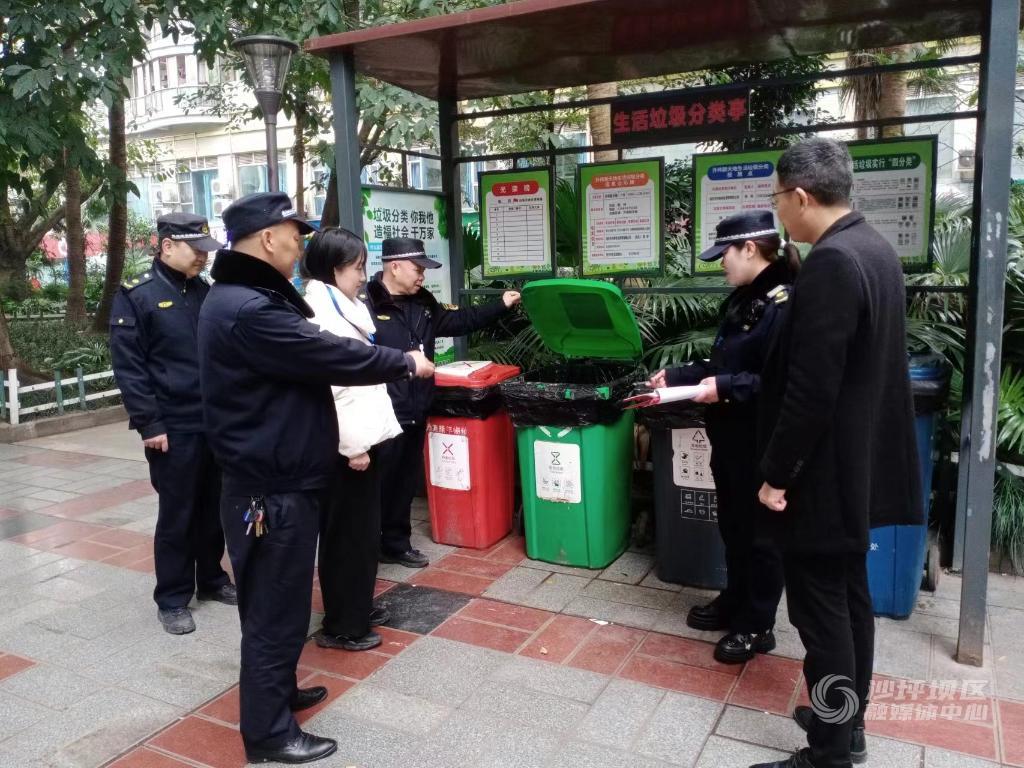
"Your vehicle has vague signs and garbage dripping, please get off and cooperate with it." "Vegetable leaves, tube bones, etc. belong to kitchen waste and cannot be mixed with other garbage." At the vehicle entrance of the solid waste transfer station on Zhanxi Road, Zhang Hua of the Emergency Brigade of the Urban Management Law Enforcement Detachment of Shapingba District made a surprise inspection of the garbage collection vehicles.

According to Zhang Hua, the phenomenon of a small amount of dripping, leaking, unclear transportation garbage label and unclean body will be warned and registered in the first investigation. If there is obvious garbage mixed transportation, they will order the driver to rectify on the spot and impose further administrative punishment after investigation.

It is reported that since the launch of the "three mixed" special rectification campaign of domestic waste in Chongqing, the urban management law enforcement detachment of Shapingba District has taken many measures to continuously promote the implementation of the "Regulations on the Management of Domestic Waste in Chongqing". The detachment adopts various forms of propaganda work, such as "entering organs" and "entering enterprises", and at the same time strengthens supervision and law enforcement and actively carries out law enforcement actions.

The relevant person in charge of the Urban Management Bureau of Shapingba District said that Shapingba District will further deepen the implementation and publicity of domestic waste classification, strengthen the work efficiency at the front end, the middle end of transportation and collection, and the law enforcement end of disposal, promote the formation of a domestic waste treatment atmosphere with the participation of the whole people, and effectively solve the problem of "mixed investment, mixed collection and mixed transportation" of domestic waste.

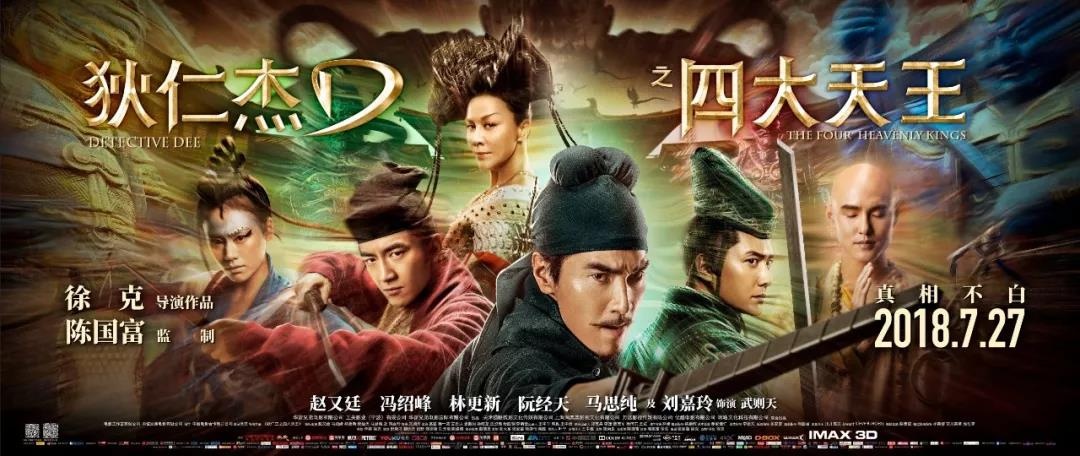
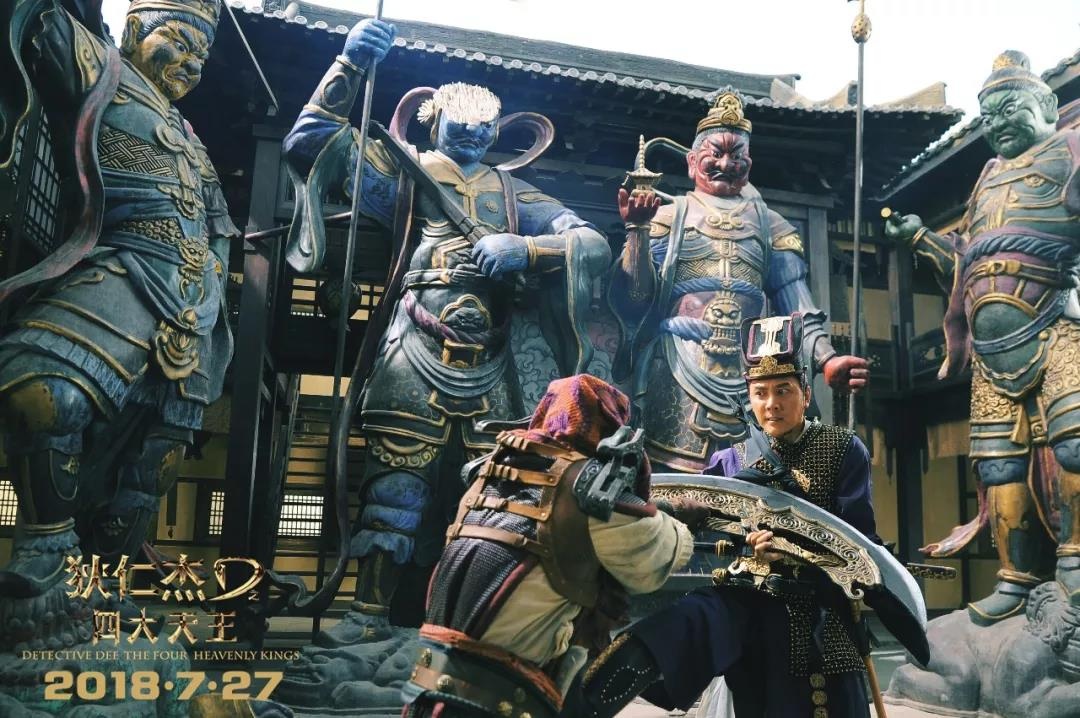
Is this the "Four Heavenly Kings" in the legendary Tsui Hark movies?

Special feature of 1905 film network On the fourth day of the release of Tsui Hark’s new work "The Four Kings of Di Renjie", the box office broke 300 million, while the cumulative box office of the competing "The Richest Man in Xihong City" has exceeded 1.1 billion, leaving the "Four Kings" far behind.

The first two Di Renjie series have doubled the box office from 286 million to 600 million, but this time, it is difficult to double the box office to 1.2 billion.


Is the film bad? Or is "The Richest Man in Xihong City" too strong?


In the audience’s word of mouth, The Four Kings scored 6.7 points for Douban and 8.2 points for Cat’s Eye, which is really mediocre. Look at "The Richest Man in Xihong City" next door, and the cat’s eye score is as high as 9.3 points!


Although the box office and word-of-mouth are not ideal, in the eyes of most people, this new work is the best in the whole Di Renjie series at present.


However, Xiao Dianjun also noticed that many viewers had a question after watching the film.


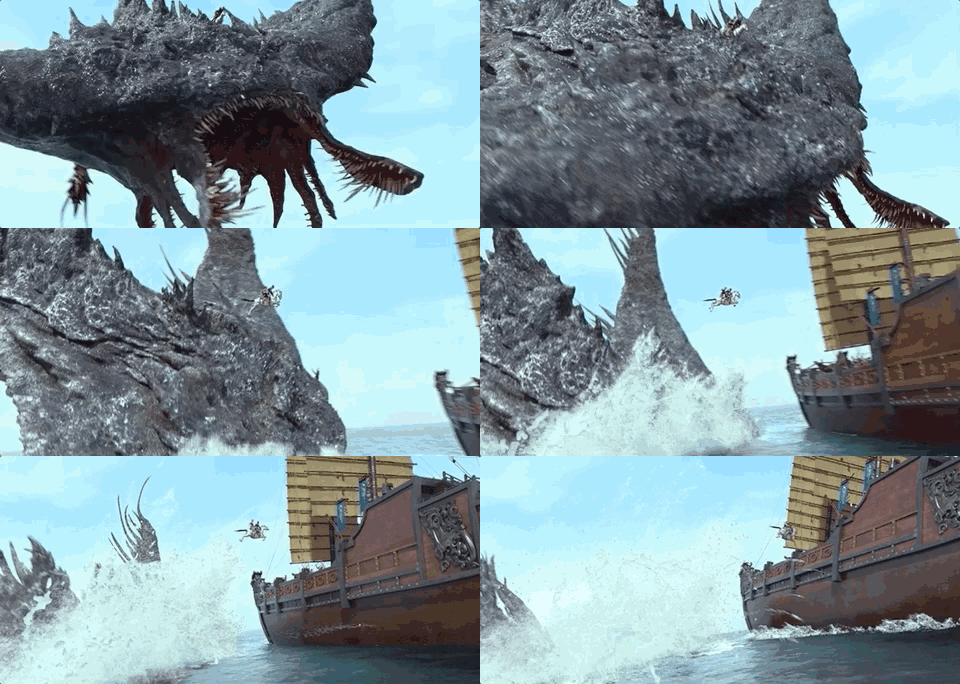
"Di Renjie’s Heaven Empire" has a thrilling moment when the statue of the floating pagoda collapses, and "The Dragon King, the God of Di Renjie" has a giant "Aohuang" that suddenly flies over the warship.


But what are the "Four Heavenly Kings" in Di Renjie’s Four Heavenly Kings?


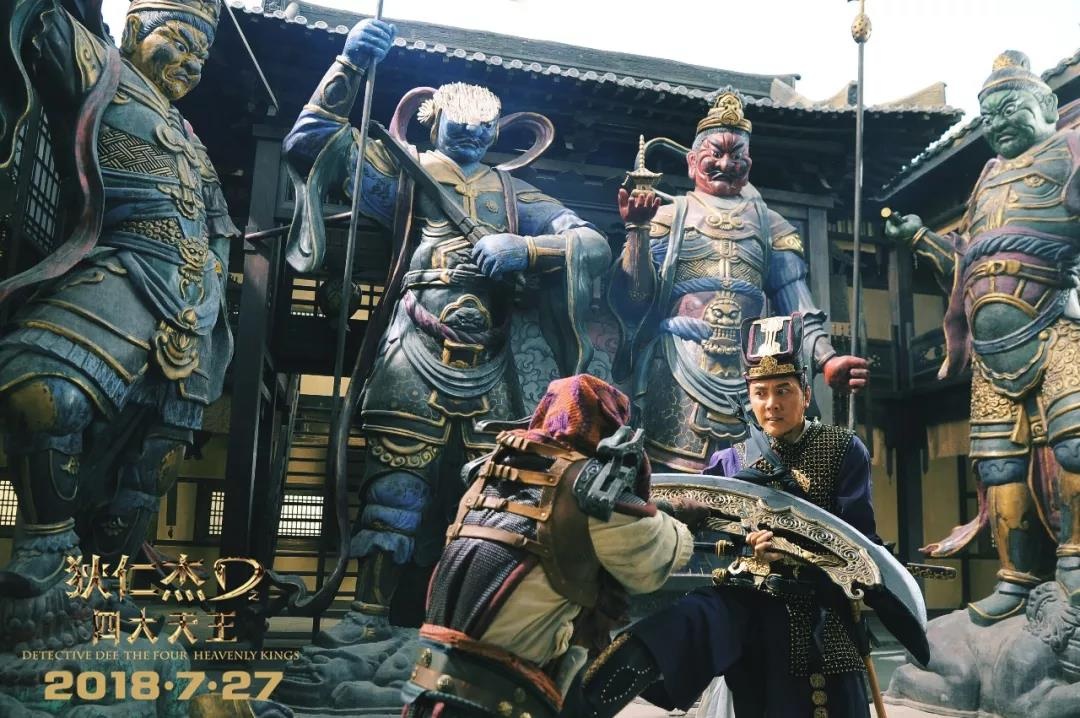
Are the four gods of heavenly kings that glared at Wei Chi Zhenjin and the Ghost Badger when they robbed Kang Long Mace in Tianwang Temple?


Is it the eye monster "Red-eyed King" who sealed the inferno in the battle of Dali Temple at the end and transformed it with the method of shifting souls?


Di Renjie, Sha Tuozhong, Wei Chi and Shui Yue, the four heroes who rode horses to the unknown front in the egg?


Or indirectly refer to and echo the core expression in the film with the four great kings of Buddhism — —"Hell is not empty, and I will never become a Buddha."?


Whether the "Four Heavenly Kings" are real or imaginary is actually traceable in movies, but what many people don’t notice is that,For director Tsui Hark, he also has his own "Four Kings" in this film, which are the four aesthetic signs of Tsui Hark’s film: strangeness, power, chaos and spirit!


Strange


Fortunately, "Di Renjie" series didn’t add the word "detective" in the title at the beginning. Although the first one was a suspense detective film with reasoning elements, it has completely turned into a martial arts supernatural film that "collectively fights monsters".


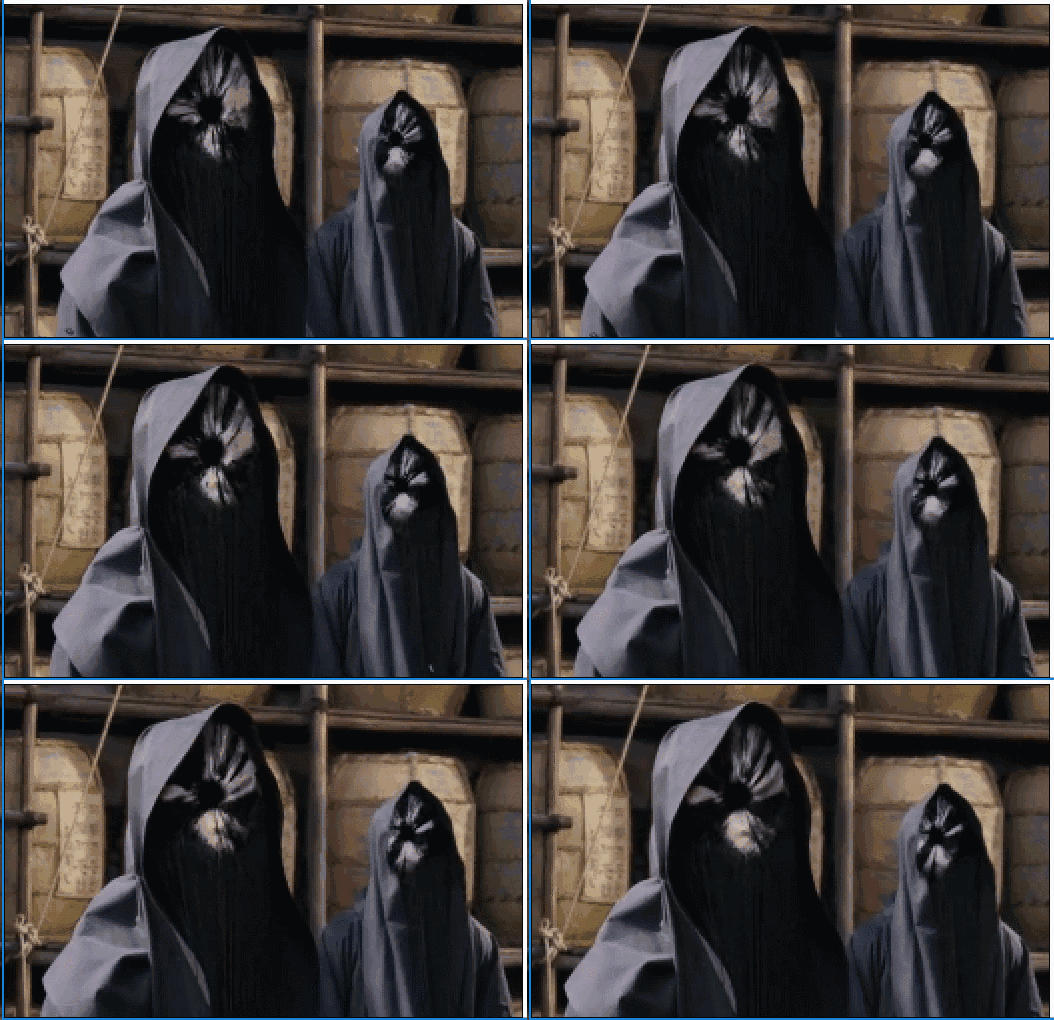
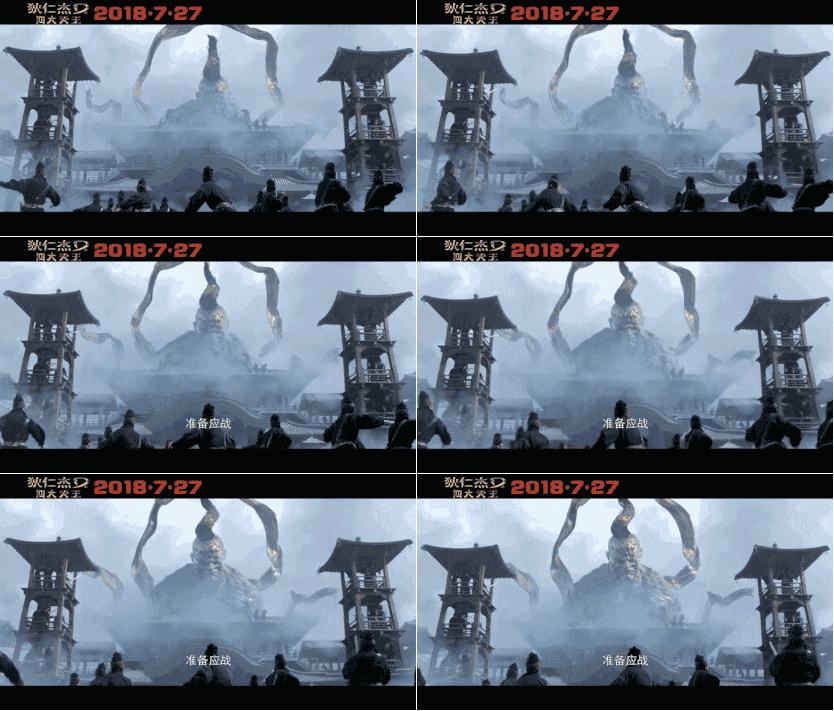
Most of the praise for this new film falls on the five visual wonders: the golden dragon, the strange fish, the white ape, the glaring king, and the tentacle monster like rambutan.The most powerful aesthetic label of Tsui Hark’s films is his "strangeness".


The first is his monster complex.Tsui Hark is known as "the hermaphrodite in the new wave movies", and the nickname "Xu Laoguai" has been used to this day. He is deeply influenced by Hollywood monster movies, Japanese special films and comics, and he also loves to find creative inspiration in China’s myths and legends.


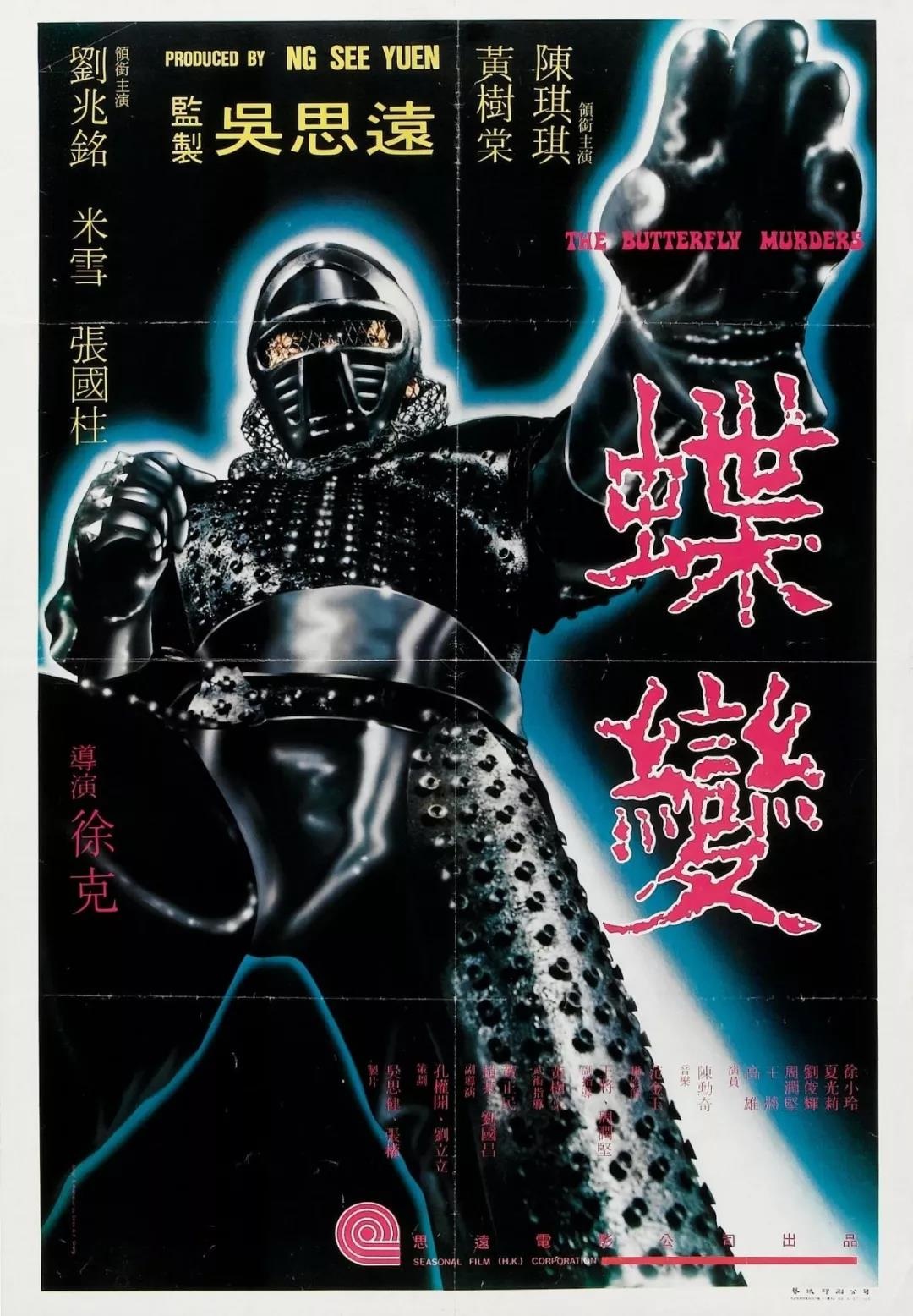
Butterfly Change, the first film in 1979, is a martial arts experimental film with the concept of "mutating butterflies to kill people", which combines Gu Long’s novel Blood-sucking Moth, Japanese horror film Eight Graves Village and Hitchcock’s Birds.

He is also known as "Spielberg of Hong Kong", just as foreign scholars commented on Spielberg, "The skill to win the audience is to extract the essence from Hollywood’s’ groceries’ and absorb the strengths of each family".Tsui Hark is good at "stealing teachers". The elements of Hollywood monster films can be seen everywhere.


The opening of the Dragon King, the destruction of the warship by the Aohuang and the great white shark in Spielberg’s film all pave the way for narrative suspense with the way of "only hearing its voice but not its shape" and "still hiding half her face from us behind her guitar".

In "Four Kings", the white ape standing on the roof of Dali Temple tore the monster, which seems to have jumped into the set of "Furious Beast" at a closer point. From a farther point of view, isn’t it the "King Kong" who stood at the top of the Empire State Building and dueled with a helicopter?

In the end, the "magic wheel" appeared when Master Yuan Xiu confronted the boss of the inferno. The package shape was very similar to the face-hugging bug in Alien and the eyeball of the glaring king. You can even think of the zerg big BOSS&hellip in starship troopers. …


Counting the monsters in Tsui Hark’s movies in the 1990s, there are the tree demon grandma and the big BOSS Montenegro old demon who absorbed men’s blood in Ghost Story, the Millennium centipede essence in Ghost Story: Infernal Affairs, and the megalithic monster in Ghost Story: The Way to the Road.


The white snake and the green snake in Green Snake, the white crane and the thousand-year-old fire turtle in New Crane Needle, and even the modern monster & HELIP in Monster City and Black Xia 2. …


After the new century, Tsui Hark seems to prefer "intensive" and "tentacle" monsters.The glaring king with eyeballs all over his body in The Four Heavenly Kings of Di Renjie was reflected in The Biography of Shushan in 2001, in which the monster Youquan is a huge skull composed of dense stones.

There are also piles of red scarabs … It is a nightmare for people with "intensive phobia".

The tentacle monster like Rambutan in the film is shown in Journey to the West and daoist magic written by Tsui Hark: spider essence, demon "red eyes" and "big nose hair" are covered with red tentacles.


Tsui Hark is becoming more and more fond of presenting some large animals on the screen:The devil fish in Di Renjie’s Dragon King, the big tiger in Taking Tiger Mountain Outward, and the Four Heavenly Kings of Di Renjie have gone from dealing with a single animal to gathering golden dragons, strange fish and white apes. ……

There are 23 concept pictures at the end of The Dragon King, where there are nine-tailed foxes, bronze warriors, Jiuding Beads and Garuda … Garuda’s eagle image appears in The Four Kings. Therefore, as long as the Di Renjie series is filmed, Tsui Hark’s "Monster Universe" will continue to bombard the big screen.


The "weirdness" in Tsui Hark’s films is not only monsters, but also pays special attention to the "weirdness" in character modeling.He not only respects history, but also makes textual research on historical facts in serving Buddhism, but also exaggerates and grotesques the faces and forms of some characters without explanation.


Yang Zirong, the Monkey King and Granny Tree Demon all have thick black eye makeup:

Pei Donglai, Pig Bajie, White-haired Witch, Yuhua Tian … They all have scary faces, and they can’t tell right from wrong.

Although no one wears eye makeup or paints white in The Four Kings, Wei Chi, played by William Feng, has to keep his eyes wide open and his facial expression will collapse like a Peking Opera. And his role, that is, wavering between his own power and interests and Di Renjie’s brotherhood, is unpredictable.


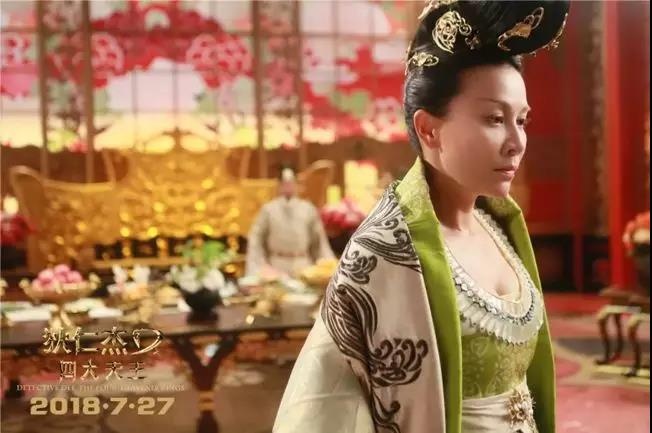
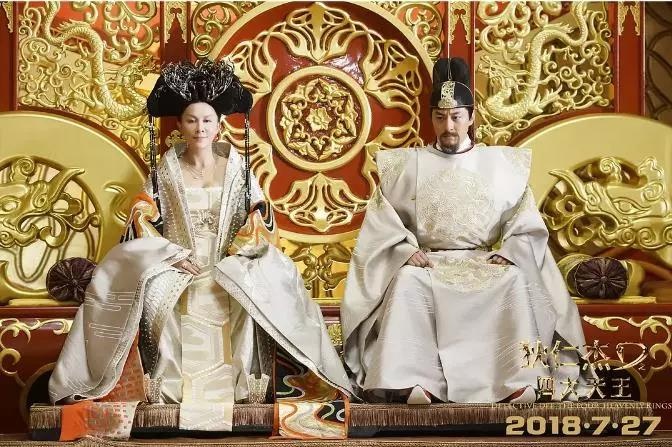
Goblins like Green Snake, Xiaoqian and Spider Spirit always have long, thin eyebrows, and some of them even turn a corner. This time, Wu Zetian, who was controlled by alchemy, also has this kind of eyebrows, which is completely different from the short, round and thick eyebrows in Heaven Empire.

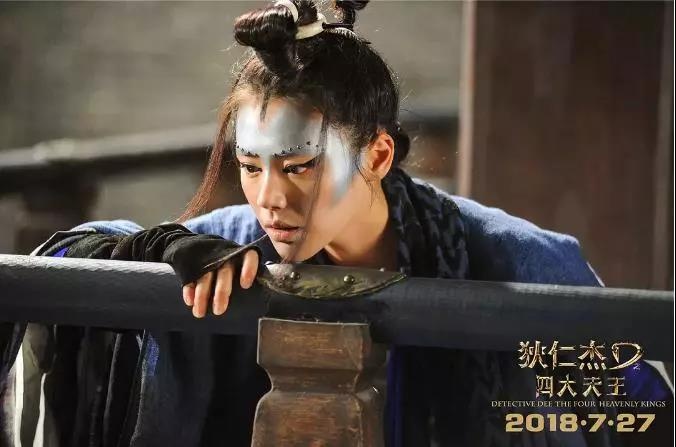
Another passive hand and foot on the eyebrows is Shuiyue, and two eyebrows are set with diamonds, which is very strange.


Buludu and Ma Jinliang in flying swords of dragon gate, the eccentric king in A Demon Journey to the West, and Eight donkey kong & HELIP in Taking the Tiger Mountain Outward; Some are foreign people, some are villains, and their faces are printed with grotesque marks.

This time, almost everyone’s face was tattooed with patterns and patterns.


Sometimes they can distinguish between good and evil, and sometimes they are difficult to distinguish.Tsui Hark just wants some specific characters to have their own unique visual labels.This kind of plastic art, whether it has a clear personality orientation or a vague faction implication, leaps to the screen, which makes his characters more energetic and memorable.


Force

"Power" is the sense of power in Tsui Hark’s movies, and the most basic thing is his action play style.


Hong Kong’s martial arts films are always divided into North and South schools. Roughly speaking, the Southern School is a real Kung Fu school, with Liu Jialiang and Bruce Lee as its representatives.

The northern school pays more attention to the skill of action and has a sense of performance on stage. One kind is the acrobatic Kung Fu comedy of the Seven Little Fooks, and the other is the light, elegant, fierce and chic action drama in the films of directors Hu Jinquan and Chu Yuan.


By the time of Tsui Hark, most of his martial arts scenes were more focused on the northern style.Especially the Ghost Story series, the legendary swordsman series and Xinlongmen Inn with Cheng Xiaodong,It’s more a collision move, and there is no in-depth conversion between attack and defense. It’s more like the step-by-step cooperation of two people dancing, and it’s more inclined to show the artistic conception and atmosphere of the action scene.


He also does the integration of the North and the South.Several Huang Feihong series directed by Yuan Bin are all realistic action styles, while Knife is both violent and powerful and has a formal freehand brushwork, not to mention Seven Swords, which has Liu Jialiang’s real skill and a free and easy sword gesture.


Based on the tradition of the North-South School, Tsui Hark’s new martial arts films have more dynamic martial arts scenes, more skillful movements, and more gorgeous and beautiful impressions.


The series Ghost Story of Ghost Story always escapes from the sky, flying swords of dragon gate is full of flying eaves and climbing walls, and The Legend of Shushan is always flying fairy … The same is true of the Di Renjie series, which is where Tsui Hark transcends the tradition of the North-South School:Pay attention to the use of modern stunts.


Tsui Hark is a "technical madman". As early as Butterfly Change, he replaced lightness skill, sword and magic with springs, hooks and gunpowder, and replaced kung fu with science and technology.


In "The New Swordsman of Shushan", he upgraded the technique of hanging Weiya in Hong Kong’s traditional stunts. In the past, the actor in Hong Kong films could only fly in a straight line, but after his transformation, the actor could fly in curves and turns.


Tsui Hark is an overseas student who went to the United States to study, and has a special liking for Star Wars. When filming "The New Swordsman of Shushan", he invited the industrial light and magic special effects team of "Star Wars" to Hong Kong, and introduced Hollywood special effects technologies such as models and optics into Hong Kong films for the first time.


In 2001, in "Biography of Shushan", Tsui Hark used live-action +CG technology, and the whole film had more than 1,600 special effects shots. He wanted to make a martial arts film into a science fiction film, even though it seems to be "fifty-five-cent special effects" now, but CG technology just arrived in China, and the actors didn’t quite understand what green screen performance was.


Although the 1986 Chivalrous Woman Thirteen Sisters was a three-dimensional martial arts film, Tsui Hark’s flying swords of dragon gate was the first all-3D martial arts film in Chinese history. "Di Renjie’s Dragon King" is a bold breakthrough, IMAX+3D+ underwater shooting; "Outwit Tiger Mountain" is the first 3D red revolutionary movie.


Tsui Hark’s step-by-step efforts in technology have made martial arts films move from the handicraft stage of physical fighting to the modernization of science and technology.Based on repeated experiments and upgrades, we can be so carried away by the false visual spectacle of The Four Kings of Di Renjie, which is close to reality.


After indulging in 3D technology, Tsui Hark always likes to "shoot" the audience’s eyes with various weapons on the screen.Not only that, but every weapon he designed in the film also made the action scenes have stronger screen impact. Just like this Tianwang Temple duel:


Wei Chi’s 360-degree rotating sword and darts, and the double knives like the "Golden Wheel of the Sun and Moon" in The Legend of Shushan, inspire more powerful action scenes in the offensive and defensive rounds.


Look at Dong Fangbubai’s embroidered needle, Yan Chixia’s talisman, Li Yingqi’s heavenly fencing, Lei Yanjian in the sky, Zhao Huaian’s long sword, and Buludu’s Gankun Circle & HELIP; …


These weapons designed by Tsui Hark not only serve the visual effects, but also are the spiritual weapons of the characters.The most obvious one is Seven Swords, in which seven swords represent the different personalities of seven swordsman.

Di Renjie’s Kang Long Mace is even more so.


Kang Long Mace is a majestic artifact presented to the king Ji, which naturally symbolizes Di Renjie’s dignity and rights. But this time, the film emphasizes that it is a defensive weapon with no sharp edge and its function of breaking all attack weapons.

This is in perfect harmony with Di Renjie’s passive and conservative personality and his ability to solve all strange cases and repel the villains.


"Four Heavenly Kings" is a bloody case caused by a "Kang Long Mace". This time, Tsui Hark’s weapon has leapt to become the narrative MacGuffin and the driving force of the story.


[Chaos]

Single shot with an average of several seconds, stormy editing, multi-angle shooting position, push-pull, shake-follow movement mode,Tsui Hark’s previous works generally used such a messy image style to stimulate the audience’s adrenaline.


However, because of 3D, the fast-paced cutting and diverse composition movements are easy to make the audience dizzy and vomit. Therefore, watching "The Dragon King of the Gods" and "The Four Kings", the pace of lens editing is obviously slower than in the past, and the shooting angle and motion mode tend to be simple.

However, the visual chaos in Tsui Hark’s films is still changing.


One is that he will use the deformation on the lens instead.This is most reflected in The Dragon King of the Gods, such as the distorted picture when Di Renjie first came to Luoyang to read Wei Chi’s lip language;


The second is to fill the screen with colorful and grotesque weapons, costumes, art scenes and special effects monsters, which is complicated and creates instant attraction.


Chaos in audio-visual style and chaos in story text are two sides of Tsui Hark’s film.


Most of his film stories took place in the years of rebellion. Xinlongmen Inn was the Ming Dynasty when Dongchang was monopolized, Huang Feihong was the turbulent era in the late Qing Dynasty and the early Ming Dynasty, peking opera blues was the period of the Republic of China when warlords were fighting, and Green Snake and Ghost Story were fictional shemale and shemale worlds … 


It is precisely because of troubled times that justice and evil have the soil of binary confrontation, so that heroes and villains can struggle with each other, stimulate the most direct drama conflict, and finally release the chivalrous feelings of loyalty to the liver and righteousness.


Even though the Di Renjie series is a prosperous Tang Dynasty under the reign of Ersheng Lingchao and Wu Zetian, Tsui Hark has to create a troublesome context in troubled times.


Heaven Empire is Sha Tuo’s personal dissatisfaction with Wu Zetian, The Dragon King of the Gods contains threats from overseas forces in the eastern island countries, and The Four Heavenly Kings is evil influence who seals the inferno’s challenge to the established regime and Wu Zetian’s lust for power.

In the rebellious world, the story lines in Tsui Hark’s works are actually not complicated, but there are many narrative lines, rapid logical changes and fast transition rhythm.Just like "Four Kings", the four sides wrestle and intertwine with each other, and there is often a clue that has not been explained yet, and the next scene will start non-stop.


Not only that, the disorder of genre is also Tsui Hark’s aesthetic label, and it is also a kind of blameless "original sin" brought by Hong Kong film production environment and Hong Kong film style in the last century.In a movie, martial arts, science fiction, reasoning, monsters, politics, love, comedy … He seems to take care of everything, as in Di Renjie.


Compared with the first two films, The Four Heavenly Kings has the most comic elements, and Sha Tuozhong and Shui Yue are almost a pair of funny actors.


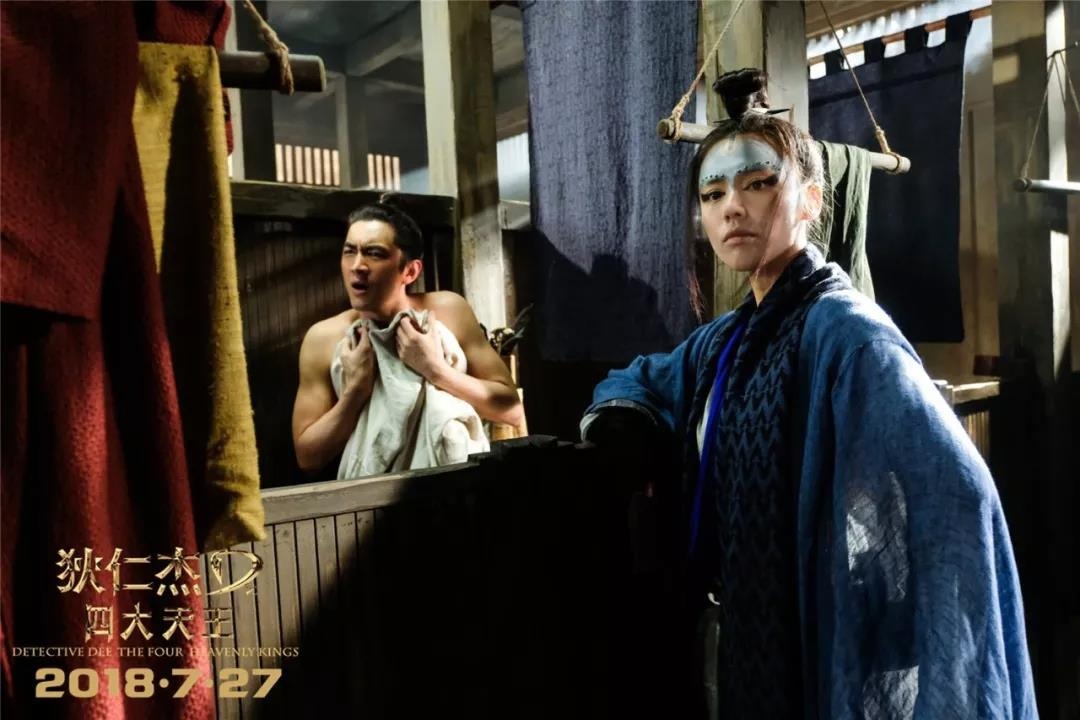
Peeping at the bath, beating up, accidentally hitting the wound and vomiting blood … These are all the nonsense tricks used by Tsui Hark in action comedies in 1980s and 1990s, such as Ghost Horse Wises Many Stars, Best Partner, The Secret Order of Queen 3, happy ever after, etc.


Tsui Hark also has a special preference for "disorder" in character gender.For example, Dong Fangbubai, who is gorgeous and heroic, can’t tell the gender, the tree demon grandmother in Ghost Story, the father-in-law Yu Huatian who is sometimes feminine and domineering, and the real person of Jiugong in Journey to the West & HELIP; … This kind of role is also set in Four Kings — Flying smoke.


Shangguan Jinger in Di Renjie’s Heaven-reaching Empire has a strong personality before Wu Zetian and a tender side before Di Renjie. Behind her, there is a mask of masculinity.


He loves this kind of female royal sister, just like Shui Yue in this film. She is strong and independent, who dares to love and hate, and is the master of her own destiny.


God

"Without words, Machamp confuses God", and the "God" here refers to ghosts and gods.


It is not so much that Tsui Hark loves to show scary or ghostly demons in supernatural films as that Tsui Hark intends to talk about people. Ghost Story is saying: Ghosts also have people’s worldly desires, and ghosts also have the right to love a person;


In "Green Snake", the white snake let the green snake gradually know what human emotion is, and Xiaoqing let Fahai escape into what is the ultimate confusion of the Buddha.


"Four Heavenly Kings" integrates the religious and ethical issues of ghosts and gods and Buddhism, and becomes the most critical part of the film.There are not only one kind of ghosts in movies, but at least three kinds: the illusion of sealing demons, magic and shifting souls, and human demons.


The setting of alchemy makes Tsui Hark’s imaginative vision more logical and acceptable. This setting is undoubtedly a satire on the demons who avenge the inferno and Wu Zetian’s desire for power: the power struggle is an illusion and a bubble.


In the end, Tsui Hark conquered everything with the Buddhism of the master of circle measurement: "Hell is not empty, and I will never become a Buddha", there is an evil ghost in everyone’s heart, and "a hundred years of lust for power … A generation of hatred, why leave future generations. "

Therefore, it seems that Yuance and Di Renjie are maintaining the stability of the established regime. In fact, they are transcending politics, letting bygones be bygones, letting go of hatred and pursuing the present peace. This is also a projection discourse of Tsui Hark and the whole series of Di Renjie on the present reality.


Confucius didn’t talk about "Machamp’s disorderly gods" and wanted to govern the country with benevolence and courtesy, but Tsui Hark described the universal moral concept of peace and justice with the film aesthetic style of "Machamp’s disorderly gods".


When Tsui Hark and Shi Nansheng set up a film studio in the 1980s, they asked the directors: "First, they should have their own style; The second is to have something to say — Even if it is a kung fu film, there must be something to say; Third, we should "follow the mass line", and commercial films must entertain the audience, so that they can be vented and feel better.Movies are mass media. I hope we can breathe with the audience … … The masses watch movies with their feelings, not with their heads."


Even though filming in the north, Tsui Hark has always insisted on making this kind of popular film, which requires direct and enjoyable sensory stimulation, instant sensationalism and pleasant pleasure.


If in "The Four Heavenly Kings of Di Renjie", you have to struggle with why the ghost night didn’t kill Er Sheng directly in the hall, why Wu Zetian, who was controlled by magic, wasn’t instructed to kill the emperor, or how Di Renjie learned magic … You will lose all the fun of audio-visual perception.


Although sometimes the plot is scattered, sometimes it becomes hilarious when it is serious, there is a bad taste of B-class movies in A-class productions …These are the labels of Tsui Hark’s existence as a film author, and they are also the game spirit of "going too far and being crazy" in the golden age of Hong Kong movies!


11 "post-90 s" railway youths bravely rescued those who fell into the river in a rainstorm night.

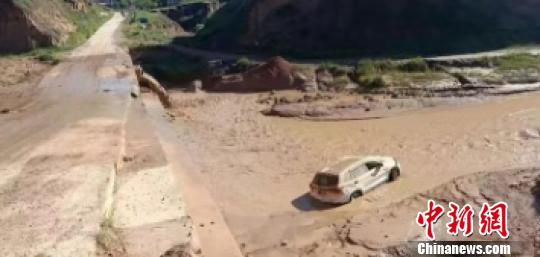
Car crashed into the river in stormy night: 11 young people from the "post-90s" railway bravely rescued the drowning people.

  Zhongxin. com, Lanzhou, August 2 (Qiangke, Zhao Bingpeng) The lights of the engineering vehicle pierced the night and shone on the turbid and rushing river. "Come on, work harder … …” Shouts are coming and going, especially in the silent and dark night. At this moment, a battle against the dark night and the flood is going on to save the drowning people bravely. It seems that the 11 "post-90 s" railway youths who have been working hard all day are full of inexhaustible energy.

  On July 31, the workers in Yangjiachuan line maintenance area of Longnan Works Section of China Railway Lanzhou Bureau Group Co., Ltd. did not expect that they would save a drowning man on their way off work and successfully save a precious life.

  That night, after completing a day’s line maintenance task at the entrance of Heishan Tunnel in lanzhou-chongqing railway, these 11 "post-90s" youths were ready to hurry back to the work area, but at this time it suddenly rained heavily. After the rainfall became smaller, yan wang, the squad leader of the work area, found that the shortcut back to the work area was muddy and difficult. To be on the safe side, he decided to lead everyone back around an easy long way. It was such a coincidence and chance that saved a fresh life.

  They arrived at the Qin Qihe Bridge about 2 kilometers away from the work area by bus. The driver Pei Bailing saw the water flooding the highway and told everyone not to risk crossing the river. After getting off the bus, they turned on the faint mobile phone light to observe the road conditions, only to find that a car was suspected to be spinning in the river. Suddenly, the car turned on the emergency light and wiper, and a man’s cry for help came from the car, "Help … …”

  "Come on, hurry to save people." Eleven workers shouted in unison. In order to see the situation clearly, yan wang asked the driver to quickly aim the headlights at the drowning vehicles. The river was rushing, and the rolling river was carrying yellow mud and the cars kept spinning. After experiencing this scene for the first time, this group of "post-90 s" immediately began to panic.

  After a short discussion, everyone was divided into three ways. One man called the police, and the other two men ran to the nearby villagers’ house to borrow ropes. Looking at the tottering cars in the water, looking at the drowning people sticking out of the window with mud all over their faces, they are afraid that the muddy water will wash people and cars away together in the next moment. Yan wang said, watching him climb, as if he could hear his own thumping heartbeat. After everyone’s encouragement, the drowning man finally struggled to climb on the roof.

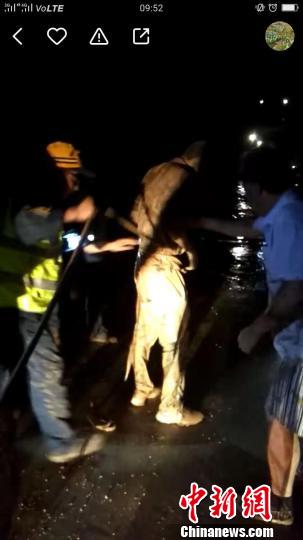
  They immediately threw the rope to the drowning driver with all their strength, once or twice, until the seventh time, the drowning man finally picked up the rope and prompted the drowning man to tie the rope to his waist. Everyone yanked and yanked it, and soon pulled the drowning man to the river bank. Upon inquiry, he was alone in the car, and now everyone’s hanging hearts finally fell to the ground.

  After a short period of happiness, they took the rescued person to a nearby gas station, washed off the dirt, put on their railway work clothes, and turned on the warm air in the engineering car to warm him up.

  They are young "post-90 s" railway linemen, rooted in remote mountainous areas, leaving early and returning late, taking on heavy line maintenance work and silently guarding the safety and smoothness of more than 40 kilometers of Lanzhou-Chongqing line.