What is the integrity and authenticity of the Grand Canal in China?

  [Editor’s note]

  In order to thoroughly implement the spirit of the important instructions of the Supreme Leader General Secretary on the protection of the Grand Canal, our network actively participated in the network theme activity of "Questing for the Grand Canal" organized by the Network Communication Bureau of the Central Network Information Office. With culture as the core, we plan to launch new media products with diverse contents and rich forms, such as "Cloud Appreciating the Grand Canal", "Canal Questions", "Grand Canal March" and "Above the River", and publicize the achievements of canal ecological protection, cultural heritage protection and high-quality economic development in depth, so as to show the new features of the Grand Canal in the new era by comparing the past with the present.

  Question 41: What is the integrity and authenticity of the Grand Canal in China?

  As a series of heritages, the Grand Canal includes all the necessary factors to show its outstanding universal value, and completely shows the development and evolution process of the canal heritage, with a high degree of integrity in the composition of the heritage.The application for heritage vividly depicts the pattern, route and operation mode of the grain transportation system during the two major breakthrough periods of the Grand Canal in China, and jointly outlines the clear and complete evolution process of the Grand Canal in China since the Spring and Autumn Period. It embodies the creativity of traditional canal engineering and the typicality of technical system; It also fully confirms the use and function of the Grand Canal in China in the history recorded in relevant historical materials, and the various social practical values of the Grand Canal in China at present, and shows the great influence of the Grand Canal on the areas along the route in terms of use, landscape and culture.

  The Grand Canal of China meets the requirements of the Operational Guidelines for the Implementation of the World Heritage Convention on the integrity of the heritage.The declared Grand Canal heritage shows the complete historical and spatial evolution pattern of the Grand Canal from the Spring and Autumn Period to the Qing Dynasty. The ten river sections are all representative paragraphs and nodes distributed in the heritage area, with complete and rich heritage types and large enough heritage area to meet the requirements of integrity and no defects.The various components of the Grand Canal heritage have substantial functional connections, making unique and indispensable contributions to the outstanding universal value of the Grand Canal heritage as a whole. Therefore, the Grand Canal heritage meets the integrity requirements.

  Generally speaking, the historical pattern of the existing Grand Canal heritage from the Spring and Autumn Period to the Qing Dynasty is basically complete.The first-line rivers and sites of the Beijing-Hangzhou Canal from Beijing to Hangzhou are basically complete. In the south of Jining, the river is continuous, and some new channels coexist with the old ones. There are still continuous rivers in Beijing, Tianjin and Hebei, which play an important role in water conservancy. The Grand Canal in Shandong Province is discontinuous. According to the existing discontinuous rivers and the river remains confirmed by investigation, the main routes and complete evolution history of the Grand Canal in Yuan, Ming and Qing Dynasties can still be determined. The first line of Tongji Canal from Luoyang to Huai ‘an: about 1/3 of the river channel exists, and the sites are dotted. Among them, the existing continuous rivers and sites in Huai ‘an, east of Shangqiu, Henan Province, have been confirmed by archaeological exploration; Luoyang passes through Zhengzhou, Kaifeng and Shangqiu. Due to the historical impact of the Yellow River’s swing and erosion, it is difficult to completely confirm the river ruins. However, the general route of Tongji Canal can still be clearly defined through the partially preserved revetments, bridges and ancient river ruins. The Weihe River system from Luoyang to Linqing evolved from Baigou, Yongji Canal and Yuhe River in history, and it has been continuously used to this day. From Hangzhou to Ningbo, Xixing Canal, Shanyin Old Waterway, Yuyu Canal, Cijiang River, Shazigang and other rivers, together with some sections of Cao ‘e River and Yaojiang River, constitute the main line of the East Zhejiang Canal in history.

  The Grand Canal has strong authenticity.The elements bearing the outstanding universal value of the heritage have good authenticity in shape and design, materials and entities, location and layout, and all the heritage elements that still have practical functions have the authenticity of use and function. As an organic whole, the Grand Canal also has good authenticity in spirit and feeling.

  At present, the channel in use of the Grand Canal heritage still has vital shipping and water conservancy functions, which reflects the characteristics of the Grand Canal as a living heritage.Due to historical and natural reasons, the remains of rivers, water conservancy facilities and management facilities have real location, environment and materials, which reflect the design, function and technology of the Grand Canal. Urban historical water system, historical blocks and so on have real position, function and pattern, and truly bear the sense of belonging brought by the Grand Canal as the spiritual home of people along the route. The Grand Canal heritage meets the requirements of authenticity.

  The heritage of the Grand Canal is well preserved. The middle reach, the Huaiyang Canal, the Jiangnan Canal and the East Zhejiang Canal are still navigable, while other reaches mainly play the functions of flood discharge, water conveyance and irrigation. Some rivers in Huitong reach, Weihe (Yongji Canal) and Tongji Canal (Bianhe River) are in ruins. All heritage sites, including hydraulic facilities, supporting management facilities and related historical and cultural relics, have been well protected.

  Jiangnan Canal Jiaxing-Hangzhou Section-Fengshan Water Gate

  Question 42: What is the boundary of the heritage area of the Grand Canal in China?

  The demarcation principle of China’s Grand Canal heritage area refers to the overall planning of China’s Grand Canal protection and the planning of provinces and cities. According to the provisions of the scope of protection of cultural relics protection units and the scope of world heritage areas, the boundary of the heritage area is delineated according to the characteristics of the elements contained in each component and the relationship between the elements. The basic principles of demarcation are as follows:

  (1) Rivers with dikes: In principle, they are demarcated according to the toe line of the outer dike, and the heritage area is a banded area including riverbed, floodplain, dike top and dike slopes on both sides.

  (2) Rivers and lakes without dikes: In principle, they are demarcated according to the extension of the coastline of rivers and lakes by 5 meters, and the heritage area is the area containing rivers and lakes and revetments.

  (3) Hydraulic facilities: they are included in the heritage area of the river where they are located, and are not demarcated separately. If necessary, the river boundary is partially extended to include the whole facility and its lower foundation.

  (4) Related ancient buildings: demarcated according to the external boundaries of the buildings (such as courtyard walls and streets).

  (5) Historical and cultural blocks: according to the regional boundaries with good features and key protection determined in urban planning.

  (6) Sites: In principle, the boundaries of sites (such as river banks and courtyard walls) confirmed by archaeological exploration or excavation are demarcated. River sites include river beds and river banks (if any), warehouse sites include the whole structures, management facilities sites and related ancient buildings sites include the whole buildings, and hydraulic facilities sites include the excavated structures and the distribution range of their underground foundations. [Text of China’s Grand Canal Application for Heritage] chinese heritage Research Institute January 2013] After this division, the area of China’s Grand Canal application for heritage is 20,819 hectares.

China Grand Canal Heritage Area Map

  Question 43: What are the requirements for the protection and management of China’s Grand Canal Heritage Area?

  The protection and management of China’s Grand Canal Heritage Area has the following requirements:

  (1) In the heritage area of the Grand Canal, except for cultural relics protection, flood control and waterlogging elimination, construction and maintenance of ship locks and navigation channels, protection and maintenance of hydraulic facilities, water conveyance river engineering, port renovation and construction, bridge crossing over the river and other projects, no other construction projects or operations such as blasting, drilling and excavation are allowed.

  (2) No facilities that pollute the Grand Canal heritage and its environment shall be built in the heritage area of the Grand Canal, and the existing facilities that pollute the Grand Canal heritage and its environment shall be treated within a time limit.

  (3) Activities that may affect the safety of the heritage and its environment shall not be carried out in the heritage area of the Grand Canal, and the existing activities that endanger the safety of the heritage of the Grand Canal and destroy the heritage environment shall be investigated and dealt with in a timely manner.

  (4) In the heritage area of the Grand Canal, no historical relics or other cultural relics of the Canal shall be damaged or removed, except for the special circumstances of flood control dispatching, emergency water transfer and engineering emergency rescue.

Boundary markers of China Grand Canal Heritage Area

  Question 44: How is the buffer zone of the Grand Canal in China divided?

  The buffer zone of the Grand Canal in China, in accordance with the provisions of the construction control zone of cultural relics protection units and the scope of the World Heritage buffer zone, aims at controlling the surrounding construction pressure and protecting the landscape harmony between the heritage area and the external environment, and comprehensively considers the background environmental factors related to the heritage elements outside the heritage area, and delimits the buffer zone outside each heritage area. The boundary of the buffer zone is defined according to the spatial form of the heritage areas protected by it, combined with the land use and construction status quo, and the basic principles of demarcation are as follows:

  (1) Buffer zone around the banded heritage area: demarcated by extending the boundary of the heritage area by a certain distance to form a corridor-like landscape protection zone along the river, so as to prevent new buildings from oppressing the river and maintain the ecological safety of the river and the harmonious waterfront landscape. In principle, it is located in a densely built-up area (the built-up area of a city or town) and extends 30 meters; Located in the suburbs and rural areas, the expansion is 80 meters; It is located in farmland and a large area of water environment and extends 300 meters. At the same time, if there are more important roads, railways, rivers and heritage areas with appropriate distances, which can be used as boundaries for long-term control and construction, roads, rivers and railways will be used as boundaries.

  (2) Buffer area around the dotted and flaky heritage area (buildings, structures, large-scale hydraulic facilities and their sites): draw boundaries according to the features or topography around the heritage area, such as roads, ditches, ridgelines, bridges, etc., and enclose the whole heritage area to form a heritage landscape of a certain scale, so as to protect the sense of space inside the heritage area from interference and maintain the atmosphere of tradition or sites. After this division, the buffer area of the Grand Canal in China is 52,747 hectares.

  China Grand Canal Buffer Map

  Question 45: What are the requirements for the protection and management of China’s Grand Canal buffer zone?

  Provisions on the administration of the buffer zone of the Grand Canal in China:

  (1) No facilities that pollute the Grand Canal heritage and its environment shall be built in the buffer zone of the Grand Canal, and the existing facilities that pollute the Grand Canal heritage and its environment shall be treated within a time limit.

  (2) Activities that may affect the safety of the heritage and its environment shall not be carried out in the buffer zone of the Grand Canal, and the existing activities that endanger the safety of the heritage of the Grand Canal and destroy the heritage environment shall be investigated and dealt with in a timely manner.

  (3) To carry out a construction project, the construction unit shall, in accordance with the provisions of Articles 29 to 32 of the Law of People’s Republic of China (PRC) on the Protection of Cultural Relics, report to the cultural relics administrative department of the people’s government of the province or municipality directly under the Central Government in advance to organize the units engaged in archaeological excavation to conduct archaeological investigation and exploration in places where cultural relics may be buried within the scope of the project. If cultural relics are found in archaeological investigation and exploration, the cultural relics administrative department of the people’s government of the province or municipality directly under the Central Government shall jointly agree on protection measures with the construction unit according to the requirements of cultural relics protection; In case of important discoveries, the administrative departments of cultural relics of the people’s governments of provinces and municipalities directly under the Central Government shall promptly report to the administrative departments of cultural relics of the State Council for handling.

  (4) The construction land in the buffer zone of the Grand Canal must be incorporated into the local land use master plan and annual plan.

  (5) No construction activities damaging the heritage, historical environment and space landscape of the Grand Canal shall be carried out in the buffer zone of the Grand Canal.

  (6) In the buffer zone of the Grand Canal, no buildings or structures with styles, volumes, colors and other incongruities with the Grand Canal heritage shall be built.

  Boundary markers in buffer zone of China Grand Canal

  Question 46: What development pressures does China’s Grand Canal heritage face?

  With the rapid economic development in China in recent years, the cities along the route are experiencing rapid urbanization and modernization, which makes the Grand Canal of China face certain pressure of urban and rural construction and water conservancy and shipping construction.

  One isUrban and rural construction pressureSince the Grand Canal has been a prosperous area of urban development since ancient times, a certain number of buildings have been built along the Canal since the reform and opening up, in the process of rapid economic development and urbanization in China. With the increase in the number of motor vehicles and the need for convenient transportation between cities, some roads and railway bridges across the canal have also been built along the canal. In view of these situations, since 2008, the people’s governments at the provincial and municipal levels along the Grand Canal have organized and published all kinds of conservation plans for the Grand Canal heritage, in which the scope of protection and construction control zones have been delineated, and strict construction approval procedures have been stipulated. The government of the heritage site strictly supervises the construction of the heritage area and buffer zone according to the plan, effectively controlling the building density, height and the construction of traffic facilities.

  The second isPressure of water conservancy and shipping constructionDue to the continuation of the water conservancy and shipping functions of the Grand Canal in China, more modern water conservancy and shipping facilities have been built one after another to ensure their use functions. These non-traditional facilities have affected the landscape of the heritage to a certain extent, and the local landscape is not harmonious. In order to cope with this pressure, the relevant construction departments have reached a consensus with local governments that in accordance with the Grand Canal Heritage Protection and Management Master Plan (2012-2030), priority will be given to the use of traditional technologies, traditional materials, traditional structures and traditional crafts adopted in various sections of the Grand Canal heritage history in the future, and the appearance, design, materials and entities, uses and functions of water conservancy and shipping facilities will be identified, respected and preserved.

  Dense pole lines in the heritage area

  Question 47: What is the environmental pressure on the Grand Canal in China? What are the countermeasures?

  The ecological environment and environmental quality within the scope of China’s grand canal declaration have been protected in accordance with national standards for a long time, and the overall situation is good.Environmental pressure mainly comes from the changes of water environmental quality, air quality and climate.. According to its functions such as water conveyance and flood discharge, the quality of water environment basically meets the Ⅲ ~ ⅴ standards stipulated in the National Quality Standard for Surface Water Environment (GB3838-2002). The air quality in rural areas and built-up areas reached the first-class standard and the second-class standard stipulated in the Environmental Air Quality Standard (GB3095-1996) respectively.The frequent occurrence of extreme weather, especially rainstorm and drought, caused by climate change has aggravated the pressure of flood control and drainage in the Grand Canal in China, and has had a certain impact on the site.

  China’s Grand Canal heritage protection and management institutions shall, in accordance with relevant protection laws and regulations and the Grand Canal Heritage Protection and Management Master Plan (2012— 2030) implements environmental protection in the chapter of heritage environmental protection planning.It mainly includes: regulating water system, allocating river basin and regional water resources; Protect and repair ecological banks; Improve the environment by wetland construction, water exchange or site protection; Restrict land management and construction within the scope of protection zoning; Strictly control pollutants discharged into water bodies; Strengthen the prevention and control of industrial pollution along the canal; Build urban and rural sewage treatment facilities and centralized garbage collection and treatment facilities, and establish a long-term cleaning system; Scientific monitoring, etc.Flood control planning and comprehensive planning have also been formulated in each basin to cope with the pressure of flood control and drainage brought about by climate change.

  Wusuo canal

  Question 48: What natural disasters are facing China’s Grand Canal? What countermeasures have been taken?

  The common risks faced by the Grand Canal in China are mainly floods.

  In order to cope with the flood disaster, the Ministry of Water Resources of People’s Republic of China (PRC) and the people’s governments of relevant heritage sites have formulated flood control plans at different levels according to the Flood Control Law of People’s Republic of China (PRC) (1998), and detailed flood control schemes have been formulated in the plans. China’s Grand Canal has successively completed flood control projects in its comprehensive management projects since the 1950s.People’s governments at all levels also strictly follow their respective flood control plans to prevent and control flood disasters at three levels: basin, region and city.The concrete measures are mainly embankment treatment and river regulation: the embankment line and the transverse and longitudinal sections of the embankment are designed according to the flood control scheme to strengthen the flood control embankment; In accordance with the requirements of stabilizing the river to make the best use of the flood and prevent ice, bank protection, branch blocking, water diversion, dredging, river widening project and river bend cutting project are implemented for river regulation. In addition to engineering measures, some non-engineering measures have been taken, such as establishing flood forecasting and warning system, strengthening flood area management, formulating flood insurance and emergency measures for exceeding the standard flood. The Grand Canal in China has established an uninterrupted river monitoring, communication and early warning system, and formulated a flood emergency plan. The emergency plan deals with the flood disaster by improving the level of flood forecasting and early warning, increasing flood discharge, and moderately overstocking inland rivers and lakes in the basin. Through the above measures, the effective prevention and control of flood disaster risk in the Grand Canal has been realized.

  In addition, in view of the fire risk of the buildings in the application elements, in addition to ensuring fire exits, all heritage sites have been equipped with fire prevention equipment, designated responsible persons, and formulated fire safety management regulations and emergency plans. Through these measures, the requirements of minimizing fire risk and reducing disaster losses can be achieved.

  The only preserved stone gate in Huai ‘an section of Huaiyang Canal: Qingjiang Gate.

  Question 49: What laws and regulations protect the Grand Canal in China?

  As a huge heritage in use, the outstanding universal value, authenticity and integrity of China’s Grand Canal are related to multiple attributes, which makes China’s Grand Canal subject to multiple and three-dimensional legal protection.First of all, we must comply with international conventions such as the Convention for the Protection of the World Cultural and Natural Heritage and the Operational Guidelines for the Implementation of the Convention for the Protection of the World Cultural and Natural Heritage, as well as the requirements of national laws and regulations such as the Law on the Protection of Cultural Relics in People’s Republic of China (PRC), the Regulations on the Implementation of the Law on the Protection of Cultural Relics in People’s Republic of China (PRC), the Administrative Measures for the Protection of World Cultural Heritage of the Ministry of Culture, and the Administrative Measures for the Monitoring and Inspection of China World Cultural Heritage of National Cultural Heritage Administration.. Secondly, the water conservancy management department is responsible for the management of the rivers and embankments of the Grand Canal in China. The Grand Canal in China is also protected by the Regulations on the Management of Rivers in People’s Republic of China (PRC), the regulations on the protection and management of rivers and lakes in provinces and cities along the route, the measures for the implementation of river management and the regulations on the management of water conservancy projects. The heritage elements declared by the Grand Canal in China include five historical and cultural blocks and one historical and cultural town in the national historical and cultural cities, and are also protected by the Regulations on the Protection of Famous Historical and Cultural Cities, Towns and Villages. The heritage elements of the grand canal heritage declaration include a national scenic spot — — Jiangsu Shugang Slender West Lake Scenic Area is protected by the Regulations on Scenic Areas promulgated by the State Council. Nansihu Provincial Nature Reserve is also protected by People’s Republic of China (PRC) Environmental Protection Law and other natural resources protection laws and regulations. The Grand Canal is also protected by various special laws and regulations. For example, the departmental regulation "Measures for the Protection and Management of the Grand Canal Heritage" adopted by the Ministry of Culture in 2012, the Joint Agreement on the Protection of the Grand Canal Heritage jointly formulated and signed by the cities along the Grand Canal in September 2012, and the regional "Measures for the Protection of the Grand Canal Heritage" formulated by the provincial and municipal governments along the route.

  In addition to the law,China’s Grand Canal has a complete protection planning system.Including: China Grand Canal heritage management planning, national protection planning, provincial protection planning, prefecture-level protection planning, important point protection planning and various detailed planning. All stages and levels of planning are connected with each other, and each has its own emphasis. Together, an overall policy of comprehensive protection of the Grand Canal heritage has been constructed, and a comprehensive and instructive protection planning system has been formed. 

  Cover of Protection Planning for Yangzhou Section of Grand Canal

  Question 50: What are the management institutions of the Grand Canal in China?

  As a linear living heritage, the Grand Canal in China has the characteristics of multi-level and multi-sector management. The declared heritage areas and buffer zones shall be managed by local people’s governments at all levels and river basin management agencies according to their jurisdiction and in accordance with laws and administrative regulations. The competent department of cultural relics in the State Council is in charge of the overall protection of the Grand Canal heritage, and cooperates with the competent departments of land, environmental protection, transportation and water conservancy in the State Council to carry out relevant work within their respective responsibilities according to law.The people’s governments of cities along the Grand Canal shall be responsible for the protection of the Grand Canal heritage within their respective administrative areas, and establish corresponding coordination agencies. The departments in charge of cultural relics, land, environmental protection, transportation, water conservancy, construction, planning, tourism and other cities are responsible for the protection of the Grand Canal heritage within their respective functions and duties.

  The heritage protection of the Grand Canal in China is a cross-industry and multi-field work, involving related institutions and many stakeholders in the fields of cultural relics, transportation, water conservancy, environmental protection, land and construction. To this end, governments at all levels in China have established an effective consultation mechanism to coordinate the major issues of many industries involved in the heritage protection of the Grand Canal in China, clarify the division of responsibilities of relevant departments and regions in the heritage protection of the Grand Canal, and strengthen exchanges and cooperation between different fields. At the national level, an inter-ministerial consultation group for the protection and application of the Grand Canal has been established, and at the local level, a corresponding provincial (municipality directly under the Central Government) and municipal leading group for the protection and application of the Grand Canal (consultation group) has been established. Regular meetings have been held to consider major issues such as draft regulations, planning and key work arrangements for the protection of the Grand Canal heritage, so that these tasks can be coordinated in a timely and effective manner.

  The people’s governments of cities along the Grand Canal in China have established the Alliance of Cities for the Protection and Heritage Application of the Grand Canal. The city alliance jointly formulated and signed the Joint Agreement on the Protection of the Grand Canal Heritage, which clearly defined the cooperation mechanism of the city alliance and the relevant requirements for the protection of the Grand Canal heritage. If the heritage area crosses administrative boundaries, the local people’s governments at or above the county level adjacent to it will study and solve the cooperation and coordination issues in the protection of the Grand Canal in China through joint meetings of relevant departments and city alliance meetings.

  After the successful application of the Grand Canal, on September 26th, 2014, 35 cities along the Grand Canal held a meeting in Yangzhou, renaming the Grand Canal Protection and Heritage Application Cities Alliance as the Grand Canal Heritage Protection and Management Cities Alliance. At the same time, the Grand Canal Joint Declaration World Heritage Office was renamed as the Grand Canal Heritage Protection and Management Office, which was unveiled by National Cultural Heritage Administration.

  National Cultural Heritage Administration leaders unveiled the Grand Canal Protection Office.

  Author Jiang Shili:

  Deputy Director of Yangzhou Press and Publication Bureau.During the application for the World Heritage of the Grand Canal in China, he served as the full-time director of the World Cultural Heritage Office of the Grand Canal and the deputy director of the World Heritage Office of Yangzhou, the leading city, and experienced the process of applying for the World Heritage of the Grand Canal.

  (Jiangsu Radio and Television General Station "My Su Net Special",Refuse to reprint, reserve the right to pursue legal responsibility. )

"Painting the Wall" draws a magical wonderland, Deng Chao sticks to love in the emotional vortex


Deng Chao stills

    Directed by Chen Jiashang, the magical love masterpiece "Painting Wall" co-starred by Deng Chao, Sun Li and Yan Ni will be released nationwide on September 29. After the film has been exposed in trailers and produced specials, the audience can see the beautiful creation process of "Painting Wall" in advance. Yesterday, an advanced screening and a meeting of the main creators were held in Changsha. The audience responded strongly after the screening and was moved by the self-denying love in the film. The question of how to stick to love has also triggered a big discussion.

    After entering the fairyland, Zhu Xiaolian, a scholar played by Deng Chao in "Painting Wall", experiences a life-and-death love amidst beautiful fairies and intoxicating beauty. And he leads the book boy and samurai "Yong" to enter the fairy pass, and has a life-and-death battle with "Aunt" Yan Ni, and the love that "looks like a lifetime" played by Sun Li as Peony is even more touching. In the film, Deng Chao challenges a variety of complex emotions and interprets a different kind of scholar.

Deng Chao "was" emotional whirlpool

    In "Painting on the Wall," director Chen Jiashang tells the audience "what love is all about. Love is not only great, but it also hurts, and there will be a price. Even existence does not happen." Zhu Xiaolian, played by Deng Chao, thinks that love at first sight and a marriage after entering Wonderland are love, but when he meets Peony, played by Sun Li, it is difficult for the three women to choose between them. Like modern love relationships, the emotions between Zhu Xiaolian and the three women represent three kinds of love. Through Zhu Xiaolian, Chen Jiashang highlights the three bifurcation paths of men’s feelings, which can exist alone or at the same time. "Love is existence." The opposite scenes between Deng Chao and the three women in the film are quite different levels of emotion. Unlike the "infatuation" of the previous characters, Zhu Xiaolian seems to be trapped and confused in the emotional whirlpool, but after truly recognizing his own heart, he has his own perseverance. "The characters played before may be more specific in love, and there are few like Zhu Xiaolian in" Painting Wall ", because he entered a temptation full of different reality. This scholar is very unusual. In the wonderland, his emotions gradually precipitated, and after being disturbed by his aunt, he was still very brave. Deng Chao interpreted Zhu Xiaolian’s love in this way. Speaking of Zhu Xiaolian’s persistence in love in the film, Deng Chao said that" if it is love, I will not let go. "

Deng Chao: From a martial artist in ancient costumes to a weak scholar

    In 2010, a film that made Deng Chao’s attention and influence on the big screen was highly praised, and his portrayal of white-haired detective Pei Donglai was even called another classic character of Xu Ke. Deng Chao, who did not like to repeat, took the lead this time and starred in "Painting the Wall" scholar, playing a role that had never been involved. A reporter once asked whether the scholar was soft and weak in the impression of many people, and whether most of Zhu Xiaolian in "Painting the Wall" also had such characteristics. Deng Chao said, "Scholar is just a title for Zhu Xiaolian. Although he also went to Beijing to take the exam, he may also have a weak part, but what I created is not this title, but the character of Zhu Xiaolian. The world he entered changed him differently, and his experiences and emotions made him a unique scholar. "

Microsoft and OpenAI prevent hackers in Russia and North Korea from using AI big model | Titanium Media AGI

(Source: The Verge)

With the rapid development of AI technology, hackers have begun to use large models to upgrade network attack technology.

Titanium media app February 15 news,Microsoft, an American technology giant, published a research article entitled "Staying ahead of threat actors in the age of AI" in official website last night.

Microsoft claims that their joint research with the OpenAI team found that hacker organizations in Russia, North Korea, Iran and other countries are using generative AI tools such as ChatGPT to conduct target research, improve scripts and help build social engineering skills, thus improving and perfecting existing cyber attack technologies.

"Cybercrime groups, national threat actors and other opponents are exploring and testing different AI technologies, trying to understand their potential value to operations and security controls that may need to be circumvented." Microsoft said in the article.

Microsoft emphasizes that the advancement of AI technology has increased the demand for network security and security measures. Microsoft should continue to cooperate with OpenAI, constantly improve its defense measures, identify, detect and prevent potential malicious use or abuse by hackers, and protect customers’ data security.

It is reported that,Since Microsoft invested billions of dollars in OpenAI in 2019, the two companies began to work closely together. Especially after the release of ChatGPT, Microsoft has become an important beneficiary of the new wave of AI. Its market value has surpassed that of Apple, reaching $3.01 trillion, making it the world’s most valuable technology company.

Microsoft revealed that the goal of its cooperation with OpenAI for this research is to ensure the safe and responsible use of AI technologies such as ChatGPT and adhere to the highest standards of ethical application to protect users from potential abuse.

As a part of the research, in 2023, Microsoft developed a product called "Microsoft Threat Intelligence", which tracked more than 300 cyber attackers, covering actors in 160 countries and 50 ransomware organizations, and collected more than 750 billion signals per second, which were synthesized by using complex data analysis and AI algorithm to understand and prevent cyber threats and criminal activities.

At the same time, by the end of 2023, Microsoft has recruited more than 10,000 security and threat intelligence experts around the world, including engineers, researchers, data scientists, network security experts, threat Seeker, analysts, investigators and frontline responders, and more than 15,000 partners have provided professional solutions. In the past 2023, Microsoft Threat Intelligence blocked an average of 4,000 hacker intrusion threats with identity verification every second, and 135 million managed devices provided security method service feedback.

In the research of Microsoft and OpenAI, it is mainly mentioned that the following four hacker organizations use AI model technology to improve and upgrade network attacks, which may pose a certain threat to the country.

  • Forest Blizzard (STRONTIUM), a Russian military intelligence technology (organization) connected with GRU 26165, threatens many fields such as national defense, transportation/logistics, government, energy, non-governmental organizations (NGOs) and information technology. It is found that they use the Large Model (LLMs) to "understand the satellite communication protocol, radar imaging technology and specific technical parameters".
  • Emerald Sleet (THALLIUM), a hacking technique (group) from North Korea, remained highly active in 2023. They use the loopholes in the research report published by the big model to help and draft the content of phishing activities, including impersonating well-known academic institutions and non-governmental organizations to lure victims to reply to expert opinions and comments on North Korea’s foreign policy.
  • Crimson Sandstorm (CURIUM) is a hacker organization from Iran. Since 2017, it has been active in many fields, including national defense, shipping, transportation, health care and technology. Microsoft said that they used a big model to generate phishing emails and even code to evade anti-virus software detection.
  • Charcoal Typhoon (CHROMIUM), whose organization also uses models for research, scripting, translation and improvement of existing tools.

Specific to the case, Microsoft revealed that some hackers use "voice imitation" and other methods to make AI synthesize speech. A three-second voice sample can train a model that sounds like a person, thus attacking and maliciously defrauding users of important private information. "Even your voice mail greeting can be used to get enough samples."

In fact, with the emergence of multi-modal AI model tools such as ChatGPT, it has not only helped more people to improve their productivity, but also been created by some lawless elements to crack malicious emails and use AI technology to carry out cyber attacks. Officials of the National Security Agency have warned that hackers are using AI to make their phishing emails look more credible.

However, OpenAI also stressed that it found that the GPT model only provided "limited incremental" functions for hacker organizations. Microsoft stressed that they have not detected any "major attacks" using the big model. At present, Microsoft and OpenAI have closed or frozen the accounts and assets of related hacker groups.

In fact, the recent fraud cases about AI technology are on the rise.

At the beginning of February this year, the Hong Kong police revealed that the financial staff of a local company had been defrauded by DeepFake (deep forgery technology). The other party claimed to conduct confidential transactions, invited to participate in a multi-person video conference, and finally accepted the instructions of the fake Chief Financial Officer (CFO). The parties remitted 200 million Hong Kong dollars in 15 times and transferred them to five local accounts. The parties asked the head office for verification five days later, only to find that they were cheated and reported the case to the police.

According to incomplete statistics, from 2020 to 2022, the number of domestic AI fraud cases totaled 5, and the number of AI fraud cases increased to 16 in 2023; At the same time, in terms of case amount, the amount involved in AI fraud will reach 4.3 million yuan in 2023 from at least 3,000 yuan in 2020. The fraud case disclosed by the Hong Kong police this time has raised the amount involved to 200 million Hong Kong dollars (about 182 million yuan).

So, how do we prevent and solve the problem of AI fraud?

Microsoft mainly summarizes two aspects: First, the company uses AI to deal with AI attacks, such as making the technology of protective wall (cyber attack) more complicated and using AI to strengthen information protection, detection and feedback; The second is to detect and help users identify vulnerabilities through AI-based network security tools such as "Microsoft Security Copilot", and finally stop hacker attacks by software.

A number of domestic security experts have summarized four methods: first, users can consciously guide each other to do some actions during video, such as shaking their heads or opening their mouths greatly, so as to find the flaws on the edge of each other’s face or teeth; At the same time, you can ask a few private information that only the two of you know to verify each other’s identity; Thirdly, try to avoid a large number of photos and videos of yourself or your family on the public platform to provide convenience for criminals; Finally, update and install security software in time to further strengthen the network security control at the source.

"We think this is an important study to expose hacker organizations trying to make early and gradual actions through AI and share with customers how we can stop and counter their cyber attacks." Microsoft said that in the future, it will further enhance the technical capabilities of the AI ​ ​ big model, thus helping them to use the model to collect information about technologies and potential vulnerabilities and find ways to avoid cyber attacks.

(This article is the first titanium media App, author | Lin Zhijia)

More exciting content, pay attention to titanium media micro-signal (ID: taimeiti), or download titanium media App.

Reporting/feedback

Strive to build a modern capital market with China characteristics

Finance is the core of modern economy, and capital market plays an important role in financial operation. How to give full play to the function of the capital market and serve the high-quality development of the economy is an important subject that must be answered well in China’s modernization drive. At present, China has entered a new development stage of building a socialist modern country in an all-round way and marching towards the goal of the second century. We must uphold and strengthen the leadership of the Party, implement the new development concept completely, accurately and comprehensively, strive to build a modern capital market with China characteristics, and promote high-quality economic development.

First, China’s capital market has undergone profound structural changes in the new era.

Since the 18th National Congress of the Communist Party of China, the CPC Central Committee with the Supreme Leader as the core has attached great importance to the capital market work, strengthened centralized and unified leadership over the capital market, made a series of major decision-making arrangements, and clearly proposed to build a standardized, transparent, open, dynamic and resilient capital market through deepening reform. General Secretary of the Supreme Leader profoundly pointed out that it is necessary to put the development of direct financing in an important position and form a multi-level capital market system with complete financing functions, solid basic system, effective market supervision and effective protection of investors’ legitimate rights and interests; It is necessary to take the initiative to prevent and resolve systemic financial risks in a more important position, scientifically prevent, identify, warn, discover and dispose of them early, focus on preventing and resolving risks in key areas, and focus on improving financial security defense lines and risk emergency response mechanisms; Wait a minute. These important expositions have pointed out the direction for the reform and development of the capital market in the new era. Especially since the National Financial Work Conference in 2017, under the strong leadership of the CPC Central Committee with the Supreme Leader as the core, China has closely followed the main line of structural reform on the financial supply side, persisted in using reform ideas and methods to break the institutional obstacles of the capital market, resolutely promoted comprehensive and deepening capital market reform, promoted profound structural changes in the capital market, and served economic development to achieve a quantitative and qualitative Shuang Sheng.

Equity bond financing has grown steadily.From 2017 to 2021, the initial public offering (IPO) and refinancing amount totaled 5.2 trillion yuan, and the exchange bond market issued 33.9 trillion yuan. Among them, in 2021, the total amount of IPO and refinancing was about 1.5 trillion yuan, and the total amount of financing in the stock and exchange bond markets exceeded 10 trillion yuan, both hitting record highs.

The market structure is obviously optimized.By the end of June 2022, there were more than 2,200 listed companies in A-share strategic emerging industries, and the market value of high-tech industries such as information technology and biomedicine increased from about 20% at the beginning of 2017 to about 37%. The R&D investment of listed companies accounted for more than half of the national R&D expenditure, and the role of listed companies as the "basic disk" of the real economy and the "leader" of transformation and development was more prominent. The investor structure has gradually improved, and the proportion of domestic professional institutional investors and foreign positions in the circulation market value has increased from 15.8% at the beginning of 2017 to 23.5%.

The multi-level market system has been continuously improved.The pilot registration systems in science and technology innovation board and Growth Enterprise Market have been successfully implemented one after another, greatly enhancing the attractiveness of the capital market to high-quality enterprises. It is a key step to deepen the reform of the New Third Board, set up the Beijing Stock Exchange, and build the main position of service-oriented SMEs. The People’s Republic of China (PRC) Futures and Derivatives Law was reviewed and passed, which effectively filled the blank of "Basic Law" in the field of futures and derivatives. By the end of June, 2022, there were 94 kinds of futures options, which basically covered the main areas of the national economy and people’s livelihood. In the context of the sharp rise in international commodity prices since 2021, the prices and increases of major futures varieties such as thermal coal and iron ore in China were less than the spot and less than those overseas, which contributed to the overall situation of ensuring supply and stabilizing prices.

The function of optimizing resource allocation is further exerted.The adaptability and inclusiveness of the basic system of the capital market have been significantly improved, and the market-oriented incentive and restraint mechanism has been continuously improved. The role of the main channel of capital market mergers and acquisitions has been continuously strengthened. In the past five years, the transaction amount of mergers and acquisitions was about 10 trillion yuan, which stimulated the vitality of market players. The delisting system has been further improved. This year, 42 companies have been forced to withdraw from the market, and the market ecology of orderly advance and retreat and survival of the fittest is accelerating.

High-level institutional opening has been steadily advanced.Coordinate openness and security, and promote the all-round opening of markets, products and institutions. The ratio of foreign shares in the securities fund futures industry has been fully liberalized. Interconnection has been deepened, the institutional arrangements of Shanghai-Shenzhen-Hong Kong Stock Connect have been continuously optimized, transactional open-end funds (ETFs) have been incorporated into the Shanghai-Shenzhen-Hong Kong Stock Connect, and the Shanghai-Luntong mechanism has been extended to Shenzhen Stock Exchange internally and Germany and Switzerland externally. A-shares have been included in internationally renowned indexes and their proportion has been continuously increased, and A-share index futures have been launched in Hong Kong. The net inflow of foreign capital has been maintained for many years, and the international attraction and competitiveness of China’s capital market have been significantly enhanced.

Second, the modern capital market has an important function of serving the high-quality development of the economy.

As China’s economy enters the stage of high-quality development, providing efficient financial support for strategic emerging industries, small and medium-sized enterprises, promoting cross-cycle, cross-industry and cross-group risk dispersion, and meeting people’s growing demand for wealth management have put forward new and higher requirements for the financial system. The capital market has unique and important functions in resource allocation, risk mitigation, policy transmission, expectation management, etc. It is the key to deepening the structural reform of the financial supply side and can play a greater role in high-quality development.

Since 2019, China’s science and technology innovation board and Growth Enterprise Market pilot registration systems have been successfully launched, greatly enhancing the attractiveness of the capital market to high-quality enterprises. The picture shows that on August 24, 2020, at the listing ceremony of the first batch of enterprises in the GEM reform and pilot registration system held in Shenzhen Stock Exchange, listed enterprises received securities registration certificates. Xinhua News Agency reporter Mao Siqian/photo

Stimulate the innovation vitality of market players and help consolidate the micro-foundation of high-quality economic development.Innovation is the first driving force for high-quality development, and cultivating a number of innovative enterprises with core competitiveness is the micro-foundation that high-quality economic development must have. The mechanism of risk sharing and benefit sharing in the capital market can not only provide financing support, but also play an important role in improving corporate governance and encouraging entrepreneurship. From the history of economic and financial development, scientific and technological innovation, property rights protection, market expansion and financial support are all key forces to promote the continuous occurrence of "creative destruction", and the positive role of capital market is becoming increasingly prominent. The development of the stock exchange has further smoothed the circulation of the company’s shares, improved the efficiency of financing and pricing, and provided more convenient conditions for the implementation of innovative mechanisms such as equity incentives. Without the sustained development of the capital market, enterprise innovation and scientific and technological progress could not change with each passing day.

Promote the benign interaction between industry and finance and help smooth the national economic cycle.Economic activity is a dynamic cycle process, and realizing a virtuous cycle of savings and investment is the most basic and important part. All along, China’s savings are mainly converted into investment through credit, and indirect financing is dominant. With the development of industrialization and urbanization in China to a certain stage, there has also been a situation in which overcapacity in traditional industries and insufficient investment in emerging industries coexist. Microscopically, the return on investment of enterprises has declined, while macroscopically, the demand for effective investment has been sluggish. In recent years, China has maintained a reasonable and abundant liquidity, the market interest rate has generally declined, and the growth rate of social financing scale has basically matched the nominal growth rate of GDP. On the whole, however, the problem of China’s lack of capital, especially innovative capital, is more prominent. This structural contradiction is even more prominent when the downward pressure on investment growth in traditional industries increases. The capital market can promote the accumulation of savings in innovative industries by decentralized decision-making and taking risks at its own risk. At the important juncture of current economic restructuring, it is even more necessary to give full play to the role of the capital market, promote the coordinated development of direct financing and indirect financing, guide more savings to gather in emerging industries, simultaneously promote the transformation and upgrading of traditional industries, form a more efficient and high-quality input-output relationship, and realize the dynamic balance of the economy at a high level.

Help improve macroeconomic governance and promote the smooth operation of the economy.The shift period of economic growth is also a period of high incidence of financial risks, and maintaining macroeconomic stability is a necessary prerequisite for successfully turning to high-quality development. The experience of some economies shows that high leverage is an important source of systemic risks. After the economic growth rate declines, financial risks, especially debt risks, are exposed at an accelerated pace, and the economy will experience a difficult process of passive deleveraging. At present, China’s macro leverage ratio is relatively high. By expanding the scale of equity financing and enriching risk management tools, the capital market can alleviate the high leverage risk and smooth the transmission of monetary policy, which is of great practical significance to improving the stability of economic operation.

Promote the fruits of economic development to benefit the people more and help achieve shared development.To take the road of high-quality development, we must adhere to the people-centered development thought. Capital market is an important channel for residents to increase their property income and meet the growing demand for wealth management, and it is also an important support for improving the multi-level and multi-pillar endowment insurance system. In recent years, the CSRC has made great efforts to deepen the reform of the investment side, strengthen all kinds of medium-and long-term investment forces, promote the introduction of Public Offering of Fund policy for personal pension investment, vigorously advocate professional investment, value investment and long-term investment, and guide listed companies to enhance their returns to investors through cash dividends and share repurchase. At the same time, we will continue to optimize the ecology of the capital market, crack down on securities violations with "zero tolerance", promote the litigation system for special representatives of securities disputes, and better protect the legitimate rights and interests of investors, especially small and medium-sized investors. From 2017 to 2021, the cash dividends of listed companies in China exceeded 6 trillion yuan; The annualized rate of return of partial stock funds is 11.7%, and Public Offering of Fund is entrusted to manage all kinds of pensions over 4 trillion yuan, which has created a good return. In the next step of deepening the capital market reform, it is still necessary to further enhance the value creation ability of listed companies, enhance the professional ability of industry institutions, and realize the benign mutual promotion of the development of the real economy, the improvement of the quality of listed companies and the growth of investors’ returns.

Third, firmly grasp the correct direction of building a modern capital market with China characteristics

After more than 30 years of reform and development, especially since the 18th CPC National Congress, China’s capital market has entered a new stage of building a modern capital market with China characteristics. We should implement the new development concept completely, accurately and comprehensively, constantly deepen our understanding and practical grasp of the laws of modern capital markets, and strive to build a standardized, transparent, open, dynamic and resilient capital market.

Adhere to the party’s overall leadership over the capital market work and ensure that the development direction is always correct.The leadership of the Party is the most essential feature of Socialism with Chinese characteristics and the fundamental guarantee for building a modern capital market with China characteristics. We must firmly grasp the correct political direction, faithfully implement the spirit of the important instructions of the Supreme Leader General Secretary and the decision-making arrangements of the CPC Central Committee, better combine the political and organizational advantages of the party’s leadership with the general laws of the development of the capital market, adhere to the people’s position of capital market supervision, and truly embody the persistence and strengthening of the party’s leadership in serving the real economy, preventing and controlling financial risks, and deepening financial reform, and effectively promote the high-level cycle of science and technology, capital and industry. Accelerate the formation of an atmosphere in which the CSRC system comprehensively and strictly manages the party, adhere to the strict main tone, promote the whole process of supervision and control over the operation of public power, strengthen the supervision of industry integrity, and create a clean and upright capital market ecology.
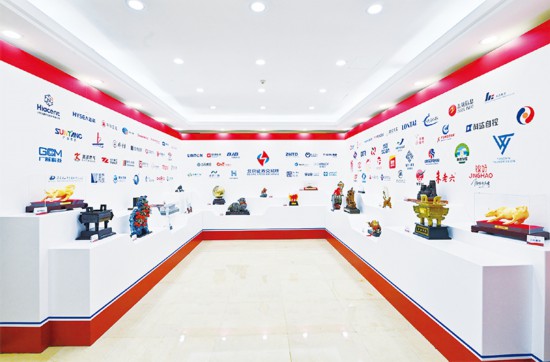
The capital market has unique and important functions in resource allocation, risk mitigation, policy transmission and expected management, and can play a greater role in high-quality development. On November 15, 2021, the Beijing Stock Exchange ushered in the opening of the market, and the ability of the capital market to serve the innovation and development of small and medium-sized enterprises was further improved. The picture shows the logo display wall of 81 enterprises listed in the first batch of Beijing Stock Exchange. Xinhua News Agency reporter Li Xin/photo

Insist on seeking truth from facts and firmly take the road of developing China’s characteristic capital market.After hundreds of years of development, the capital markets in western countries have formed some relatively mature experiences, and we should actively learn from them with an open and pragmatic attitude. At the same time, we should also see that China is building a capital market under the conditions of a socialist market economy. The development orientation, functions and responsibilities of the market must be adapted to the basic socialist system, and we must fully consider the current market foundation, investor structure and legal integrity environment in China. In recent years, the CSRC has adhered to the three principles of respecting the basic connotation of the registration system, learning from international best practices, and embodying the characteristics of China and its development stage, and successively promoted the pilot registration systems of science and technology innovation board, Growth Enterprise Market and Beijing Stock Exchange. While adhering to international common practices such as focusing on information disclosure, strengthening the responsibility of intermediary agencies, and promoting market-oriented pricing, it has made a series of distinctive institutional arrangements in the aspects of primary and secondary market balance, misplaced development of sectors, and investor protection. We should always persist in seeking truth from facts, boldly explore and carefully verify, take the reform of registration system as an opportunity, continue to deepen the reform of capital market in an all-round way, and strive to embark on a road of capital market development in line with China’s national conditions.

Adhere to marketization and rule of law, and create a stable, transparent and predictable development environment.The capital market is extremely demanding. We must adhere to the principle of "building a system, non-intervention, and zero tolerance", respect the laws of the market, abide by the spirit of contract, further promote the "streamline administration, delegate power, strengthen regulation and improve services" reform, give full play to the decisive role of the market in resource allocation, and better play the role of the government. In particular, we should correctly understand and grasp the characteristics and behavior laws of capital and guide the healthy development of capital norms. On the one hand, we should grasp the political and people-oriented nature of capital market supervision, guard the entrance, establish and improve the system and mechanism to prevent the disorderly expansion of capital with relevant parties, and maintain a fair market environment. On the other hand, to strengthen the coordination between securities supervision and industry supervision, we should not only shine a "red light" but also set a "green light", implement the "two unwavering", promote the common development of diversified ownership economies, protect property rights and intellectual property rights according to law, stimulate entrepreneurship and market innovation to create vitality, and better guide capital to serve the socialist market economy.

Adhere to the concept of system, and strive to build a new pattern of governance in which all parties build, govern and share.The capital market is an ecosystem with complex mechanism. Only by coordinating the relationship between the present and the long-term, the overall situation and the local situation, and constantly strengthening its own functions through reforming and perfecting the system, optimizing the structure and improving the ecology, can we better serve the real economy in a way of "moistening things quietly". This requires firmly establishing the overall concept, not only doing well the capital market’s own affairs, but also actively strengthening coordination with fiscal, taxation, monetary and industrial policies, giving full play to the enthusiasm of the central and local governments, and enhancing joint efforts in promoting medium and long-term capital to enter the market, improving the quality of listed companies, expanding the high-level opening up to the outside world, and cracking down on securities violations, so as to jointly create a good market ecology.

Adhere to the overall planning of reform, development and stability, and promote the stability of the capital market.The stable operation of the capital market is the basis for maintaining its normal function, and it is also the basic prerequisite for promoting reform and better serving the real economy. It is a law that the stock market goes up and down. The government should not and should not intervene in normal fluctuations and cannot spend money to buy indexes. However, non-intervention is not laissez-faire. We must always adhere to the bottom line thinking and resolutely prevent abnormal fluctuations caused by "market failure". This requires keeping the bottom line of risk and grasping the degree. At the same time, we must also realize that the stability of the capital market is not maintained, but changed. We must maintain our strength, persist in stimulating market vitality through reform, and enhance the endogenous motivation of market resilience and high-quality development.

Fourth, continuously improve the ability of the capital market to serve the high-quality development of the economy in the process of comprehensively deepening reforms.

At present, the great changes in the world that have not happened in a hundred years have accelerated their evolution, and the characteristics of changes in the world, times and history are more obvious. At the same time, China’s development is still in an important period of strategic opportunities, and the development of China’s capital market is still in an important period of great potential. We must adhere to the general tone of striving for progress through stability, resolutely implement the requirements of "preventing the epidemic, stabilizing the economy, and ensuring safe development", put risk prevention, steady growth, and promoting reform in a more prominent position, actively strengthen policy coordination with relevant departments, increase financial support for epidemic prevention and control and economic recovery and development, and strive to achieve market stability, policy stability, and expected stability.

Maintain the smooth operation of the market and strengthen the market function.The capital market is a "barometer" of the national economy, which reflects expectations and reflects confidence. Under the complicated and severe situation, it is of special significance to maintain the stable and healthy development of the capital market. Since the beginning of this year, due to the superposition of factors such as the Ukrainian crisis and repeated domestic epidemics, the market has experienced great fluctuations. Under the strong leadership of the CPC Central Committee, all parties concerned have made joint efforts, and the market has gradually stabilized and is expected to improve significantly. The CSRC will continue to take maintaining the smooth operation of the market as its top priority, strengthen macro-judgment, continue to exert efforts around stabilizing expectations, listed companies, funds and market behavior, strengthen the monitoring and analysis of marginal changes such as market capital flow, investor behavior and performance of listed companies, improve the endogenous stability mechanism of the capital market, and improve the risk response plan in extreme cases. At the same time, actively strengthen communication and coordination with macroeconomic management departments and industry authorities, maintain the stability and consistency of policy expectations, help effectively resolve the risks of real estate enterprises, promote the healthy development of platform economy norms, and strive to promote market stability and economic stability with expectations.

Fully implement the stock issuance and registration system to promote the optimal allocation of resources.The registration system is a "bull’s nose" project to comprehensively deepen the reform of the capital market, a key measure to develop direct financing, especially equity financing, and a major reform to improve the market-oriented allocation system and mechanism of factors. The 14th Five-Year Plan, the Central Economic Work Conference in 2021 and this year’s "Government Work Report" all made clear arrangements for the full implementation of stock issuance registration. Generally speaking, after nearly three years of pilot exploration, the registration system structure with information disclosure as the core has withstood the market test initially, the supporting system and the supply of the rule of law have been continuously improved, and the conditions for fully implementing the stock issuance registration system have basically been met. In the next step, the CSRC will firmly grasp the correct direction of reform, scientifically grasp the issues such as the audit and registration mechanism, the positioning of various sectors, and guide the healthy development of capital norms, and make preparations for rules, business and technology with "embroidery" to ensure the smooth landing of this major reform. At the same time, accelerate the reform of intermediary and investment, improve the judicial system and mechanism of securities law enforcement and the investor protection system, promote the innovation of key systems, and create a good institutional and ecological environment for the healthy development of the capital market.

Improve the multi-level capital market system and help stabilize the macro-economic market.Focus on macro-stabilizing leverage and micro-increasing vitality, further enhance the coverage and inclusiveness of capital market services, and better meet the differentiated development needs of enterprises of different types and stages. Grasp the key of supporting innovation, stick to science and technology innovation board’s "hard technology" positioning, speed up the improvement of the evaluation criteria for growth-oriented innovative start-up enterprises on the Growth Enterprise Market, highlight the blue-chip characteristics of the main board, strengthen the positioning of innovative small and medium-sized enterprises served by the North Exchange, and strive to form a pattern of dislocation development and moderate competition in various market sectors. Give full play to the role of "leading" and "feedback" of the North Stock Exchange, make overall plans to promote institutional innovation at the basic and innovative levels of the New Third Board, steadily expand the pilot scope of regional equity market innovation, improve the market interconnection mechanism at all levels, improve the basic system that is more suitable for the characteristics of SMEs, and create the main position of service-oriented innovative SMEs. Give full play to the strategic and basic role of private equity and venture capital funds in supporting innovation, further improve regulatory transparency and service efficiency, and smooth all links of fundraising, investment, management and withdrawal. The exchange bond market is an important part of the multi-level capital market system. By the end of June 2022, the size of this market in China had exceeded 19 trillion yuan, accounting for about 14% of the total domestic bond market, of which non-financial corporate bonds accounted for 43%. The CSRC will further improve the bond financing support mechanism for private enterprises, and strive to improve the availability and convenience of bond financing for private economy and small and medium-sized enterprises; Further promote the expansion of real estate investment trust funds in infrastructure and broaden the scope of pilot projects.Pay close attention to promoting the landing of affordable rental housing and private enterprise pilot projects, and help accelerate the formation of a virtuous circle of existing assets and new investment; Together with relevant parties, we will deepen the interconnection of the infrastructure of the bond market, improve the market-based legal bond default disposal mechanism, and accelerate the construction of a sound, orderly, transparent and open bond market system. At the same time, we will further improve the variety system of the futures market, promote more entities to participate in the futures market, and strengthen the joint supervision of futures and cash, so as to better help the overall situation of ensuring supply and stabilizing prices.
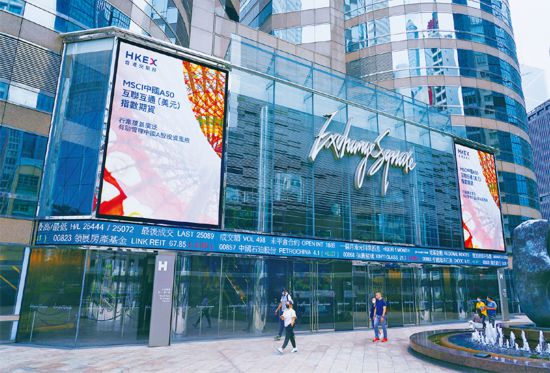
China Securities Regulatory Commission has continuously strengthened pragmatic cooperation between the mainland and Hong Kong markets and supported Hong Kong in consolidating its position as an international financial center. On October 18th, 2021, morgan stanley capital international (MSCI) China A50 Interconnection (USD) Index Futures was officially listed and traded on the Hong Kong Stock Exchange. The picture shows the advertisement of MSCI China A50 interconnection (USD) index futures on the big screen of Hong Kong Exchange Square. China News Service reporter Zhang Wei/photo

Improve the quality of listed companies and give full play to the "barometer" function of the capital market.Listed companies are an important micro-foundation for high-quality economic development. In recent years, the CSRC has thoroughly implemented the Opinions of the State Council on Further Improving the Quality of Listed Companies and the Implementation Plan for Improving the Delisting Mechanism of Listed Companies, which was deliberated and adopted by the Central Committee for Deep Reform, to promote the steady improvement of the quality of listed companies. The CSRC will continue to take improving the quality of listed companies as an important part of comprehensively deepening the reform of the capital market, insist on paying equal attention to good entrance clearance and smooth multiple exit channels, and insist on focusing on the two-wheel drive of information disclosure and corporate governance, further resolve outstanding problems such as false information disclosure and illegal occupation of guarantees by major shareholders, and guide listed companies to standardize governance, focus on their main businesses, and become better and stronger. At the same time, give full play to the role of the main channel of capital market mergers and acquisitions, support industry-leading listed companies to promote the coordinated development of small and medium-sized enterprises, and promote the integration of industrial chain supply chain and economic transformation and upgrading.

Coordinate openness and security, and expand high-level two-way opening.China’s capital market has grown in the process of opening up, and it will certainly grow in the process of further opening up. Facing the complicated international environment, the CSRC will resolutely implement the decision-making and deployment of the CPC Central Committee, make overall plans for opening up and security, and unswervingly promote the all-round institutional opening of markets, institutions and products. Accelerate the implementation of the overseas listing filing system for enterprises, keep the overseas listing channels open, support all kinds of enterprises to go overseas for listing according to laws and regulations, and make good use of the two markets and resources. We will continue to strengthen the construction of regulatory capacity under the conditions of opening up, and further improve the monitoring and supervision mechanism and risk response plan for cross-border funds. At the same time, strengthen pragmatic cooperation with the Hong Kong market, deepen the Shanghai-Shenzhen-Hong Kong Stock Connect mechanism, further promote the Hong Kong market’s ability to undertake the listing of domestic enterprises, support Hong Kong to consolidate its position as an international financial center, and promote the coordinated development of the two markets.

(The author is Party Secretary and Chairman of China Securities Regulatory Commission)