[Deep Science Popularization] What exactly is nuclear wastewater? What can we do in the face of nuclear wastewater
On April 13th, 2021, the Japanese government announced that it would discharge the nuclear waste water stored in the Fukushima Daiichi nuclear power plant of Tokyo Electric Power Company into the sea, and the total amount of discharge would exceed 1 million tons, which caused an uproar all over the world.
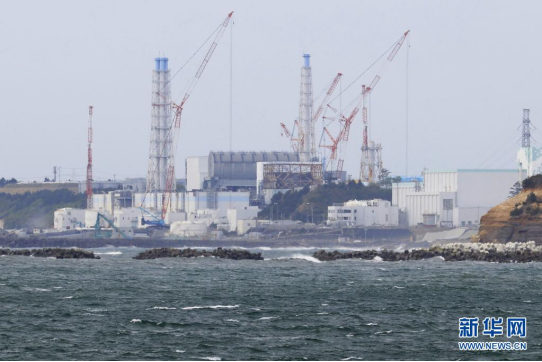
(This is the Fukushima Daiichi nuclear power plant in Japan, which was filmed on April 13th. Xinhua News Agency/Kyodo News Agency)

(On April 13th, a citizen browsed the news of Japan’s decision to discharge Fukushima nuclear sewage into the sea through his mobile phone in Tokyo, Japan. Xinhua News Agency reporter Du Yiyi photo)
I. Unveiling the Mystery of Nuclear Waste Water
At the beginning of the article, let’s first understand what nuclear wastewater is. Under normal circumstances, the nuclear waste water we refer to refers to radioactive waste liquid which contains radioactive elements and thus has certain radioactivity. So where did these waste liquids come from and how were they treated?
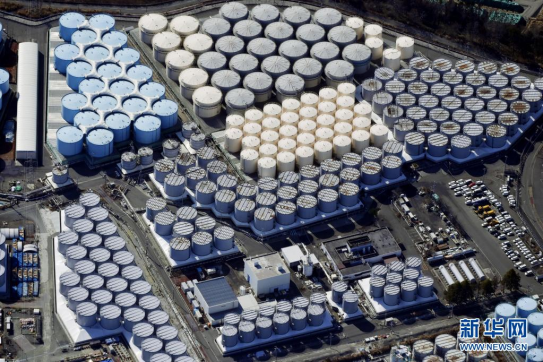
(This is the nuclear sewage storage tank of the Fukushima Daiichi nuclear power plant in Japan, which was shot on February 13th. Xinhua News Agency/Kyodo News Agency)
As we all know, water resources are an important element to ensure the normal operation of nuclear power plants. The production water of nuclear power plants is mainly cooling water, and the cooling mode of coastal nuclear power plants generally adopts seawater direct current cooling, so the amount of fresh water used is less. However, inland nuclear power plants not only need a large amount of water, but also require high water quality, and the normal operation of nuclear power plants cannot be separated from a stable supply of water resources, so they need a high water supply guarantee rate. The annual water consumption of a single million installed units in nuclear power plants with circulating cooling mode is 40 million ㎡, and the water withdrawal is about 11 million ㎡. In order to ensure that the concentration of radioactive elements in the discharged waste liquid reaches the safety standard, a considerable amount of water must be required for dilution.Therefore, the water resources condition is one of the key factors in the site selection of nuclear power department, which requires sufficient and reliable water resources guarantee, and fully considers the water quantity and water resources dispatching conditions during the extremely dry period.
Long-term discharge of low-level radioactive waste water will lead to the formation of radioactive element enrichment areas in areas with weak water flow exchange, and can also form radioactive element enrichment through sediment adsorption, food chain transfer and groundwater lateral infiltration, which will affect the downstream water quality. The sudden events of inland nuclear power plants have potential risks to the water supply safety downstream of them. Once the nuclides in the nuclear island leak out and enter the downstream water body, it will have a great impact on the safety of downstream water supply.
The increasing shortage and pollution of water resources in China, as well as the increasing water quantity and population of river-type drinking water sources, have become the main limiting factors for the development of inland nuclear power construction, and the water resources management of nuclear power construction projects has also received widespread attention from the society. Under the new situation that the country implements the strictest water resources management system, the water resources management of nuclear power construction projects will also be highly valued. This shows that the water demand of nuclear power plants is huge.
Fresh water resources will form radioactive wastewater containing radioactive elements after being used by nuclear power plants.Under the normal operation of nuclear power plants, radioactive elements in radioactive waste liquid mainly come from radionuclide ions produced during fission and activation. During the operation of the reactor, the dissolved boric acid in the primary coolant reacts to produce tritium, which causes the tritium concentration in the coolant to increase and accumulate. However, there is no economically feasible technology to separate tritium from the primary coolant, so we can only adopt the way of discharging coolant to maintain the activity level of tritium in the primary coolant, and the discharged coolant is the main source of radioactive waste liquid in nuclear power plants. Tritium, fission products from fuel, fission products from fuel pollutants and activated corrosion products are the main components in radioactive waste liquid.
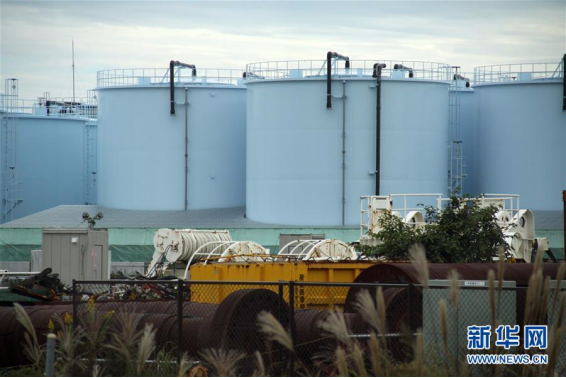
(Nuclear waste water storage tank photographed in Fukushima Daiichi nuclear power plant, Japan. Xinhua News Agency)
At present, there are many ways to treat the radioactive waste water produced by nuclear power plants under normal working conditions, such as flocculation, filtration, evaporation, ion exchange, membrane separation technology, etc., so that the radioactive elements contained in it can be reduced to within the standard range and then discharged into the receiving water body. In reality, engineers will adopt different treatment processes or reasonable process combinations according to water quality conditions, so as to achieve ideal treatment results.
After a series of treatments, the radioactivity of radioactive waste liquid becomes very low, which we call low-level radioactive waste liquid.Although its radioactivity level is very low, China has issued relevant emission standards to fundamentally ensure the safety of people’s production and life, such as the dual control of concentration index and total index of low-level radioactive substances in nuclear power drainage, and requires relevant units to attach great importance to the design of the discharge mode of low-level radioactive waste liquid from nuclear power and create more favorable dilution and diffusion conditions as much as possible.
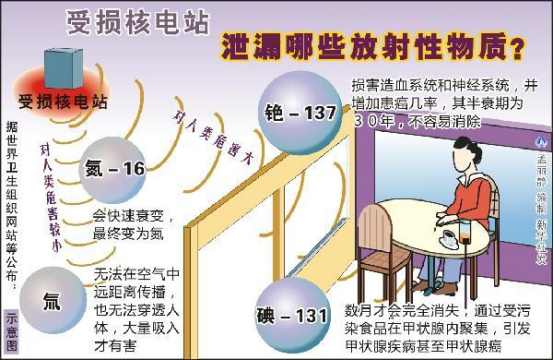
Second, the appalling nuclear accident in history
Although people have accumulated a lot of experience in the use of nuclear energy, and the security technology has become more and more mature, these valuable experiences have been returned by a series of regrettable disasters. Let’s briefly review several relatively serious nuclear accidents in human history.
1. Three Mile Island nuclear power plant accident
Three Mile Island Nuclear Power Plant is located near 16km southeast of Harrisburg, the capital of Pennsylvania, USA. Its Unit 2 (TMI-2) is a 950MW electric power (880MW net electric power) pressurized water reactor designed by Babcock and willcocks and operated by Metropolitan Edison. On March 28th, 1978, it reached the critical point. One year later, on March 28th, 1979, the most serious accident in the history of commercial nuclear power plants in the United States-Three Mile Island nuclear power plant accident occurred. The accident started with a transient caused by the loss of water supply. After a series of events, the core melted and a large number of fission products were released into the containment. Although the radioactive release to the environment and the radiation consequences to people and the environment are very small, and the accident rating is only 5, the accident has had a far-reaching impact on the development of the nuclear industry in the world.
The accident was caused by the accident cooling system of the secondary circuit of the nuclear power plant automatically starting after the water pump in the secondary circuit failed. However, the water in the secondary circuit was still in a cut-off state after the system was automatically started because the workers failed to open the valve of the accident cooling system after overhaul a few days ago. When the temperature and pressure in the reactor rise in this case, the reactor will automatically stop and the pressure relief valve will automatically open, releasing part of the steam-water mixture in the core. At the same time, when the pressure in the reactor dropped to normal, the pressure relief valve failed to return to its seat automatically due to a fault, so that the core coolant continued to flow out and the pressure dropped below normal, so the emergency core cooling system was automatically started. However, the operator did not judge that the pressure relief valve did not return to its seat, but turned off the emergency core cooling system and stopped injecting water into the core. This series of management and operation errors are intertwined with equipment failures, which makes a small failure expand sharply and causes a serious accident of core melting.
About 70% of inert gas (mainly 133Xe (tritium -133)), 30% of I and 50% of Cs (cesium) and a small amount of other fission products were released into the main cooling system. Some radioactive materials entered the pressure relief box at the bottom of the containment through the open pressure relief valve. After 15 minutes, the pressure relief box overflowed, the bursting valve burst, radioactive water entered the pit, and fission gas entered the containment. After that, a part of radioactive water was sent to the drainage tank in the auxiliary plant, causing some radionuclides to overflow; In addition, the operator opened the main system drainage system, which also caused the leakage of radionuclides. The operator thinks that there is too much water in the main system, so he opens the drain system and introduces part of the coolant into the volume control box through the purification system, thus communicating with the degassing system. The degassing system compresses the released gas to the decay box and discharges it to the chimney through the filter. In the accident, the main system produced a large amount of gas, which made the degassing system overloaded. The gas was discharged from the safety valve of the container control box, and about 5% of inert gas and 10-5% of gaseous I entered the environment.
Very little radioactive material was released in the accident at Sanli Island, indicating that containment is very important. Although the containment is not absolutely leak-free, it is basically not mechanically damaged. Due to the addition of sodium hydroxide to the containment spray, most iodine and cesium are trapped in the containment. The gas leaked from the containment passes through the auxiliary building, so most radioactive materials are collected by the filter.
2. Chernobyl nuclear power plant accident
In the early morning of Saturday, April 26, 1986, the first highest-level 7-level nuclear power plant accident occurred in Chernobyl Unit 4 of the Soviet Union. The accident of this nuclear power plant is a serious accident caused by prompt critical caused by power transient during the test of reactor safety system. The reactor core, reactor building and steam turbine building were destroyed, and a large amount of radioactive materials were released into the atmosphere.
At the time of the accident, four 1000MW RBMK reactors were in operation, and two other reactors were under construction nearby. The accident of Unit 4 was put into operation in December 1983. The Chernobyl nuclear power plant plans to build eight nuclear power units with 1 million kilowatts of electric power. Under the enthusiasm of building socialism, Chernobyl Unit 1 was put into operation in 1977, followed by Unit 2 in 1978, Unit 3 in 1981 and Unit 4 in 1983. At this time, units 5 and 6 are under construction, while unit 5 has completed about 80% of the project progress, and units 7 and 8 are also preparing to start construction.
There is no problem for these units to operate under normal and safe conditions. However, in the event of an accident, when a large amount of radioactive material leaks, there is no protective measure to prevent it from entering the atmosphere. The original design of the reactor body and the main cooling circuit of the steam-water separator are respectively placed in the radiation protection shielding isolation chambers of concrete, and these adjacent isolation chambers form the main power house of the reactor, which is not sealed, can not bear the pressure, and can not play the role of containment, and its safety precautions are worse than those of the pressurized water reactor.
After the Chernobyl accident, the relevant departments have taken many measures to protect the water resources in this area to a certain extent, to prevent radioactive materials from expanding the scope and to avoid further pollution to the local water system.
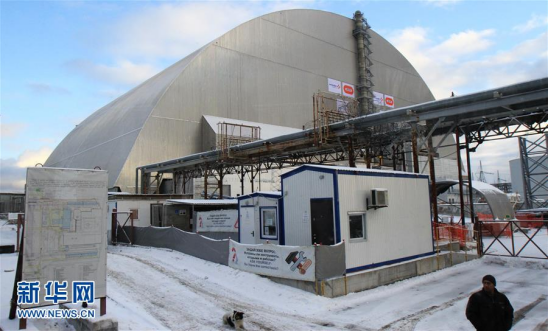
(Near Kiev, Ukraine, the new bunker of Chernobyl nuclear power plant was officially completed, covering the reactor of Unit 4. Xinhua News Agency reporter Chen Junfeng photo)
In order to prevent rainfall pollutants near the factory from being transferred into important water systems, the Soviet Union set up a meteorological aircraft fleet to eliminate rain clouds, and threw cartons containing special substances into the clouds in the air to disperse the rain clouds. After throwing these "weather missiles", the rainfall within 30 kilometers of Fiona Fang was completely eliminated, and the Dnieper River flowing through Kiev was prevented from causing serious pollution. When cleaning up the radioactive materials in the factory area, in order to prevent the water system from being polluted by radioactive materials caused by rain, the emergency repair personnel temporarily built a dike in the factory area.
In essence, the Chernobyl accident was a serious accident caused by excessive reactivity, but it developed into the most serious nuclear power plant accident in human history for the following reasons.First of all, the management is chaotic and the violation of regulations is serious. The operator seriously violated the operation regulations during the operation. Secondly, the reactor has serious defects in design and does not have inherent safety. The reactor has a moderate reactivity coefficient. Although the comprehensive power response coefficient is negative at the normal operating point, the comprehensive effect is positive when the east-west power is lower than 20% of the rated power. Therefore, when the reactor runs below 20% rated power, it is prone to great instability. In the presence of various other external factors (the operator has seriously violated the operating procedures for many times), it is this internal and positive reaction coefficient that leads to the prompt critical of the reactor, resulting in the accident of core breakage. In addition, the lack of containment in the nuclear power plant is also a reason for the serious impact on the environment caused by the accident.
Iii. Fukushima nuclear power plant accident
This Fukushima nuclear power plant is located in Shuangye County, Fukushima Industrial Zone, Japan, including the Fukushima Daiichi nuclear power plant (6 units) and the Fukushima II nuclear power plant (4 units), all of which use mixed oxide fuel. Unit 1 of the Fukushima Daiichi nuclear power plant was put into commercial operation in March 1971, and Unit 1 of the second nuclear power plant was put into commercial operation in April 1982. The nuclear reactors of Fukushima nuclear power plant are all single-cycle boiling water reactors with only one cooling loop, and steam is directly generated from the core to drive the steam turbine. Unit 1 has been in service for 40 years, and there are many signs of aging, including embrittlement and corrosion of reactor pressure vessels and corrosion of exhaust gas treatment system in heat exchange area. In February 2011, the Atomic Energy Safety and Security Agency approved the application of Tokyo Electric Power Company for extending the life of Unit 1 of Fukushima Daiichi Nuclear Power Plant, and agreed to extend the life of this unit for 20 years, and officially retired in 2031.
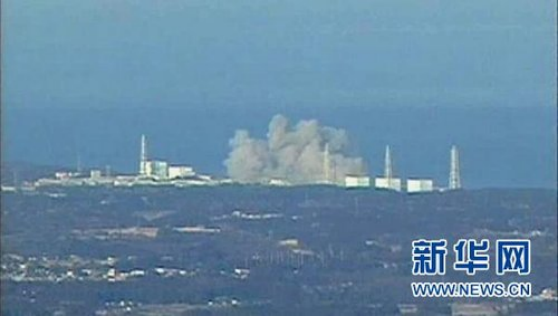
(This TV screenshot photo shows white smoke after the explosion of Unit 1 of the Fukushima Daiichi nuclear power plant in northeastern Japan on March 12. )
At 14: 46 p.m. on March 11th, 2011, with a strong earthquake measuring 9.0 on the Richter scale, the power grid system in northern Japan was severely damaged, resulting in a large-scale power outage in northeastern Japan. The operating 1c3 reactor unit of Fukushima Daiichi Nuclear Power Plant, located in the hardest hit area, immediately took emergency measures-stopping the nuclear fission reaction inside the reactor due to the earthquake and power failure. However, there are still a lot of radioactive fission products in the reactor, which still release energy in the form of decay. This part of the decay heat power is between 25 and 45 MW, which is equivalent to 30,000 to 50,000 electric furnaces burning at the same time. If this part of heat is not transferred out quickly by cooling water, the temperature of the reactor core will rise rapidly and be melted down quickly. Therefore, the reactor still needs long-term cooling after it stops running.
After the external power grid is cut off, the diesel generator set as an emergency power supply automatically starts to maintain the normal operation of the circulating water cooling system of the reactor. However, the secondary disaster caused by the earthquake-tsunami followed. Less than an hour after the earthquake, waves as high as 10m reached the Fukushima coast, while the breakwater of Fukushima nuclear power plant was less than 6.5m The flood rushed into the nuclear power plant, which quickly flooded the emergency diesel generator set on the shore, making the generator set stop working. At this time, the battery as the third set of emergency power supply is automatically connected. However, the battery pack of Unit 1 was exhausted after 1 hour, and the battery pack of Unit 3 was exhausted after 3.5h hours, and the cooling systems of both units were completely paralyzed. The water pump valve of Unit 2 failed after 3 days, and the cooling system also stopped running. So far, units 1 ~ 3 have been in a state of no cooling. Subsequently, the liquid level in the reactor core container drops, and the fuel rods are exposed to water vapor.
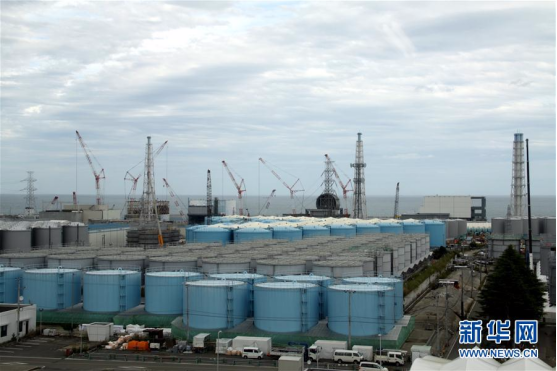
(This is the No.1, No.2, No.3 and No.4 reactors (from left to right) photographed in the Fukushima Daiichi nuclear power plant in Japan on October 12, 2017. Xinhua News Agency)
If the exposed fuel rods are not effectively cooled, the temperature will rise rapidly. When the fuel rod temperature reaches above 1200℃, zirconium alloy will react with water vapor to release a large amount of hydrogen, and the heat released by this reaction will further heat the fuel rod. When the temperature reaches 1800℃, the cladding material begins to melt; When the temperature reaches 2500℃, the fuel rods will melt and collapse to the bottom of the core; When the temperature reaches 2700℃, uranium (U) as fuel will form a high-temperature molten state with zirconium as cladding material.
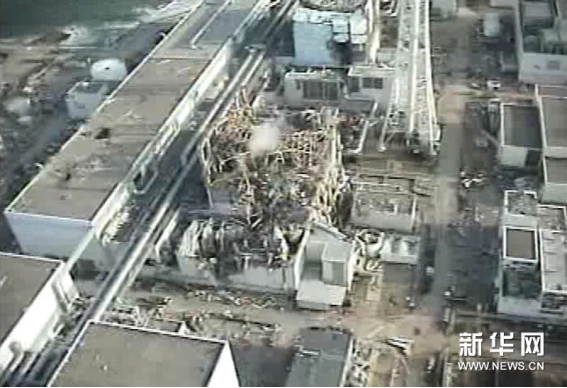
(This photo provided by Tokyo Electric Power Company on April 10th, 2011 shows the No.3 reactor of Fukushima Daiichi Nuclear Power Plant. )
It is roughly estimated that in the accident, Unit 1 may release 300kg of hydrogen, and Units 2 and 3 may release 300 ~ 1000 kg of hydrogen. This part of hydrogen will enter between the pressure vessel (the second protective barrier of nuclear fuel) and the containment (the third protective barrier of nuclear fuel) through the condensate pool. The design pressure resistance of containment is 4 ~ 5 atm. However, if the internal pressure reaches 8atm or more in an accident, it must be depressurized immediately to avoid explosion and serious radioactive leakage. At this point, the only measure is to take the way of bypass deflation to relieve pressure. Therefore, the mixed gas of hydrogen and water vapor with a small amount of gaseous radioactive substances is discharged into the working area at the upper part of the reactor. Because the concentration of hydrogen in the air exceeds 4%, it will explode. Therefore, hydrogen explosions occurred in units 1 ~ 3, which blew up the roof and walls of the upper part of the building. At the same time, radioactive gas entered the environment and formed radioactive pollution. Fortunately, the structure of the lower part of the reactor is very solid, the explosion did not damage the lower part of the reactor, the pressure vessel and containment did not appear serious damage, and most radioactive materials were still shielded inside the reactor.
When the earthquake occurred, Units 4 ~ 6 were in shutdown for maintenance, and the spent fuel was stored in the storage pool, but it still needed to be cooled. Also due to the lack of power, the water temperature in storage of spent fuel pool rises rapidly under the action of heat energy generated by radioactive decay, reaching a boiling state. With the evaporation of water vapor, the liquid level drops and the fuel rods are exposed, repeating the process similar to the damage of the fuel rods in the core. What is particularly serious is that the storage of spent fuel pool is not a closed pressure vessel, and the generated gas is easy to leak, and the melted solid radioactive materials are easy to be released into the external space, so it is easier to form a large number of radioactive materials to leak, which is more dangerous. A hydrogen explosion also occurred in Unit 4, and the radiation of radioactive materials around it increased after the explosion.
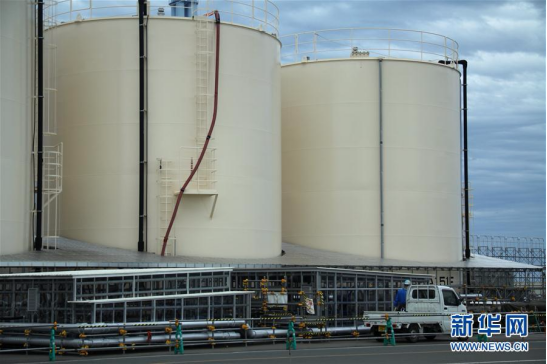
(Nuclear waste water storage tank in Fukushima Daiichi nuclear power plant, Japan. Xinhua News Agency)
In order to prevent the accident from getting worse, Tokyo Electric Power Company used mobile pumps to inject seawater into the reactor core, containment and even the whole building, which was a last resort emergency measure.However, at the same time, a large number of high-concentration radioactive waste liquid is produced. Improper storage or poor treatment of these waste water will produce secondary disasters and create obstacles for subsequent accident treatment.On April 12, 2011, Japan decided to raise the accident level of Fukushima nuclear power plant to the highest level of 7. With the passage of time, the calorific value of nuclear fuel will be attenuated, and with the access of external power supply, the cooling water circulation system of the reactor has been restored, and the situation of the reactors with accidents has been basically stable. At present, TEPCO has begun to clean up the accident site, and the main task is to treat a large number of high-level radioactive wastewater accumulated on the site.
On April 13, 2021, the Japanese government announced that it would discharge the nuclear wastewater stored in the Fukushima Daiichi nuclear power plant of Tokyo Electric Power Company into the sea, with a total discharge of more than 1 million tons. It is difficult for the Japanese government to convince the world in this way.
Fourth, the national "nanny level" plan
With the successful conclusion of China’s 2020 Central Economic Work Conference in Beijing on December 18th, it was clearly pointed out that eight key tasks should be done well next year. This includes doing a good job in peak carbon dioxide emissions, carbon neutrality and other related work. Because of its high quality, stability, cleanliness, economy, safety and other characteristics, nuclear energy has become the main force of new energy in China, and it is an important energy utilization mode to realize peak carbon dioxide emissions and carbon neutrality in China. Its healthy development is of great significance for improving people’s quality of life, protecting the ecological environment and promoting the harmonious development of social economy. However, the explosion of the Fukushima nuclear power plant in Japan has caused serious nuclear leakage accidents and water resources safety hazards, which has put forward new warnings for China’s nuclear power water resources management. In the 14th Five-Year Plan for People’s Republic of China (PRC)’s National Economic and Social Development and the Outline of Long-term Goals in 2035 (the 14th Five-Year Plan), it is clearly proposed to "promote coastal nuclear power construction safely and steadily". After the Chernobyl nuclear accident and the recent Fukushima nuclear accident, people can’t help asking, how should we "safely and steadily" promote the development of nuclear power? Once a similar serious accident happens, what can the country and we do?
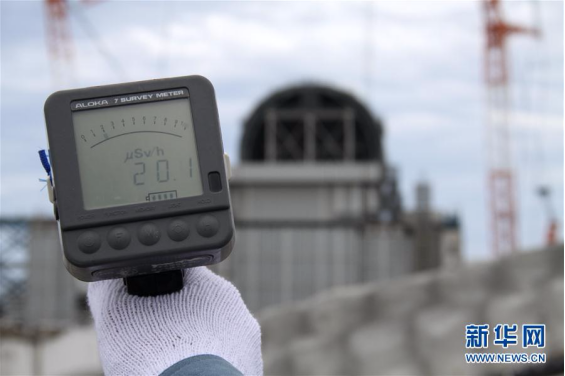
(On October 12, 2017, in the Fukushima Daiichi nuclear power plant in Japan, the staff used a radiometer to measure the radiation value near the No.3 reactor. Xinhua News Agency)
First of all, under the normal operation process of nuclear power plants, the radioactive wastewater discharged from them will also have some impact on the surrounding ecological environment. For nuclear power plants, especially inland nuclear power plants, the influence of low-level radioactive wastewater in its backwater on the downstream water quality safety is a matter of great concern to everyone.As mentioned above, the long-term discharge of low-level radioactive waste liquid may lead to the enrichment of radioactive elements in areas with weak water exchange, and it can also form the enrichment of radioactive elements through sediment adsorption, food chain transmission and groundwater lateral infiltration, thus affecting the water quality in the lower reaches of the river.
The actual operation monitoring results and mathematical simulation calculation results of nuclear power plants in service in China for many years show that the radioactive concentration is slightly higher than the natural background value only in a certain area of the drainage outlet, and it will return to the natural background value when it exceeds this area, which has not caused radioactive pollution to the surrounding water environment and has not affected the water quality safety in the area. In addition, according to the test results of the concentrations in nearby seawater, seabed sediments and organisms, the results of the radiation dose estimation study of surrounding organisms, especially fish, show that the biological radiation dose is far less than the internationally recommended non-human biological radiation dose limit, and no harmful reactions to organisms have been observed.Therefore, for a normal nuclear power plant, even if it discharges radioactive wastewater into the surrounding water, its radioactivity level is low, and it will not cause great damage to the surrounding environment and ecosystem.After all, all wastewater discharged from nuclear power plants is allowed to be discharged to the outside world after a series of processes to reduce its radioactive concentration below the standard value.
Secondly, for the residents, the low-level radioactive waste water discharged from nuclear power plants does little harm to human body. As early as the 1980s, China calculated the concentration distribution of liquid discharge from Daya Bay nuclear power station in the nearby sea area by numerical simulation of tidal current pollution diffusion, and on this basis, calculated the dose equivalent of external exposure to human activities in the sea area and internal exposure to local seafood, and calculated the dose rate of low-level radioactive waste liquid to various marine organisms. According to the calculation results, it is concluded that, The discharge of low-level radioactive waste liquid during the normal operation of Daya Bay Nuclear Power Station is not harmful to the health of residents and has no harmful effect on aquatic organisms. Later, the long-term monitoring and investigation results of the actual operation of Daya Bay Nuclear Power Station also confirmed this conclusion. So you don’t have to worry that the radioactivity of its wastewater will harm your own influence.
In the event of a serious nuclear accident, everyone does not need to panic, because the country has already made enough emergency plans. The only thing we have to do is to comply with the government’s requirements.
With the occurrence of nuclear accidents and radioactive hazards in history, the concept of safe nuclear power has been deepened and the safety technology of nuclear power has been continuously developed. Nuclear power developing countries and international organizations in the world have established corresponding nuclear safety systems, including nuclear reactor safety technologies (four barriers, safety injection system, decompression and hydrogen elimination system and other technologies to improve safety margin, etc.), safety management standards for nuclear power plants, storage and management specifications for high and low radioactive wastes, technical standards for radioactive material discharge, and emergency response plans and preplans for nuclear accidents in and outside the plant area. These technical specifications for nuclear power safety mainly prevent the hazards caused by nuclear power plant accidents from the perspective of reducing radionuclide leakage and protecting the public from radiation hazards. Although the above safety technologies and measures have controlled the leakage of radionuclides, it is beneficial to reduce its impact on water safety.
If the nuclear power accident really happens, the government and relevant departments will quickly start emergency countermeasures because the nuclide will spread rapidly through various media and channels, causing radioactive effects. Emergency countermeasures for nuclear power accidents mainly include the following aspects:
① Start the emergency plan for nuclear power accident;
② Surface water isolation measures and groundwater seepage control measures under accident conditions;
③ Moderate and high-level radioactive effluents;
④ Measures to seal the sarcophagus;
⑤ Emergency water dispatching and regulation measures under the condition of inland nuclear power accident;
⑥ Emergency monitoring of water quality in case of accident;
⑦ Water safety information release scheme under accident conditions.
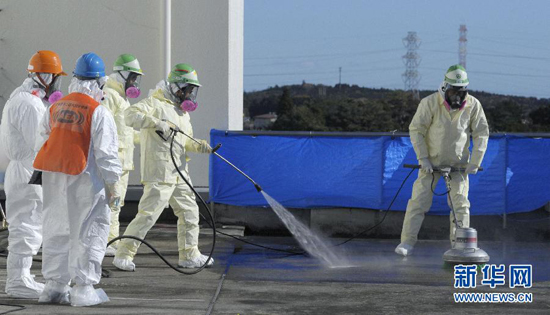
In addition, as early as 2016, People’s Republic of China (PRC) Ministry of Water Resources has been drafting the corresponding construction and operation system to ensure the safe and stable operation of China’s nuclear industry. The Guidelines for Water Resources Demonstration of Coastal Nuclear Power Construction Projects (SL/T 777-2019) is one of them. This guideline, issued on May 31, 2019 and implemented from August 31, 2019, gives specific guidance in view of the relevant characteristics of water intake, water use and drainage in the construction and operation of coastal nuclear power. This guideline not only puts forward guiding opinions on liquid radioactive wastewater, but also puts forward corresponding general guiding opinions on common pollution forms such as concentrated brine and warm drainage that may be involved. It can be seen that its consideration is comprehensive. Therefore, as an ordinary person, resolutely obeying the government’s command and cooperating with relevant departments is our best performance in reducing accident losses.
The above are some measures taken by China to promote the development of nuclear power safely and steadily, and I hope that more targeted guidance and regulations can be put forward in the future to protect the stable and reliable operation of nuclear power.
(Author: Fan Guohua)
Scientifically: Professor and Doctoral Supervisor of Environmental Science and Engineering, North China Electric Power University, Ding Xiaowen.