"Xiao Zhi governs affairs with great wisdom", how can social governance get enlightenment from it?
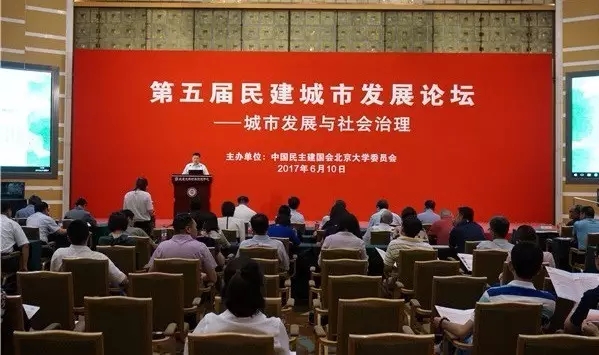
Let me tell you in advance that the level of this meeting is not low. Gu Shengzu, vice chairman of the Central Committee of the Democratic National Construction Association and a famous economist, made a special trip to give a keynote speech on globalization and xiong’an new area construction. Experts and scholars from the State Council Development Research Center, China Academy of Social Sciences, United Front Work Department of Beijing Municipal Committee of the Communist Party of China and Peking University answered questions and made suggestions on social governance. How’s it going? Are you looking forward to it?
Don’t worry, let’s do science first. The so-called social governance is a process in which the government, social organizations, enterprises, institutions, communities and individuals guide and standardize social affairs, social organizations and social life according to law through equal cooperation, dialogue, consultation and communication, and finally realize the maximization of public interests. In short, it is different from state and government governance and social management.
Not much to say, dinner. This meeting really has a lot of dry goods. What will the future of globalization be like if the United States withdraws from the Paris Agreement? Xiong’an new area’s Millennium plan, how to ensure scientific planning and construction? Urban-rural duality still exists, who should be the mainstay of social governance? Civil affairs are deeply rooted in the hearts of the people. Is it necessary for everyone to participate in everything? ……
These topics have been answered by experts in this forum. The following are announced by Unity Jun, so don’t miss it.
Gu Shengzu, Vice Chairman of the Central Committee of the Democratic National Construction Association and member of the China City Hundred People Forum: We should look at urbanization governance from the perspective of globalization governance extension
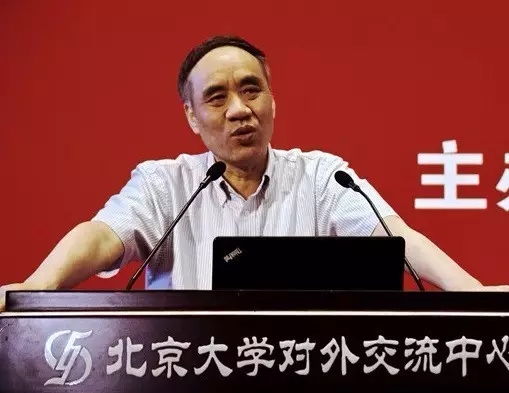
At the Davos Forum at the beginning of the year, General Secretary of the Supreme Leader emphasized that Xiao Zhi governs affairs with great wisdom, and mentioned that the global governance system can only provide a strong guarantee for the global economy if it adapts to the new requirements of the international economic structure. All countries, big or small, strong or weak, rich or poor, are equal members of the international community and should participate in decision-making, enjoy rights and fulfill obligations on an equal footing. Happily, China’s globalization initiative, especially an important concept in the initiative-building a community of human destiny, was written into the UN Security Council resolution, and the "China Plan" rose to a global consensus, reflecting China’s wisdom.
We should look at urbanization governance from the perspective of globalization governance extension. Taking the coordinated development of Beijing-Tianjin-Hebei as an example, the key to the coordinated development of Beijing-Tianjin-Hebei is that Beijing will deconstruct the functions of non-capital, realize the "three major deconstructions" of functions, industries and population, and effectively control the "big city disease". While deconstructing the function of non-capital, we should strengthen Beijing’s capital function to make Beijing a growth pole of entrepreneurial innovation. At the same time, we should build a "multi-core, multi-circle" multi-center city, so that the industrial system and the urban system can work together to solve the problem of poverty belt around Beijing and Tianjin.
The essence of global governance lies in reconstructing a fair and inclusive global governance system. In the process of promoting the coordinated development of Beijing-Tianjin-Hebei and the construction of xiong’an new area, we should fully examine China’s urbanization governance mechanism and build a scientific governance system. As a national millennium plan and the third national new district, Xiong ‘an should follow the general idea of "traffic first, supporting services, and integration of Industry-University-Research residence" and implement it step by step, instead of taking the old road of pollution first and then treatment. At the same time, it is necessary to sum up the experience and lessons of the planning and construction of international new districts, prevent undue and excessive government intervention, and give more play to the decisive role of the market in resource allocation.
Zhou Kairang, Executive Vice Minister of United Front Work Department of Beijing Municipal Committee of the Communist Party of China: Grassroots deliberative democracy is a good prescription for urban social governance.
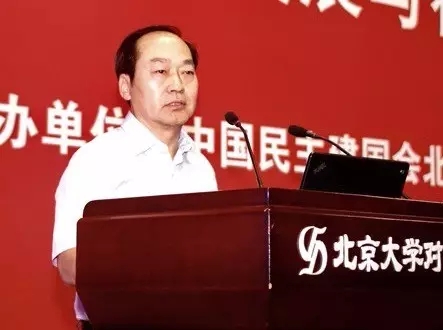
From the past regional governance to the present community governance, it is a great progress in the process of urbanization in China since the reform and opening up. Since the 18th National Congress, a very important breakthrough in the construction of democratic politics lies in the concept of deliberative democracy, which is regarded as an important aspect of democratic politics in Socialism with Chinese characteristics. Deliberative democracy plays a good role in grassroots governance, and grassroots consultation practice in urban governance is rich and vivid.
We have always said that a small government and a big society is to make the society stronger. Taking Dongcheng District’s community consultation governance model as an example, firstly, we should build a community consultation platform, let residents participate, standardize community consultation procedures, brainstorm, and let the common people discuss their own affairs, which is a basic principle of social governance.
In the process of social governance, the United front should actively participate in and promote grass-roots deliberative democracy; In urban development and social governance, we should give full play to the advantages of the United front, such as gathering talents, intensive intelligence and strong representativeness, and constantly build cities and societies well.
Ge Yanfeng, Director of Social Development Research Department of the State Council Development Research Center: Medical reform is one of the key factors of social governance.
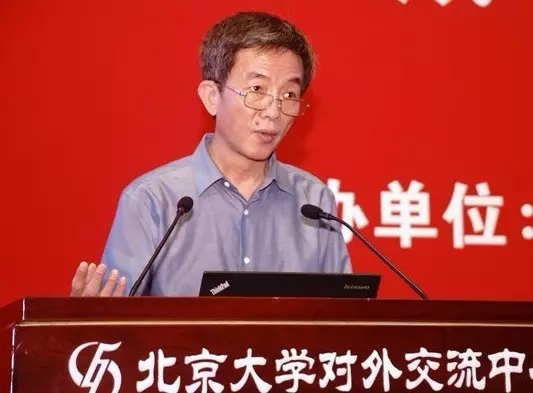
In the final analysis, the medical and health system is a basic social policy, and the core problem it wants to solve is how to protect the health rights of ordinary people, not to completely protect their health. Many health problems cannot be guaranteed by systems and policies. Birth, old age, illness and death are natural laws, so the core is to protect the health rights of ordinary people.
Since the new round of medical reform, China has carried out a series of reforms in the medical service system, which have achieved results, but the problems are still outstanding. The main problem is that the grassroots level has not really strengthened, and the reform of public hospitals has not yet made a comprehensive breakthrough. Because the financing level of medical insurance is still low, and the focus of intervention by health management departments is biased, the health rights of some low-and middle-income groups are still not effectively protected, and the problem of high economic risks is still outstanding.
Yang Tuan, deputy director of the Social Policy Research Center of China Academy of Social Sciences: Let social organizations handle the relationship between public power and private rights
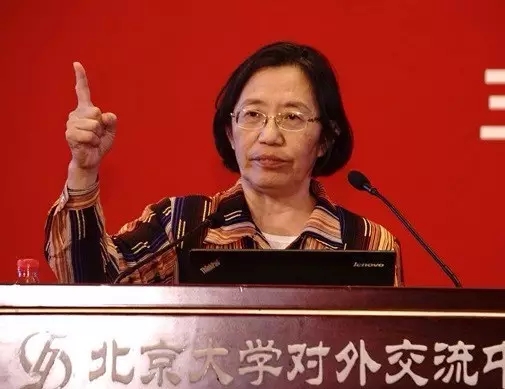
Governance is different from management, it must first emphasize the process, and can’t be achieved overnight, and can’t rely on one-size-fits-all rules and regulations; Secondly, we should emphasize harmony, regard society as a capable organism and let it survive, develop, correct and repair itself; Once again, we should give consideration to diversity, pay attention to interaction, and not engage in centralized and individualism.
Social governance must also be combined with social organizations. In the vast area of social protection and economic growth, social governance supported by social organizations should be implemented in line with the reform of the state and social system. For civil rights, it is necessary to politically promote the growth of the whole society, properly handle the relationship between public power and private rights, carry out incremental reforms, and enhance the governance capacity of the community.
Zhou Feizhou, Deputy Director of Sociology Department of Peking University: Looking at Social Governance in the Process of Urbanization
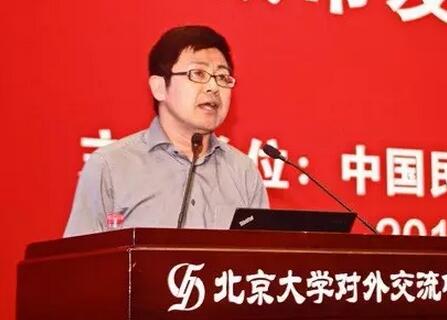
Sociology’s understanding of social governance is combined with specific changes in social structure. At present, China’s society is a society with particularly drastic changes in social structure. People’s status, social status, interpersonal relationship and group relationship are all changing. The most direct and main contributing factor of these changes is urbanization. Understanding the problem of governance in these structural changes is actually a basic orientation of sociological research to explore the problem of governance.
China’s urbanization can be divided into three stages-industrial urbanization, land urbanization and population (new type) urbanization. Social governance is not an individual, not an individual. This individualism is the cornerstone of western social science theory, but it is very different from Chinese’s basic mode of action. One individual involves one family, and Chinese’s concept of "home" is very flexible, which is an important issue that should be paid attention to when talking about social governance in China.
Xiong Yuegen, a member of the Democratic National Construction Association and a professor of sociology at Peking University: Carrying out social governance around people’s needs
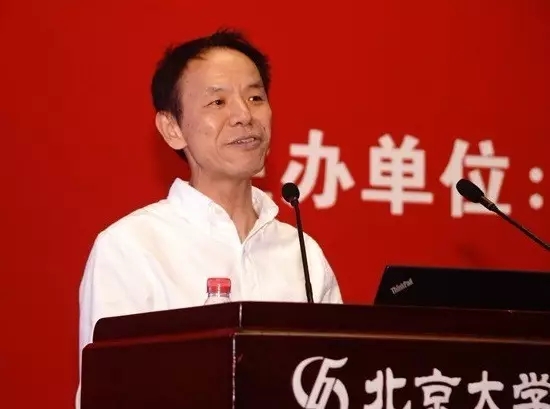
When we talk about urban development, we often treat the city as an isolated object. However, in China society, urban and rural areas are inseparable, so it is impossible to treat urban problems in isolation, and development should be the overall development. At present, the better and more beautiful the city is, the bigger the problem may be. Because the city is like a huge magnet, and all the resources are concentrated, the development of the countryside becomes a problem.
To understand China’s problems, we can’t separate today from history, nor can we separate cities from villages. We should consider the overall social development. For example, urban development is ultimately about the needs of the majority, not the will of the minority or the will of power. It is necessary to handle the relationship between man and nature and the relationship between good people, including urban planning and the arrangement of social public services.
Tips Introduction to the Civil Construction Urban Development Forum
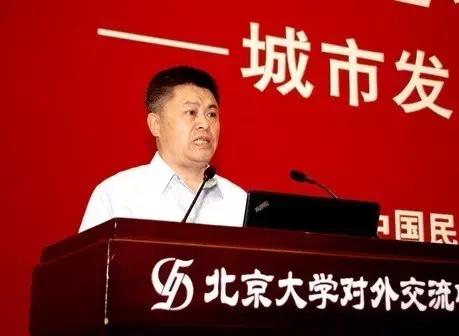
Chen Xiaotong, Chairman of Peking University Committee of Democratic National Construction Association, introduced the forum.
The Urban Development Forum of the Democratic National Construction Association was founded by the Peking University Committee of the Democratic National Construction Association in May 2013. The first four forums respectively discussed "urban cultural construction and the road to urban prosperity", "market, government and urban resource allocation", "urban economic transformation under the new normal" and "ecological civilization and urban development". This forum focused on social construction with the theme of "urban development and social governance". The future forum will extend and cover more topics of urban development, and conduct more discussions in combination with regional issues. (Huang Changsheng)