Original Gu Huang Lu Shanghai Mental Health Flying Green Ribbon
"Are you I or E?" This is the latest social opening remarks of young people on the Internet this year. Some friends may ask, what is I? What is e-man? In fact, "I person" comes from "I personality" in MBTI(Myers-Briggs Type Indicator) personality test. "I" personality represents introversion, that is, introverted and introverted person, referred to as social phobia; "E" personality stands for extroversion, that is, extroverted, cheerful and naturally familiar people, referred to as social cattle. The biggest difference between I and E is that I socialize to consume electricity, while E socializes to charge.
For schizophrenics, due to the serious disorder of thinking, perception and emotion, abnormal behavior and social dysfunction caused by the disease, they generally have certain social dysfunction, such as interpersonal skills, social adaptability and learning disabilities. In other words, a schizophrenic often shows a deep "type I personality" when facing social interaction.
What is music therapy? What kind of "magic power" does music have to improve the "autistic" symptoms of deep "type I personality"? Today, let’s discuss the influence of group music therapy on interpersonal relationship in the social function of schizophrenics!
01
Schizophrenia-the gathering place of "I" type people
Schizophrenia is a kind of serious mental disorder, which mostly occurs in young adults. The onset is often slow, and the clinical manifestations are obstacles in thinking, emotion, behavior and uncoordinated mental activities. The impairment of social ability in cognitive function of schizophrenic patients has been confirmed by a large number of studies.
Specifically, one of the manifestations of impaired social function of schizophrenic patients is the lack of social skills caused by various reasons, such as dull eyes when talking to people, dodging eyes, caring about others and so on. For example, neighbor Xiao Wang is a schizophrenic. One day when you meet each other in the narrow corridor, you may ask, "I haven’t seen you very much recently. What are you busy with?" Xiao Wang can dodge his eyes and hesitate for a long time before answering "hmm … OK". According to the survey, more than 50% patients with schizophrenia in stable stage will continue to show social skills defects characterized by their inability to talk actively, expressing their inner feelings and being difficult to solve problems, just like Xiao Wang.
Is Xiao Wang’s "social disorder" because he didn’t take his medicine on time? Of course not! Antipsychotic drugs can effectively alleviate mental symptoms, but have no effect on improving social skills defects. At this time, we need to invite our protagonist today-"Music Therapy".
02
"Magic Power" from Melody —— Music Therapy
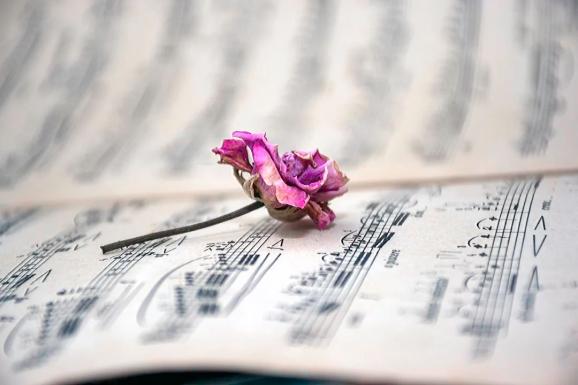
Music therapy is a popular form of music activity. It involves physical functions, such as participating in vocal organs and respiratory system, as well as psychological functions and emotional expression. It is reported that group music therapy can improve the quality of life, mental health and neurochemical activities (such as dopamine and oxytocin levels) of the elderly.
From the perspective of clinical application, music therapy has long been used as a part of the combined treatment of various neuropsychiatric diseases, and has been widely used in patients with emotional disorders, anxiety disorders, psychotic disorders and cognitive disorders.
From the perspective of neuroimaging, it also provides further evidence for the brain structure and neural circuits corresponding to music processing. Personal handling of musical stimuli is usually related to the emotional circuit of the brain. This effect can be observed in insula, cortex (CC), prefrontal cortex (PFC), hippocampus, amygdala and hypothalamus (23). In addition, music can cause changes in the levels of important neuromodulators, such as dopamine, endorphins, endogenous cannabinoids and nitric oxide.
03
Effect of Music Therapy on Social Function of Schizophrenia Patients
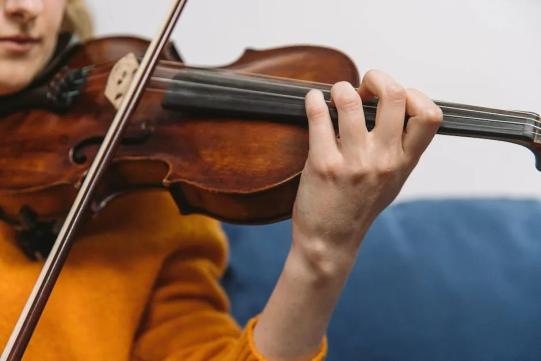
One of the reasons for the impairment of social function of schizophrenic patients is cognitive impairment. Cognitive function is impaired in a wide range of forms, including obstacles in decision-making, abstract thinking, information processing, verbal memory expression, visual memory understanding, etc., among which the most serious ones are information transmission, attention, learning and memory. Imagine that when you chat with Xiao Wang, Xiao Wang’s answer is always that the donkey’s lips are not right for the horse’s mouth, or that his mind is rambling. Often, before you finish a word, Xiao Wang deserted …….. As time goes by, the boat of friendship will drift further and further.
For people with severe mental disorders like Xiao Wang, music therapy often relies on a mixture of active and receptive skills, and improvisation and the language of music interaction are often the core. Music therapists who work with these people in clinical practice usually receive systematic training, and music therapy is usually provided in an individual or group environment, and a treatment cycle is usually from January to March. At the same time, it is crucial that Xiao Wang actively participate in music therapy is the key to success.
Clinical reports show that music therapy has unique qualities of motivation, relationship building and emotional expression, and the key is to help those who can’t accurately express themselves and emotions. Music interaction in music therapy may also support the reconstruction of music resources and abilities that affect patients’ daily life. From the patient’s point of view, this is an important factor for music therapy to improve the quality of life.
04
Clinical application of music therapy
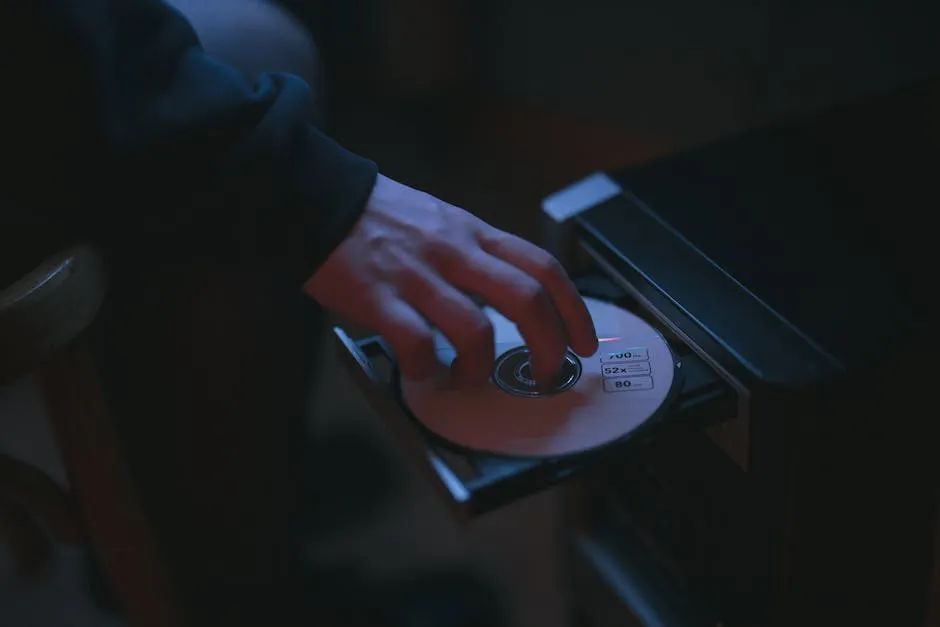
Clinically, music therapy is usually divided into three stages, namely:
(1) The first stage: receptive music therapy, which emphasizes listening to music and various physiological and psychological experiences caused by listening to music. The specific contents include song discussion, music synchronization, music memory, music imagination, music biofeedback and music relaxation training. For example, through the observation of music therapists, Xiao Wang has a lot of resonance with melodious piano music and will have certain emotional reactions. So the music therapist invited Xiao Wang to listen to the piano music with her, and asked Xiao Wang to choose the piece that best described her mood from several piano music and share it with her.
(2) The second stage: Re-creative music therapy, which emphasizes that the treated person not only listens, but also participates in various music activities in person. The specific methods usually include singing and playing, learning music skills, etc. Through this artistic carrier, individuals in the group are encouraged to express themselves. After several classes, Xiao Wang pointed out the African drum as "his instrument" among the many percussion instruments prepared by the music therapist. Xiao Wang said that because he felt that when he hit the drum surface, the touch of the leather surface bounced like his ups and downs when he was sick. Beating rhythmically made him feel that his repeated illness was controllable and he felt relaxed and safe.
(3) The third stage: impromptu music therapy, in which patients improvise music at will on specific musical instruments to achieve the purpose of treatment. In the last class, the music therapist asked each patient in the group to play a song for themselves with their own musical instrument. Xiao Wang hit a happy birthday with the African drum. He said that after a period of music therapy, he could feel that the "monster" in his mind had stabilized a lot. Today is the end of the course and the day of his rebirth.
/ END /
References:
[1] Tan Xiying, Gan Jingli, Gao Cunyou, et al. Cognitive impairment in patients with schizophrenia [J]. International Journal of Psychiatry, 2011,38 (1): 4. Doi: CNKI: Sun: gwyj.0.2011-01-009.
[2] Huo Honglin, Liu Zhaorui, Huang Yueqin, et al. Clinical characteristics and related influencing factors of schizophrenia [J]. chinese mental health journal, 2021(035-012).
Song Lihua, Li Sushui, Sun Zhigang, et al. Longitudinal research progress on the relationship between cognitive impairment and functional prognosis of schizophrenia [J]. International Journal of Psychiatry, 2015,42 (5): 5. Doi: CNKI: Sun: GwyJ.0.2015-05-015.
[4] Huang Baobao, Wang Xiaoli, Fang Huimin, et al. The application effect of social skills training supported by virtual reality technology in young and middle-aged schizophrenic patients with social skills deficiency [J]. Journal of Practical Cardiovascular Diseases, 2019,27 (1): 87-91. DOI: 10.3969/j.ISSN.1008-5977.
[5] Ivanova E , Panayotova T , Grechenliev I , et al.A Complex Combination Therapy for a Complex Disease-Neuroimaging Evidence for the Effect of Music Therapy in Schizophrenia[J] .Frontiers in psychiatry, 2022, 13:795344.DOI:10.3389/fpsyt.2022.795344.
[6] Kwon M , Gang M , Oh K .Effect of the Group Music Therapy on Brain Wave, Behavior, and Cognitive Function among Patients with Chronic Schizophrenia[J].Asian Nursing Research, 2013, 7(4):168-174.DOI:10.1016/j.anr.2013.09.005.
Xiang Yun. Schizophrenia and cognitive dysfunction [J]. China Behavioral Medical Science, 2005,14 (7): 3. DOI: 10.3760/CMA.J.ISSN.1674-6554.2005.07.019.
Tang Kexin, Zhang Yunxiao, Yang Xiaoyu, et al. Research status and prospect of music therapy in affective disorder [J]. World’s latest medical information abstracts (serial electronic journals), 2020,20 (63): 58-60,63.doi: 10.3969/j.issn.1671.
Brief introduction of the author

Gu Huang Lu
Rehabilitation therapist and primary psychotherapist of Shanghai Putuo District Mental Health Center, and head of Putuo District Public Health Project in 2021: Influence of Group Music Therapy Intervention on Social Function and Interpersonal Relationship of Schizophrenia Patients.
copyright statement
green ribbon
This article has been authorized by the author. If you want to reprint this content, you must indicate "Source: Green Ribbon Flying in Shanghai Mental Health". It shall not be used for other purposes except reprinting without authorization. Anyone who violates this statement will be investigated for tort liability according to law.
Read the original text