Raise the upper limit of the monthly deposit of housing provident fund in many places and standardize the deposit ratio.
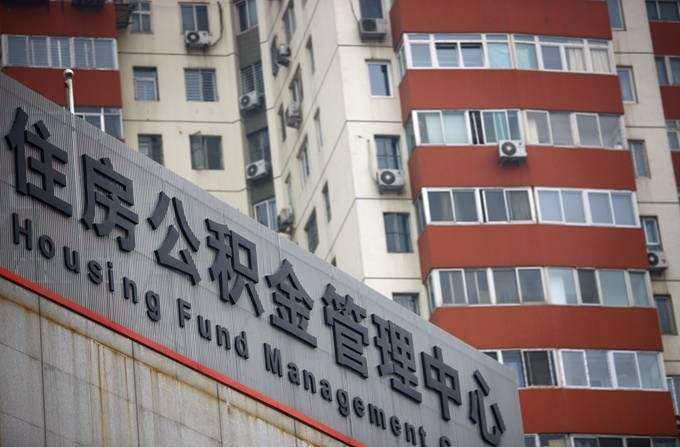
Xinhuanet Beijing, July 3 (Reporter Li Zhiqiang) From July 1, many places began to implement the new year’s housing provident fund deposit policy: the implementation period of the policy of reducing the proportion of enterprise housing provident fund deposit was extended to April 30, 2020, the proportion and upper and lower limits of housing provident fund deposit were standardized, and the upper limit of provident fund deposit base or the upper limit of monthly deposit was adjusted. Enterprises with difficulties in production and operation can apply for reducing the proportion of housing provident fund deposit or delaying payment.
Reduce the proportion of enterprise housing provident fund deposit and extend the period
Recently, housing provident fund management departments in Beijing, Nanjing, Harbin and other places issued notices to strictly implement the Notice on Improving the Housing Provident Fund Deposit Mechanism to Further Reduce Enterprise Costs issued by the Ministry of Housing and Urban-Rural Development, the Ministry of Finance and the People’s Bank of China in April this year. In order to reduce the cost of the real economy and reduce the non-tax burden of enterprises, the policy of appropriately reducing the proportion of enterprise housing provident fund deposit in stages was extended to April 30, 2020.
In April 2016, the Ministry of Housing and Urban-Rural Development, the National Development and Reform Commission, the Ministry of Finance and the People’s Bank of China jointly issued a document clarifying that the policy of appropriately reducing the proportion of housing provident fund contributions in stages will be implemented from May 1, 2016, and will be temporarily implemented for two years.
Standardize the deposit ratio and upper and lower limits of housing provident fund
The notice issued by the Ministry of Housing and Urban-Rural Development and the Ministry of Finance in April this year once again standardized and adjusted the deposit ratio of housing provident fund and expanded the floating range of the deposit ratio of housing provident fund. The lower limit of the housing provident fund deposit ratio is 5%, and the upper limit is determined by each region according to procedures, but the maximum shall not exceed 12%. The deposit unit can independently determine the proportion of housing provident fund deposit within the upper limit range of 5% to local regulations; Effectively standardize the upper limit of the housing provident fund deposit base. The monthly salary base of local housing provident fund deposit shall not be higher than 3 times the average monthly salary of employees in the previous year published by the statistical department of the city where the employees work. Where more than 3 times, will be standardized and adjusted.
According to the spirit of the notice, all localities can be in 12%— 5% within the scope of the upper and lower limits, decide the upper and lower limits of the local provident fund deposit ratio. Across the country, Beijing, Nanjing, Xi ‘an, Qingdao, Yangzhou and other cities have made it clear that the upper and lower limits of the proportion of housing provident fund paid by units and employees themselves are 12%— 5%。 In some areas, the upper and lower limits are limited according to local actual conditions. For example, Jilin province stipulates that the upper and lower limits of the housing provident fund deposit ratio are 7% in principle. Shanghai has made it clear that in 2018, the contribution ratio of employees and units to housing provident fund is 5% to 7% respectively, and units can independently determine the contribution ratio of provident fund within the range of 5% to 7% respectively.
Raise the upper limit of the monthly deposit of housing provident fund in many places
The upper limit of the monthly deposit of housing provident fund is determined by the upper limit of the deposit base, which is linked to the average salary of employees in the previous year. According to the notice of the Ministry of Housing and Urban-Rural Development and other three departments, the upper limit of the deposit base of provident funds in various places is three times the average monthly salary of local employees in the previous year.
Recently, the housing provident fund management departments in many places have issued notices one after another, clearly stipulating the upper limit of the individual housing provident fund deposit base or the upper limit of the monthly deposit amount in the new provident fund year (July 1, 2018 to June 30, 2019). If Beijing is clear, the upper limit of the deposit base of housing provident fund in the new year is 25,401 yuan, and the upper limit of the monthly deposit is 6,096 yuan. Guangzhou and Tianjin, both first-tier cities, issued a document clarifying the upper limit of the monthly deposit base of the provident fund, which is 24,654 yuan and 24,240 yuan respectively. Nanjing has made it clear that the upper limit of the provident fund deposit base is 25,300 yuan.
With the increase of the average wage of employees in last year, according to statistics, from a national perspective, the upper limit of the monthly deposit of housing provident fund in a few cities such as Beijing, Nanjing, Jinan and Lishui exceeded 6,000 yuan (corresponding to the deposit base of provident fund of 25,000 yuan). Among them, the upper limit of the monthly contribution of the provident fund in Jinan and Lishui exceeds that in Beijing.
Enterprises with difficulties in production and operation may apply for reducing the deposit ratio.
The housing provident fund management departments in many places issued a notice saying that enterprises with production and operation difficulties that meet the prescribed conditions can apply for reducing the proportion of housing provident fund deposit or delaying the payment of housing provident fund according to procedures.
Beijing has clarified the specific conditions for enterprises to apply for reducing the proportion of provident fund deposits or delaying payment. For enterprises with difficulties in production and operation, if there is no workers’ congress or trade union through discussion, with the consent of more than two-thirds of all employees, they can apply for reducing the proportion of housing provident fund deposit or applying for holdover within 1%-4%.
According to Shanghai regulations, enterprises with difficulties in production and operation that meet the prescribed conditions may apply for reducing the proportion of housing provident fund deposit or delaying the payment of housing provident fund. Enterprises can apply to reduce the deposit ratio to less than 5%. Enterprises applying for reducing the deposit ratio or holdover of housing provident fund shall be discussed and approved by the workers’ congress or trade union of the unit and apply to the municipal provident fund management center.
Tianjin stipulates that enterprises with difficulties in production and operation can apply for reducing the deposit ratio after discussion and approval by the workers’ congress or the workers’ congress (trade union), and the reduction ratio will be adjusted from the current 5% for the unit and 5% for the employees to 1% for the unit and 1% for the employees. At the same time, the requirement of "loss in the previous year" for applying for reducing the proportion will be cancelled.
Nanjing stipulates that if it is really difficult for an enterprise to make a deposit, it may reduce the deposit ratio or postpone the payment after being discussed and approved by the workers’ congress or the trade union of the enterprise and audited by the Nanjing Housing Provident Fund Management Center (sub-center). After the economic benefits of the enterprise improve, the deposit ratio will be increased or the deposit will be resumed and the deferred payment will be paid. The minimum deposit ratio shall not be less than 5%.