The "Digital Economy Initiative" is a significant pioneering achievement of the G20 Hangzhou Summit.

  The theme of G20 Hangzhou Summit is to build an innovative, dynamic, coordinated and inclusive world economy. How to change the growth mode through innovation and inject new impetus into the current difficult recovery of the world economy is a major issue before the world, and the world expects the Hangzhou Summit to give an answer. Looking back on May 17th this year, the G20 coordinators held a special meeting on "Innovative Growth Mode" for the Hangzhou Summit, and Deputy Director Zhuang Rongwen of the Central Network Information Office has conveyed important information to the outside world — — The Hangzhou Summit will come up with a recipe to revitalize the world economy: G20 Digital Economy Development and Cooperation Initiative. This important document inherits the consensus of leaders at the Antalya Summit in 2015: We live in the era of Internet economy, and opportunities and challenges for global growth coexist. On this basis, the document will strive to find ways to seize opportunities and meet challenges, especially to propose specific measures to promote inclusive growth of the world economy through the digital economy. This will be the first global digital economic cooperation initiative, which will make a great contribution in the history of world economic development.

  At present, there is no authoritative definition of what digital economy is, but its basic feature is that digital technology has been widely used and brought about fundamental changes in economic environment and economic activities. Modern information network has become an important space for economic activities, and information technology has become an important driving force for optimizing economic structure and promoting economic growth. This happens to be the direction of power transformation after China’s economy enters the new normal. The General Secretary of the Supreme Leader pointed out that the new normal should have new impetus, and the Internet can do a lot in this respect. Because of this, China, as the chairman of this year’s G20 summit, listed the digital economy as an important topic of the summit for the first time, presided over the drafting of the G20 Digital Economy Development and Cooperation Initiative, and contributed China wisdom to it.

  China’s Internet development achievements have injected strong confidence into the global digital economy.

  China put forward the strategy of strengthening the country by network, which is closely linked with the great rejuvenation of the Chinese nation. Internet has penetrated into all aspects of China’s economic and social development, profoundly changed people’s production and lifestyle, brought about a qualitative leap in productivity and triggered a major change in production relations. The development of Internet in China has made remarkable achievements. It has become a breakthrough to build a well-off society in an all-round way by accelerating the transformation of China from an industrial economy to an information/digital economy and vigorously developing the sharing economy based on the Internet. There are 710 million netizens in China, and the Internet penetration rate reaches 51.7%. Internet companies in China have risen rapidly, occupying four seats among the top ten Internet companies in the world; In 2015, the e-commerce transaction volume in China exceeded 20 trillion yuan.

  China regards the all-round development of information/digital economy as an important indicator of network power, and takes adapting to and leading the new normal of economic development as an important requirement of the national informatization development strategy. During the "Thirteenth Five-Year Plan" period, China will vigorously implement a series of major strategies and actions, such as the strategy of strengthening the country by network, the national big data strategy and the "internet plus" action plan, so as to promote the further innovation and development of the digital economy. In 2020, the total information consumption in China will reach 6 trillion yuan, and the scale of e-commerce transactions will reach 38 trillion yuan. China will continue to focus on the supply-side structural reform, give full play to the role of informatization in improving the total factor productivity, foster new impetus for development, shape more leading development that gives full play to the first-Mover advantage, and support China’s economic evolution to a stage with more advanced form, more optimized division of labor and more reasonable structure.

  G20 Hangzhou Summit put forward the development concept of global digital economy.

  The new development concept of innovation, coordination, green, openness and sharing reflects the Communist Party of China (CPC)’s new understanding of the law of economic and social development. General Secretary of the Supreme Leader pointed out that the network information business represents new productive forces and new development direction, and should and can take the lead in practicing the new development concept. The digital economy is a part of the network information business. China not only actively practices the new development concept when developing the digital economy itself, but also strives to establish guiding principles for the global digital economy.

  We must persist in innovation and development, and make ICT technological innovation an important driving force for inclusive economic development. It is necessary to adhere to coordinated development, so that the digital economy can be closely integrated with the development themes in economic and social fields, avoiding conflicts and coordinating. We should adhere to green (that is, trust and security) development, enhance the security of ICT and key information infrastructure, and ensure the healthy, stable and sustainable development of the digital economy. We should adhere to open (cooperative) development, deepen close cooperation among G20 members, narrow differences, expand consensus and meet common challenges through constructive dialogue. We must persist in sharing (that is, inclusive) development and bridge the digital divide. People all over the world can enjoy the benefits brought by the digital economy regardless of gender, race, region, age, health status and economic level, and ensure the realization of the goals of the United Nations 2030 Agenda for Sustainable Development.

  In addition, in view of the complexity of global issues, on the basis of China’s new development concept, G20 should take flexibility as an important principle, and realize that different countries are at different levels of development and have different concerns and priorities on development and security issues. We must fully respect the national conditions of all countries, so that G20 members can independently choose a path consistent with their development status, historical and cultural traditions, national legal system and national development strategy.

  G20 Digital Economy Initiative insists on paying equal attention to development and security.

  The digital economy is a development issue, but security is the bottom line. Consensus security norms are an important part of the global digital economy initiative. At the first meeting of the Central Leading Group for Cybersecurity and Informatization, General Secretary of the Supreme Leader stressed that it is necessary to properly handle the relationship between security and development, so as to coordinate and go hand in hand, ensuring development with security and promoting security with development. In addition, at last year’s world internet conference in Wuzhen, General Secretary of the Supreme Leader put forward "Four Principles" and "Five Propositions", pointing out that all countries should respect their right to choose their own network development path, network management mode, internet public policy and equal participation in international cyberspace governance, and refrain from engaging in cyber hegemony, interfering in other countries’ internal affairs, and engaging in, conniving at or supporting network activities that endanger other countries’ national security. The "cyber sovereignty" advocated by China has aroused strong resonance among countries and won wide support from people who love peace and are eager for development in the world.

  The G20 Digital Economy Initiative also fully embodies the importance of security and development. In terms of information flow, the initiative proposes to promote the flow of information and knowledge on the basis of considering the safety of information and communication technologies and respecting network security, personal data and privacy protection, so as to enhance the confidence and trust of the digital economy; In terms of key infrastructure, the initiative points out that it is necessary to improve the security of key infrastructure based on information and communication technology, so that information and communication technology will continue to be a reliable driving force for accelerating economic development. Encourage the development of credible information infrastructure to promote credible, stable and reliable Internet applications; In terms of online transactions, it is proposed to enhance the availability, integrity, confidentiality and authenticity of online transactions. Strengthen international cooperation in online transactions, jointly fight cyber crimes and protect the information and communication technology environment. From this point of view, the G20 Digital Economy Initiative fully reflects the consensus of all parties on security and development, and makes the global digital economy enter the track of safe and healthy development, which will surely promote the healthy and rapid development of the digital economy.

  (The author is Zuo Xiaodong, vice president of China Information Security Research Institute)
Key Points: Are you ready for the launch of military service registration in 2018 today?

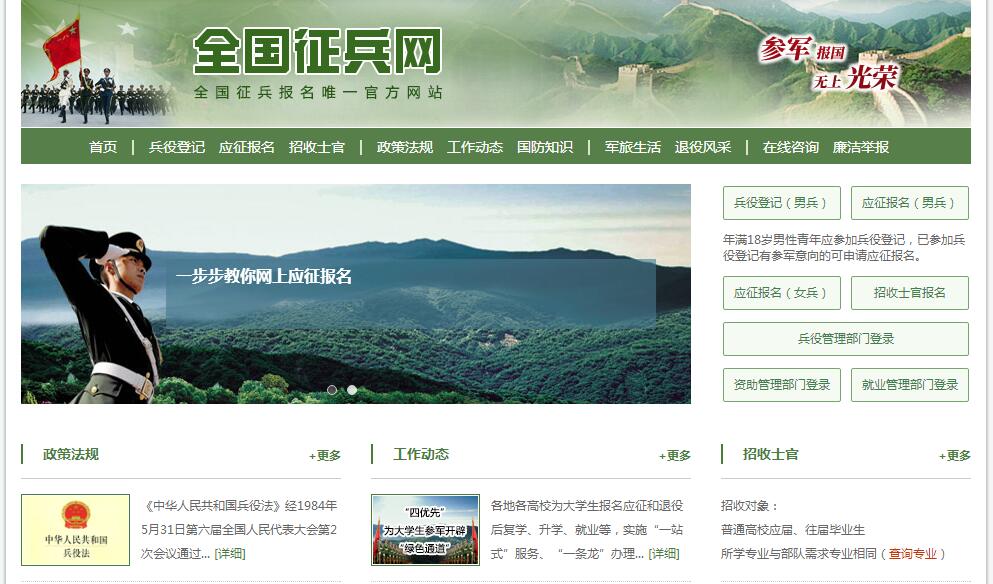
  The Conscription Office of the Ministry of National Defense recently issued the Notice on Preparing for Conscription in 2018, arranged for the preparation of conscription in the new year, and made it clear that the National Conscription Network (website http://www.gfbzb.gov.cn) was officially opened today, and all kinds of work such as online military service registration, recruitment registration and policy consultation were carried out in an all-round way.

  The circular stressed that all localities should make early arrangements for the pre-recruitment of college students to ensure that the physical examination, political assessment and soldier reservation work are completed before college students leave school. In the next step, military service organs at all levels, together with the army and local propaganda departments, will carry out in-depth conscription propaganda, carry out in-depth "conscription propaganda and education into colleges and universities" activities, and organize "provincial and municipal leaders to talk about conscription" activities.

  China’s "Military Service Law" stipulates that male citizens who have reached the age of 18 before December 31 each year should go to military service registration before June 30 of that year according to the arrangements of the military service organs of counties, autonomous counties, cities and municipal districts. Military service registration has started in 2018. Are you ready?

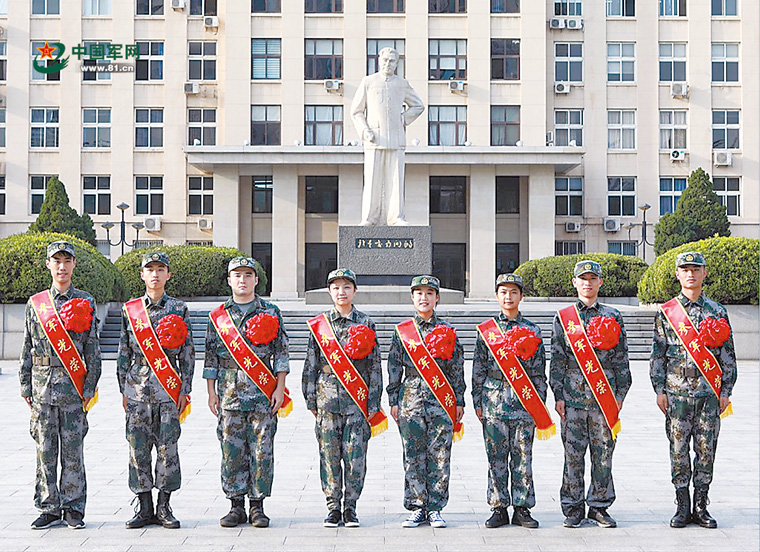
  Point one: President Xi wrote back to eight enlisted college students of Nankai University last year.

  On the last day of 2017, the Supreme Leader of president delivered a New Year message for 2018. It is mentioned in the congratulatory message that in 2017, he received many letters from the masses, including the newly enlisted college students of Nankai University. The stories of college students deeply touched him and made him feel that happiness was all achieved through struggle. On September 23rd last year, the Chairman of the Supreme Leader sent a reply to eight enlisted college students of Nankai University, encouraging them to devote their blood to the great practice of realizing the dream of strengthening the military and write a splendid and regretless chapter of youth.

  Eight Nankai students are ordinary members of Qian Qian’s 10 million new college students in 2017. Among the eight people, some are the children of Xinjiang’s anti-terrorism martyrs, some are descendants of veterans who fought against US aggression and aided Korea, both urban youth and peasant children. Today, they have all grown up obviously: Kazakh boy Ashar, "challenged" to be the platoon leader of special warfare players for six years and completed the 3000-meter run in 11 minutes and 30 seconds; Dai Rui, a female soldier, changed from a "cute girl" on campus to a "female man" in a military camp. In order to cultivate a tall and straight military posture, she put paper on her knees and bricks on her head; Dong Xudong, the champion of the local college entrance examination, went from "Xueba" in the university to "Young Eagle" in the new training. After putting on his uniform, he read "The Educated Youth of the Supreme Leader" for the first time. Hu Yifan, a descendant of the Volunteers, not only learned, taught and applied theory in the military camp, but also hit the 48th ring &hellip with five shots at a distance of 100 meters. …

  Key point two: the continuous development of national defense mobilization level will improve the ability of science and technology to participate in the war and support the front.

  National defense mobilization is a bridge to transform national defense potential into national defense strength and an important content of national defense construction. The effectiveness of national defense mobilization construction is related to national security and development, and to the victory or defeat of future wars.

  In 2017, with the adjustment of the whole army to form 84 military units, including services and arms units and provincial military region systems, various reform measures of the national defense mobilization system gradually landed and achieved new breakthroughs.

  Planning and design are clearer. Combined with the formulation of the "Thirteenth Five-Year Plan" for national defense mobilization construction, the long-term tasks of national defense mobilization in 2025 and the indicators of core mobilization ability are demonstrated and put forward. Various strategic directions, mobilization fields and provinces (autonomous regions and municipalities) have also formulated various planning plans at different levels.

  Accelerate the transformation of the construction model. Vigorously promote the transformation of national defense mobilization from quantitative scale to quality and efficiency, from ensuring army operations to ensuring joint operations of services and arms, from corresponding construction to complementary construction, and from extensive mobilization to precise mobilization.

  The field of mobilization continues to expand. Adhere to information-oriented, increase preparations for supporting and ensuring the mobilization of services and arms, strengthen the construction of new mobilization forces such as information support, electromagnetic spectrum, meteorology and hydrology, mapping and navigation, medical rescue, and maintenance of high-tech equipment, actively explore expansion in various fields, improve the ability of science and technology to participate in wars and support the front, and lead national defense mobilization to a higher level.

  At the same time, in order to meet the requirements of the reform of the military leadership and command system, the National Defense Mobilization Department of the Military Commission has guided Jiangsu, Guangdong, Fujian, Hunan and other provinces and military regions to carry out relevant pilot work, and made useful explorations in building a wartime mobilization organization and command mechanism, a mobilization demand reporting and docking mechanism, and establishing and improving a mobilization preparation inspection and evaluation system.

  Focus 3: There are many preferential policies for resettlement of retired soldiers and entrepreneurship and employment.

  The State Council and the Central Military Commission promulgated the Regulations on Resettlement of Retired Soldiers in October 2011. The Regulations specify a series of preferential policies for resettlement and entrepreneurship of retired soldiers.

  Eligible retired soldiers can be arranged by the government. Non-commissioned officers have served in active service for 12 years; During the period of active service, he usually won a prize above Class II or a prize above Class III in wartime; Disability due to war is rated as level 5 to level 8 disability; Children of martyrs will be arranged by the people’s government.

  Retired soldiers who are self-employed enjoy a series of support policies. If conscripts and noncommissioned officers who have been in active service for less than 12 years retire from active service, the people’s government will support their own employment and get a one-time retirement pension for their own employment; Local governments at or above the county level should support retired soldiers to find jobs and start businesses, and give tax incentives in accordance with state regulations; Employers recruit retired soldiers and enjoy tax incentives according to law; The land contracted by self-employed retired soldiers through household contract before joining the army shall not be illegally recovered or forcibly transferred during the contract period.

  College soldiers enjoy a series of preferential treatment after retirement. Ex-soldiers who have been admitted to ordinary colleges and universities before enlisting and retained their qualifications for admission or are studying in ordinary colleges and universities are allowed to enroll or resume their studies within two years after retiring from active service, and enjoy preferential treatment such as scholarships, grants and tuition reduction and exemption in accordance with relevant state regulations. Those who apply for graduate students can enjoy the "special postgraduate enrollment plan for retired college students and soldiers" of the Ministry of Education.

  Eligible retired soldiers can retire or be supported by the state. The living, housing and medical care of retired non-commissioned officers shall be guaranteed in accordance with the relevant provisions of the state. Conscripts and junior noncommissioned officers who have been assessed as disabled at level 1 to level 4 are discharged from active service and are supported by the state for life.

  Extended reading

  Military service registration is a mandatory obligation.

  In fact, many people don’t know what military service registration is, and think that I don’t have the will to be a soldier, so I don’t need to go to military service registration. However, this is not the case. Article 13 of China’s Military Service Law stipulates that the state practices the military service registration system. Every year before December 31st, male citizens who have reached the age of eighteen shall go to military service registration before June 30th of that year according to the arrangement of the military service organs of counties, autonomous counties, cities and municipal districts.

  According to the relevant regulations, military service registration is the registration management for citizens who meet the military service age, and it is a compulsory obligation of the state. Male citizens of the appropriate age who do not intend to join the army for the time being must also undergo military service registration and verification. Military service registration, mainly to prepare for the annual conscription work. That is to say, it is not necessary to join the army after military service registration.

  Avoiding registration is responsible for affecting credit reporting.

  Evading or rejecting citizens of military service registration will not only affect their normal participation in the army, but will also be subject to administrative punishment. According to the provisions of the Military Service Law, if a citizen who applies for enlistment refuses, evades the solicitation and refuses to make corrections, he shall not be employed as a civil servant or a staff member managed according to the Civil Service Law, and shall not go abroad (territory) or pursue further studies within two years. If the refusal to perform relevant obligations in wartime constitutes a crime, criminal responsibility shall be investigated according to law. (Feng Renqing)

Integrity needs to be adhered to together-Zhongchu Zhiyun launched the selection activities of "Zhicheng Shipper" and "Zhixin Driver" in the industry

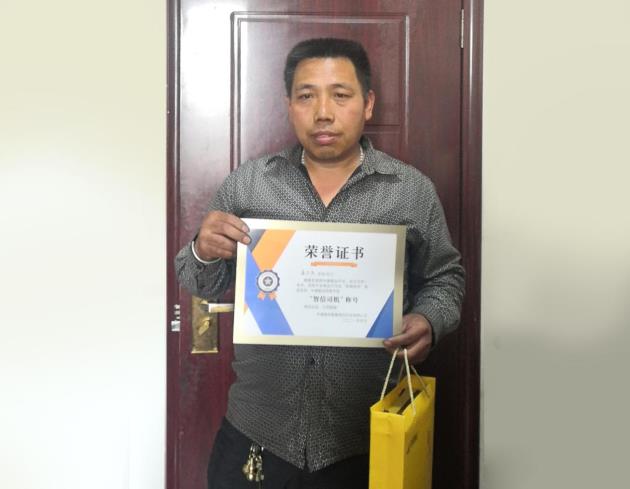
  On April 27th, the "Zhicheng Shipper" and "Zhixin Driver" of China Storage Zhiyun in 2020-2021 were newly released. This is the third consecutive year that this 5A-level online freight platform has conducted such selection among platform shippers and drivers. "We want to promote the positive atmosphere and spread positive energy in the industry through the selection and publicity of honest shippers and drivers, and make use of the spiritual quality and integrity of role models." The organizer of the company’s activities said.

  In 2021, the selection activities of "Zhicheng Shippers" and "Zhixin Drivers" selected 23 "Zhicheng Shippers" and 10 "Zhixin Drivers" among many shippers and more than 2 million driver members of China Storage Zhiyun according to strict selection process and evaluation indicators. These shippers and drivers, despite their different businesses and experiences, have a common feature behind them-adhering to honesty, reflecting the responsibility and responsibility of engaging in the logistics and freight industry, and injecting the high-quality development momentum of honesty into the whole industry that urgently needs to improve management norms.

  Quality service urges shippers to adhere to integrity.

  The selection of "Zhicheng Shippers" involves two ways: recommendation and platform member application. After selecting the candidate shippers according to the comprehensive indicators, the final evaluation is made according to their waybill volume, information accuracy and timeliness on the platform. Finally, 23 shippers won the title of "Zhicheng Shippers".

  Since many shippers cooperated with China Storage Zhiyun, there has never been any shortage of freight, long-term non-processing of overdue waybills, and arrears of drivers’ freight. They insisted on standardized operation through the platform and achieved remarkable cost reduction and efficiency improvement. Based on good service experience, some cargo owners have developed from the initial trial operation of a line to the online platform of all lines of their subsidiaries; Some shippers take the initiative to help drivers solve abnormal problems and constantly improve the efficiency of freight settlement …

  It is worth mentioning that the shippers’ integrity on the platform of China Storage Intelligent Transportation is closely related to the standardized operation principles that the platform has always adhered to and the quality services provided to shippers’ enterprises. On the one hand, at the beginning of its establishment, China Storage Zhiyun attached great importance to auditing standards and safety work, and established a strict membership certification auditing mechanism. Each order achieved the "five-in-one" of business flow, information flow, capital flow, bill flow and cargo trajectory flow, providing safe, convenient and assured integrated logistics and transportation services for cargo owners. On the other hand, through the deep integration of online technology and offline services, China Storage Zhiyun provides the integrated and accurate service of "one customer and five services" for shippers, which effectively protects the rights and interests of shippers. These not only greatly improve the satisfaction of shippers’ enterprises, but also promote their integrity.

  Credit rating helps drivers improve their sense of integrity.

  Based on the platform’s massive real capacity transaction data, China Storage Zhiyun independently developed the "walnut credit score", and established a brand-new credit rating mechanism for drivers based on the platform’s basic attributes, vehicle use, trading preferences, credit history and other big data, which further improved the driver’s integrity awareness. The selection of "Zhixin Driver" is based on this.

  Among the 10 "Zhixin drivers" selected by Zhongchu Zhiyun, some of them undertook the task of emergency material transportation support during the anti-epidemic period; Some actively participate in emergency transportation work such as rescue and disaster relief; Some dutifully guard the safety of goods for the owner; Some keep their promises and infect more card friends with their own integrity; Some are ready to help others and win the respect of shippers and card friends; Some dare to take responsibility and always wait for the security line; Some platforms have large orders and high business support …

  Behind these drivers, there are many simple and touching stories, and each story shines with the light of honesty. Since he registered as a member of the platform, Master Zhang has been carrying goods on the platform of China Storage Zhiyun for a long time, showing great trust and support for the operation of the platform. During the anti-epidemic period in 2020, he actively devoted himself to the transportation of materials to ensure the production and operation of platform cargo owners. Master Lan not only carries goods on the platform of China Storage Intelligent Transportation, but also actively cooperates with the product promotion of the platform ecosystem, and recommends many drivers and friends to join China Storage Intelligent Transportation … The power of the example is endless. There are many similar drivers on the platform of China Storage Intelligent Transportation. They represent the spirit of the members of China Storage Intelligent Transportation: honesty and dedication, and also represent the positive mental outlook of the truck drivers.

  For a long time, Zhongchu Zhiyun has paid more attention to the group of truck drivers. It not only uses the intelligent matching algorithm to accurately provide drivers with source information, but also creates a platform for drivers to find goods with peace of mind, ease and convenience, helping them to increase their transportation income. Moreover, it has continuously passed on the care for truck drivers by holding public welfare activities, winning the trust and support of drivers.

  Obviously, the selection activities of "Zhicheng Shipper" and "Zhixin Driver" held by Zhongchu Zhiyun have truly demonstrated the integrity of the logistics industry and widely publicized the concept of integrity to the industry, which is conducive to the formation of a good fashion of integrity management in the industry. At the same time, through the introduction of a group of typical representatives of shippers and drivers who adhere to integrity, the integrity system construction of the online freight industry has been greatly promoted with the power of example, which has prompted the industry to achieve good integrity construction results.

The first suggestion

As an important popular project of the country in recent years, the renovation project of old urban communities has faced the pain points of people’s livelihood and achieved positive results, which greatly improved the happiness of the beneficiaries. However, the total demand for funds for the renovation of old residential areas is relatively large. At present, various localities are raising funds through multiple channels, but there are still problems such as the overall shortage of funds, the "unaffordable" financial funds, the reluctance of residents and society to invest, and the lack of funds for later management and protection.

What should be changed in the renovation of old residential areas?

According to the relevant person in charge of the Ministry of Housing and Urban-Rural Development, the renovation of old residential areas is divided into three priorities, one is the most basic water circuit gas network. The problems listed as "priority transformation" in various places are "dilapidated pipe network, lack or aging of water supply and drainage, power grid, gas and optical fiber". Second, elevators, parking garages and other supporting facilities. After the water and electricity are changed, the qualified areas can install elevators and build parking garages and other supporting facilities according to local conditions. The third is property management and public services. Conditional areas can solve the problems of water and electricity and parking, build supporting facilities such as old-age and child-care service facilities and barrier-free facilities, and implement energy-saving transformation.

After the renovation of the old community, the old building is equipped with elevators to make the residents no longer "suspended"; In the past, the ground where rain and sewage flowed was covered with colored cement; In the past, the open space full of weeds and garbage has now become a pavilion for people to rest. Various changes in the community have improved the happiness of residents. At the same time, the transformation of old residential areas has not only improved people’s livelihood, but also promoted investment and consumption growth, which has also made great contributions to economic growth.

Sources of funds for the renovation of old residential areas

The soldiers and horses have not moved, food and grass come first, and the funds needed for the transformation of old communities are the top priority. According to the contents of rectification, financial investment, house payment, special housing maintenance fund, personal provident fund, responsible enterprise funds and social investment can be used for the transformation of old residential areas. Mainly divided into the following parts:

First, the central government’s financial investment. In 2012, the Ministry of Housing and Urban-Rural Development issued the Interim Measures for the Administration of Subsidies for Energy-saving Renovation of Existing Residential Buildings in Hot Summer and Cold Winter Areas and the Implementation Opinions on Promoting Energy-saving Renovation of Existing Residential Buildings in Hot Summer and Cold Winter Areas. Subsidies for energy-saving renovation of existing residential buildings in hot summer and cold winter areas include four aspects: expenditure on energy-saving renovation of external doors and windows of buildings; Expenditure on energy-saving renovation of building external shading system; Expenditure on thermal insulation and energy-saving renovation of building roofs and external walls; Other expenditures related to energy-saving renovation of existing residential buildings in hot summer and cold winter areas approved by the Ministry of Finance and the Ministry of Housing and Urban-Rural Development. The highest subsidy standards in eastern, central and western regions are 15, 20 and 25 yuan/m2 respectively.

The second is government financial investment and fixed assets investment. Taking Beijing as an example, the projects shared by the two levels of finance include: comprehensive renovation of seismic strengthening of buildings, renovation of energy saving and heat metering, barrier-free facilities, environmental improvement of residential quarters, greening, roads, lighting facilities, and air conditioning regulation. Among them, the renovation of barrier-free facilities and the renovation of existing non-energy-saving buildings are shared by the urban two levels of finance in a ratio of 1:1; District environmental improvement, greening, roads, lighting facilities, air conditioning and other renovation costs, by the county responsible. Fixed assets investment is used for municipal public facilities renovation, flat to slope and other projects.

Third, responsible enterprises and responsible (property rights) units invested funds. The renovation costs of water, electricity, gas, heat, communication and other lines, pipe networks and equipment in the public part of the community shall be borne by relevant professional companies and responsible (property rights) units, and the urban two-level finance shall give fixed subsidies. Such as: water supply and drainage network transformation, power distribution facilities transformation, gas pipeline transformation, heating pipeline transformation.

Fourth, individuals and society invest money. Generally speaking, the cost of water, electricity, gas, heat, communication, auxiliary facilities and equipment of waterproof lamps, rainwater collection system in residential areas, renovation of fire-fighting facilities, supplementary construction of parking spaces for motor vehicles and non-motor vehicles, and renovation of security systems can be used in accordance with regulations, such as housing reform, house sales, special maintenance funds and personal provident fund. The expenses required for the renovation of ordinary basement, the addition of elevators, the application of solar energy technology, roof greening and other projects can be solved by means of unit investment, social fundraising, contract energy management, and owner’s own financing.

In addition, in order to solve the problem of funds, the state supports the transformation from multi-channel funds and the implementation of tax reduction and exemption policies. In terms of financing, it requires increasing financial subsidies, increasing bank credit support, attracting private capital to participate, expanding bond financing, and raising funds by enterprises and the masses. Among them, multi-channel financing methods include: first, issuing government bonds, Public Offering of Fund, trusts and other financial means; Second, the National Development Bank and the World Bank provide interest-free and discount loans, or introduce investment companies; The third is to adopt PPP and contract energy management modes; Fourth, by issuing special lottery tickets, a certain proportion of the existing land transfer fees or lottery income is extracted as the old community renewal fund; Fifth, adding floors and areas, increasing the commercial functions of the community, and tearing down some old buildings and building new ones. In view of the capital investment in the renovation of residential buildings, from the central government to the local government, the methods of raising funds according to local conditions have been introduced one after another.

The current funding problem

It is indeed a relatively perfect operation system to obtain funds through financial allocation, residents’ investment and market operation. However, judging from the current progress, the financial allocation is in place, and residents are willing to contribute to improve their living quality. As for absorbing social capital to participate in the transformation through market operation, the effect is not great. The renovation of old residential areas still faces financial difficulties.

The financial dilemma is caused by the huge demand for funds. According to the statistics of China National Information Center, as of December 2018, 106 old residential areas have been renovated in 15 pilot cities for the renovation of old residential areas in cities and towns designated by the Ministry of Housing and Urban-Rural Development at the end of 2017, benefiting 59,000 households. According to the preliminary investigation in various places, there are about 170,000 old urban communities that need to be rebuilt nationwide, with a construction area of about 4 billion square meters, involving hundreds of millions of residents. According to preliminary estimates, the total investment in old residential areas that need comprehensive transformation in cities and towns in China can reach 4 trillion yuan.

Secondly, at present, the main source of funds for the renovation of old residential areas in China is still financial funds, but the existing residential buildings in large cities rely only on the government’s own efforts, which is far from making up for the huge funding gap for renovation. The the State Council executive meeting held on June 19th pointed out that financial institutions and localities should be encouraged to actively explore and increase financial support for the renovation of old residential areas in a sustainable way. Use market-oriented methods to attract social forces to participate. On October 14th, when Premier Li Keqiang visited Xi ‘an, he stressed that it is not enough to transform old residential areas into government solo, but also to innovate the system and mechanism, fully attract social forces to participate and form a multi-voice chorus.

Finally, different from shed reform, the fund-raising channels for the renovation of old residential areas should be based on the principle of "who benefits, who contributes", reasonably determine the allocation rules of renovation costs in combination with the actual situation, and improve the multi-channel fund-raising mechanisms such as reasonable sharing of residents, unit investment, market operation and financial awards. Among them, the responsibility of residents’ capital contribution can be clearly defined, and the part of residents’ capital contribution can be implemented through residential special maintenance funds, public income and other channels, and individual residents are encouraged to donate money and materials to participate in the transformation of old communities. However, China has not yet established a perfect investment and financing system. The government’s financial investment is limited, and the residents’ willingness to contribute is low, so it is difficult for enterprises to participate because of many uncontrollable factors. Obviously, only by solving the financial dilemma can we smoothly promote the transformation of old communities.

countermeasure and suggestion

The renovation of old residential areas involves a wide range, which is a systematic project. To do this work well, we need to solve three problems:

First, establish a diversified financing mechanism and increase the efforts to raise funds for transformation. First, enrich financing subjects and ease the pressure on government funds. Give play to the decisive role of the market in the allocation of public resources and treat all kinds of investment subjects equally. Utilize franchising, investment subsidies, government purchase of services, etc. to attract private capital to participate in the renovation projects of old residential areas. In a certain period of time, foreign capital can also play an active role.

The second is to expand financing channels. Explore the establishment of a diversified loan risk compensation fund financing model with the participation of central, local and social funds to expand the sources of funds. All localities should, in light of their own reality, reasonably expand the scope of support, scientifically determine the sharing ratio, and make the formulation and implementation of the risk compensation sharing mechanism compatible with the local government’s financial resources and industrial development policies.

The third is to strengthen financial support and optimize financial supply. We should strengthen the role of policy finance, strengthen the financing docking between CDB and Agricultural Development Bank, and provide a stable source of funds with low cost and long term for community rectification; Encourage and guide commercial banks to set up specialized service institutions and formulate multi-level credit service mechanisms to provide more practical credit services for the transformation of more old communities; Establish a "bank-enterprise assistance fund" to support the capital turnover of key enterprises and minimize the financing costs of enterprises.

Fourth, give full play to the direct financing function of the capital market. Taking advantage of the characteristics of large scale, long term and stable use of equity and bond markets, we will encourage qualified leading enterprises and small and medium-sized enterprises to go public and use multi-level capital markets for financing.

The fifth is to promote the PPP model, that is, the cooperation between government and social capital. This model uses the existing resources of the community to attract social funds, and the government, investment enterprises and community owners establish a relationship of "benefit sharing, risk sharing and full cooperation" in the form of concession agreements, forming a win-win model of "government support, enterprise financing and co-construction, and residents’ participation and benefit".

Second, improve the financing supporting measures to attract more funds to invest in the renovation of old communities. The first is to increase the guarantee of financing policy system. Seriously study various policies and measures to support the transformation of old residential areas, give play to the guiding role of finance in the allocation of financial resources, and standardize and guide financial institutions and private financing to invest more resources in the transformation of old residential areas through financial subsidies, tax incentives and risk compensation.

Second, continue to improve the construction of social credit system. Vigorously promote the construction of credit information sharing and accelerate the credit construction of government, enterprises, communities and individuals; We will improve the credit guarantee market, set up a financing guarantee company wholly owned or controlled by the policy government, and further improve the credit risk compensation and sharing mechanism of small and micro enterprises, that is, the risk sharing mechanism of banks, insurance, guarantees and governments.

The third is to clarify the policy objectives and improve the assessment mechanism. Improve the relevant rules and regulations, and clarify the scope standards, operational procedures and charging standards for supporting enterprises; Establish and improve the assessment management system suitable for policy objectives, and clarify the main assessment factors; Actively build a multi-level fund replenishment mechanism based on financial funds, and promote financial institutions and re-guarantee institutions to provide capital injection support.

The fourth is to supervise the whole process of funds. In accordance with the requirements of implementing the main responsibility, clarify the main responsibility of the project funds, that is, the principle of "whoever implements it is responsible", so as to ensure that the use must be effective, the inefficiency must be accountable, and the violations must be investigated, so as to ensure that every brick and tile from the allocation of funds to the implementation to the renovation of old communities must be strictly and meticulously supervised, and corruption such as shrinkage and discount are not allowed.

Third, increase the investment ratio of enterprises and community residents. Practice has proved that if the transformation of old residential areas only depends on government investment, it is tantamount to a drop in the bucket If it is invested by enterprises, it is necessary to find new profit space. However, as a major livelihood project, enterprises can not have the idea of quick success and instant benefit when investing in the renovation of old residential areas, let alone hold the illusion of profiteering.

The first is to increase the public income of old communities and solve the financial dilemma. For example, considering that many old residential areas are located in prime locations of cities, the advertising revenue of elevators after renovation, the parking revenue after adding parking berths, and the rental revenue of public houses in residential areas can all be used as "cakes" to attract enterprises to invest. In addition to revitalizing idle space, it can also form market interest stimulation points through subsequent property and parking management fees, as well as planned pension, child care, health and other industries.

The second is to increase the proportion of residents’ participation in the renovation of old residential areas. Residents should be encouraged to play a sense of ownership, assume a certain responsibility for capital contribution, and establish a mechanism for sharing results in accordance with the principle of "who invests and benefits". Specifically, some reconstruction funds can be raised through channels such as residents’ self-raised donations and housing maintenance funds.

The third is to explore ways to establish a maintenance fund system for old residential quarters and use new facilities for compensation, so as to broaden the sources of long-term care funds. Specifically, according to the basic conditions of old residential areas, residents’ consumption level, awareness of payment and other specific conditions, residents should be guided to implement standardized, basic and bottom-up care models in a classified manner, and the level of follow-up care should be gradually improved.

Fourth, broaden social investment channels, encourage enterprises to invest, donate money and other ways to attract social forces to donate money or cultural and sports facilities; Encourage the original property units to support the transformation of old communities by donating money and materials; You can also set up a love foundation to encourage caring people in society to donate freely.

Shapingba: full chain disposal to prevent garbage "three mixed"

The "three-mixed" problem of domestic waste (mixed input, mixed collection and mixed transportation) is a persistent problem that affects the efficiency of domestic waste classification and recycling. In recent years, Shapingba District has focused on the outstanding problems in the delivery, collection and transportation of domestic waste classification, carried out special rectification work in the front end, middle end and law enforcement end of domestic waste classification, gradually improved the long-term management mechanism, and made effective progress in domestic waste classification.

The front end is accurate.

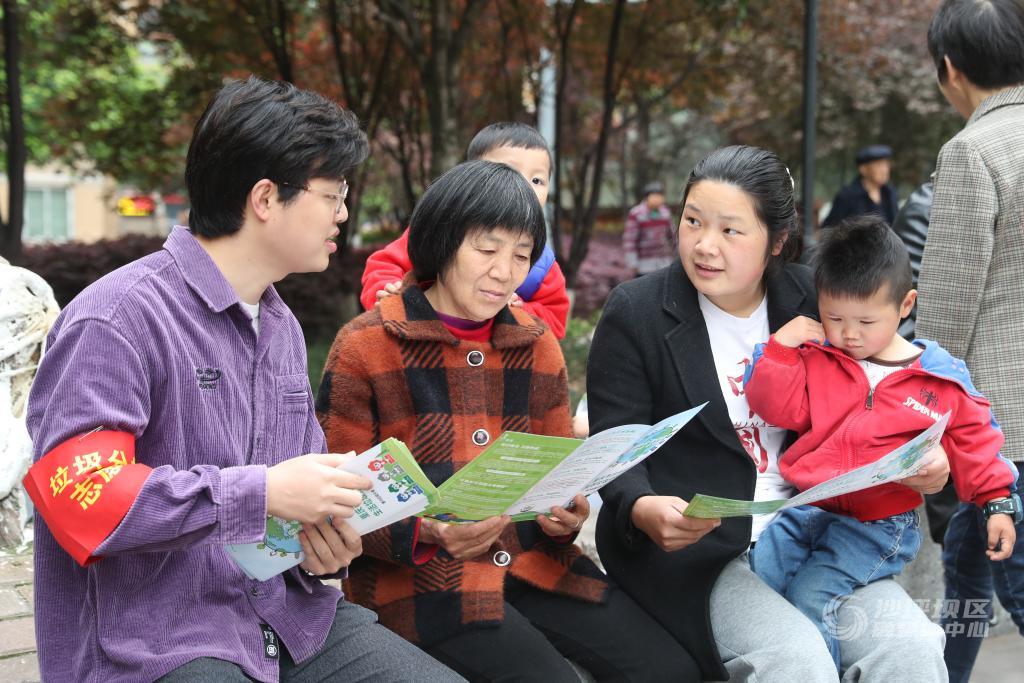
At 7: 00 a.m. on February 28th, in Qingyue Community, Fengwen Street, Shapingba, Peng Bin, a garbage sorting instructor, put on a volunteer vest and armband, and stood beside the centralized garbage sorting point to guide residents to put garbage in a classified way. "Contaminated napkins belong to other garbage and cannot be thrown into recyclable garbage bins." Peng Bin patiently explained the classification to the residents. "Every day from 7: 00 am to 9: 00 am and from 7: 00 pm to 9: 00 pm, it is the peak period of domestic garbage delivery and our busiest time." Peng Bin told reporters. Xuefu Yueyuan public rental housing area has a large population. In order to make the knowledge of domestic waste classification a household name, Peng Bin will also carry out door-to-door publicity and knowledge lecture hall training in his spare time, and strive to pass on the knowledge of domestic waste classification to every resident.

Nowadays, the residents of Yueyuan public rental housing community in Xuefu have gradually developed the habit of sorting domestic garbage. "Now there are three garbage bins standing in the home, which are placed in the kitchen, living room and bedroom respectively. Every time I go out, I will pack them and throw them into the corresponding garbage bins." Resident Yu Xinhui told reporters.

At present, Shapingba District focuses on improving the quality of accurate delivery of kitchen waste, and continues to deepen the publicity of "knocking at the door", strengthen the guidance and persuasion of residents’ classified delivery, and at the same time, support positive incentives such as red and black lists, and strive to improve the quality of front-end classified delivery.

Mid-range transportation is not mixed.

At 8 o’clock in the morning, the kitchen waste collection and transportation vehicle driven by Wang Ping arrived at Xuefu Yueyuan public rental housing community on time and began to prepare for the collection and transportation of kitchen waste. I saw Yang Jun take out a piece of white film and spread it flat on the ground at the rear of the car. This step is to prevent the oil of kitchen waste from dripping on the road. "If non-kitchen waste is found in the bucket during recycling, we will refuse it and dump it into the garbage truck after the cleaning staff reclassifies it." Wang Ping introduced to the reporter.

It is understood that the collection and transportation of kitchen waste in Shapingba District is currently carried by Chongqing Solid Waste Transportation Co., Ltd. The company sends more than 20 professional vehicles for "one-stop" collection and transportation service, and the kitchen waste collected from various communities will be transported to Xiyong garbage primary transfer station and Zouma garbage secondary transfer station for back-end treatment.

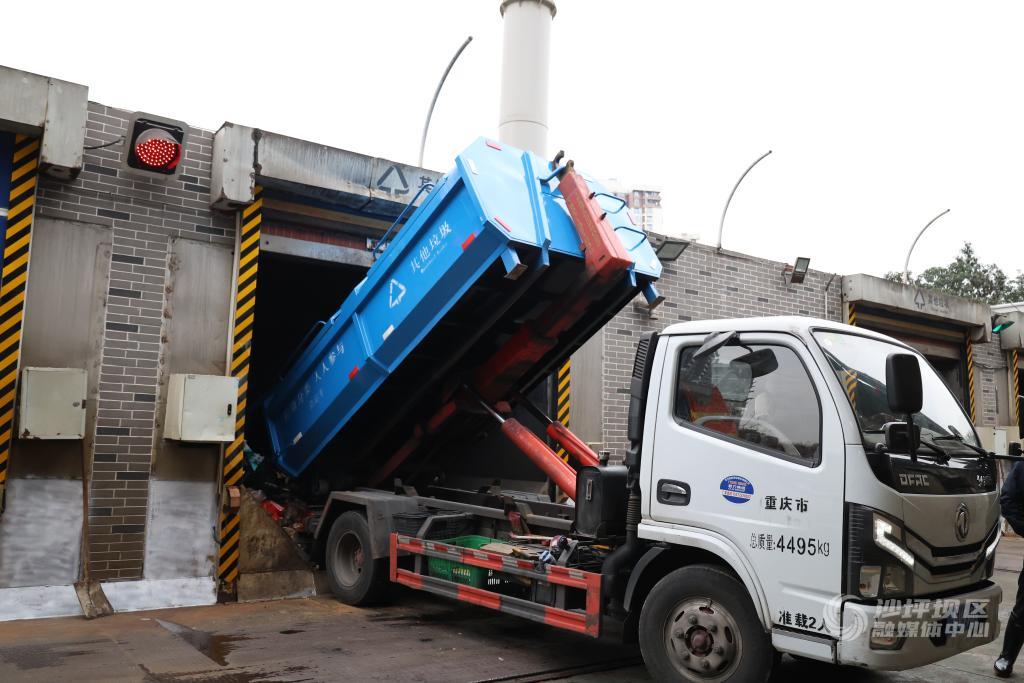
The front-end delivery is accurate, and the middle-end delivery is not mixed. The collection and delivery of other garbage will come to the solid waste transfer station on Zhanxi Road from another route. This transfer station is one of the four other garbage transfer and collection stations in Shapingba District, and the domestic garbage trucks near the business circle of Three Gorges Square in Shapingba will be cleared and transferred here.

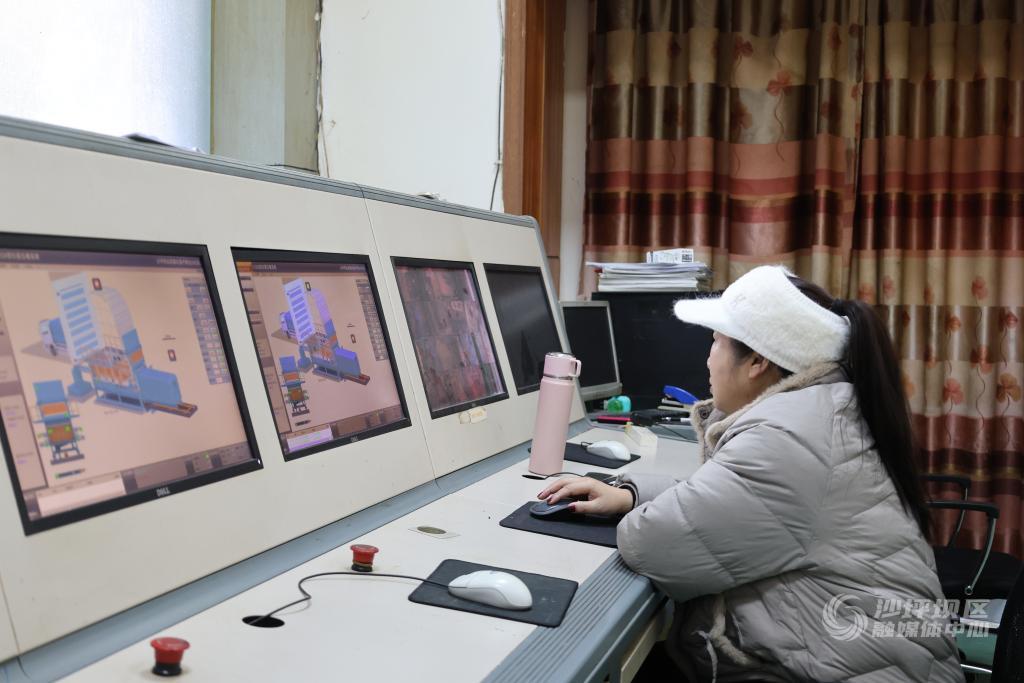
In the main control room of the transfer station, several display screens are lined up, and the operators keep an eye on each screen and observe the dumping port in real time. "If the vehicle is observed to have non-other garbage such as construction waste residue, branches and leaves when it is dumped, the staff will suspend the work of the vehicle and inform the driver to clean it up immediately. The site with serious mixed transportation will refuse the vehicle garbage." He Jian, the stationmaster, pointed to the screen and said.

It is reported that the solid waste transfer station on Zhanxi Road will compress nearly 220 tons of other garbage in one day, and the other garbage after classification and compression will be transferred by designated vehicles to the Zouma garbage secondary transfer station to complete the whole chain collection and transportation process of domestic garbage classification.

Strict law enforcement and supervision

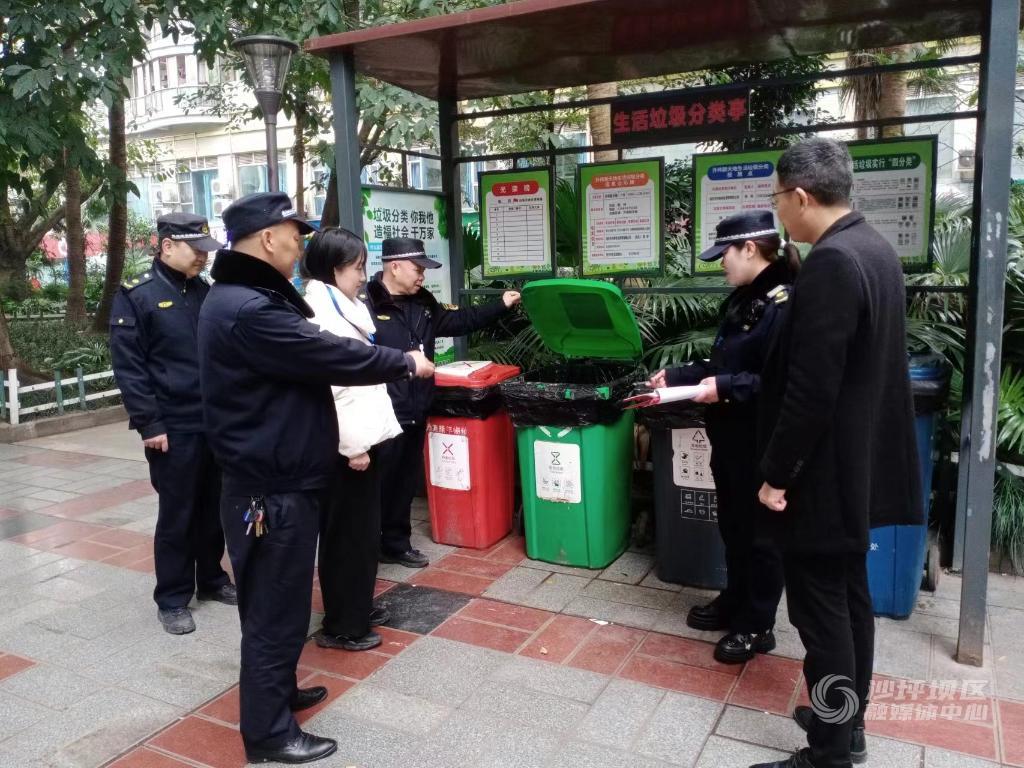
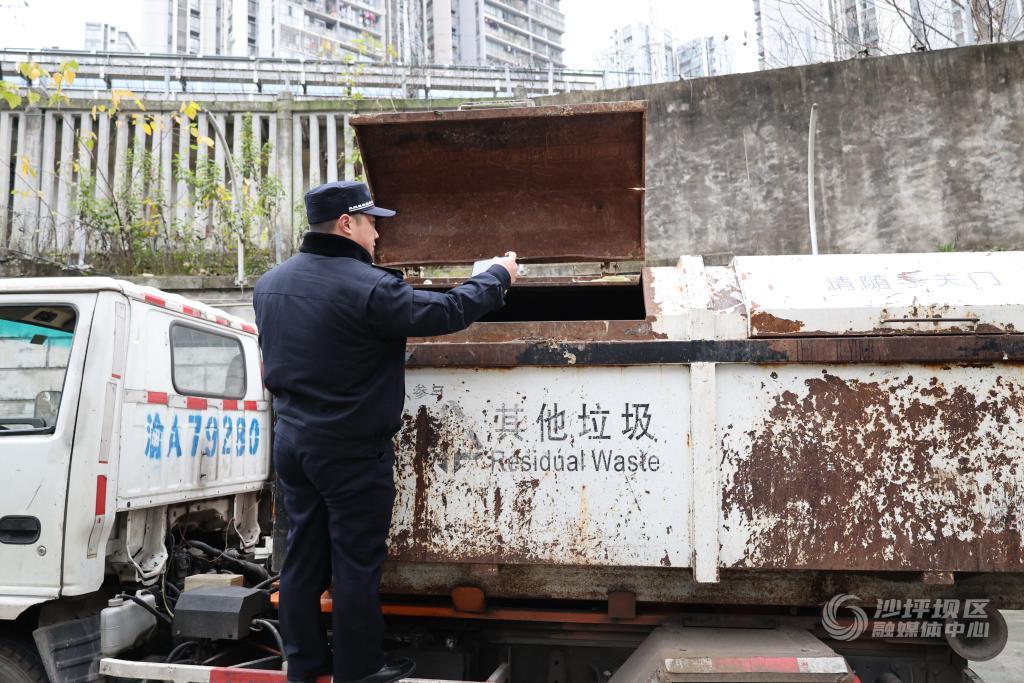
"Your vehicle has vague signs and garbage dripping, please get off and cooperate with it." "Vegetable leaves, tube bones, etc. belong to kitchen waste and cannot be mixed with other garbage." At the vehicle entrance of the solid waste transfer station on Zhanxi Road, Zhang Hua of the Emergency Brigade of the Urban Management Law Enforcement Detachment of Shapingba District made a surprise inspection of the garbage collection vehicles.

According to Zhang Hua, the phenomenon of a small amount of dripping, leaking, unclear transportation garbage label and unclean body will be warned and registered in the first investigation. If there is obvious garbage mixed transportation, they will order the driver to rectify on the spot and impose further administrative punishment after investigation.

It is reported that since the launch of the "three mixed" special rectification campaign of domestic waste in Chongqing, the urban management law enforcement detachment of Shapingba District has taken many measures to continuously promote the implementation of the "Regulations on the Management of Domestic Waste in Chongqing". The detachment adopts various forms of propaganda work, such as "entering organs" and "entering enterprises", and at the same time strengthens supervision and law enforcement and actively carries out law enforcement actions.

The relevant person in charge of the Urban Management Bureau of Shapingba District said that Shapingba District will further deepen the implementation and publicity of domestic waste classification, strengthen the work efficiency at the front end, the middle end of transportation and collection, and the law enforcement end of disposal, promote the formation of a domestic waste treatment atmosphere with the participation of the whole people, and effectively solve the problem of "mixed investment, mixed collection and mixed transportation" of domestic waste.