Going Green —— Three Ecological Stories along the Yangtze River

  Xinhua News Agency, Nanchang, July 21st Title: Go green — — Three ecological stories along the Yangtze River

  Xinhua News Agency reporter Chen Zhuzuo

  Entrepreneurs who return to the countryside from big cities, "experience officers" of urban life on the banks of Xunyang River, and "researchers" in the aquarium & HELIP; … The reporter recently visited many places in Jiujiang, Jiangxi, and three ecological stories were impressive.

  Entrepreneurs returning to the countryside from big cities

  "Eat an iced watermelon first, and then a housekeeper will take you to the cabin after the formalities are completed." The person talking to the tenant in front of him is Lu Xianfeng, the head of Yueshan Residential Quarter in Changshui Village, Luoping Town, Wuning County, Jiujiang City. This is his sixth year of "treasure hunting" in Changshui Village.

  In 2016, Lu Xianfeng, who worked in Tangshan for three years, became the head of the northern market of a travel company. Seeing that the mountains and rivers in his hometown contain business opportunities, he quit his job in the city and returned to his hometown to invest in the development of the homestay industry. Just after the Spring Festival in 2017, the B&B broke ground.
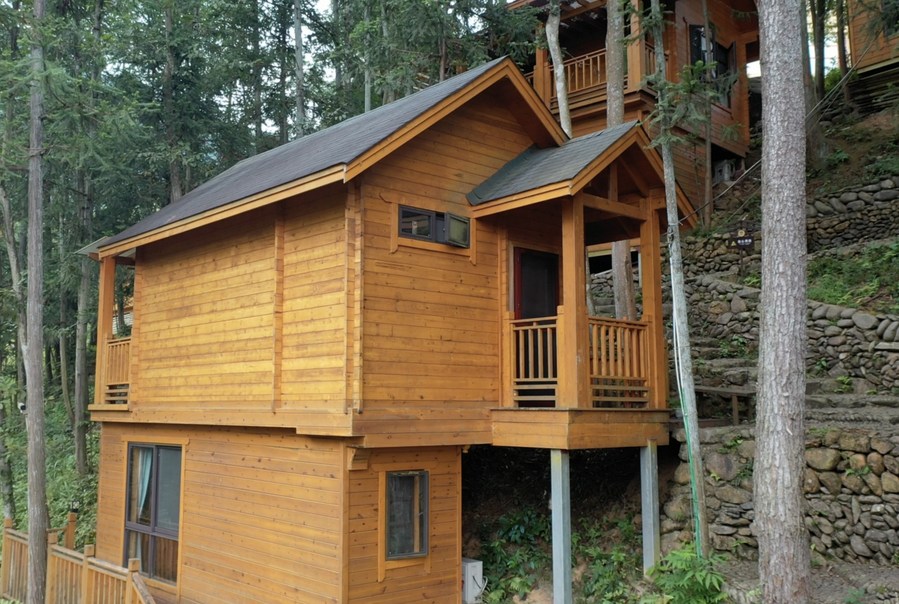
  The picture shows the wooden house in the forest where Yueshan residents live in Changshui Village, Luoping Town, Wuning County. Xinhua News Agency reporter Guo Jiewen photo

  Main business operation, multi-point extension. Today, the B&B has 21 wooded cabins and 60 standard rooms, which are built by the mountains and rivers, and carry out business such as agricultural product sales, catering, leisure and entertainment. In May this year, it received more than 2,500 passengers.

  Seeing that Lu Xianfeng did a good job, local villagers also joined in, vigorously developing rural tourism, under-forest economic industries and characteristic homestays. In 2022, the village collective income reached 1.39 million yuan, an increase of 33.8% over the previous year.

  The "experience officer" of urban life along Xunyang River.

  "Not enough, not enough at all." Yang Jie, a citizen of Jiujiang, told reporters that since Pipa Bookstore opened, she has been in the bookstore almost every weekend morning. "I will order a cup of coffee on the first floor and then choose a book on the second floor to read it carefully."

  Pipa Bookstore is located in Changjiang National Cultural Park (Jiujiang Section), Xunyang District, Jiujiang City. There are not only more than 5,000 books for free reading, but also coffee shops and tea rooms with Xunyang cultural characteristics on the first and third floors respectively. Since its opening in June this year, about 25,000 people have come here to "enjoy books and enjoy culture".

  "Last week, I was in the bookstore with two friends in the morning and went to the Pipa Pavilion not far apart in the afternoon to see the immersive exhibition Pipa Travel, which was particularly shocking." Yang Jie said.
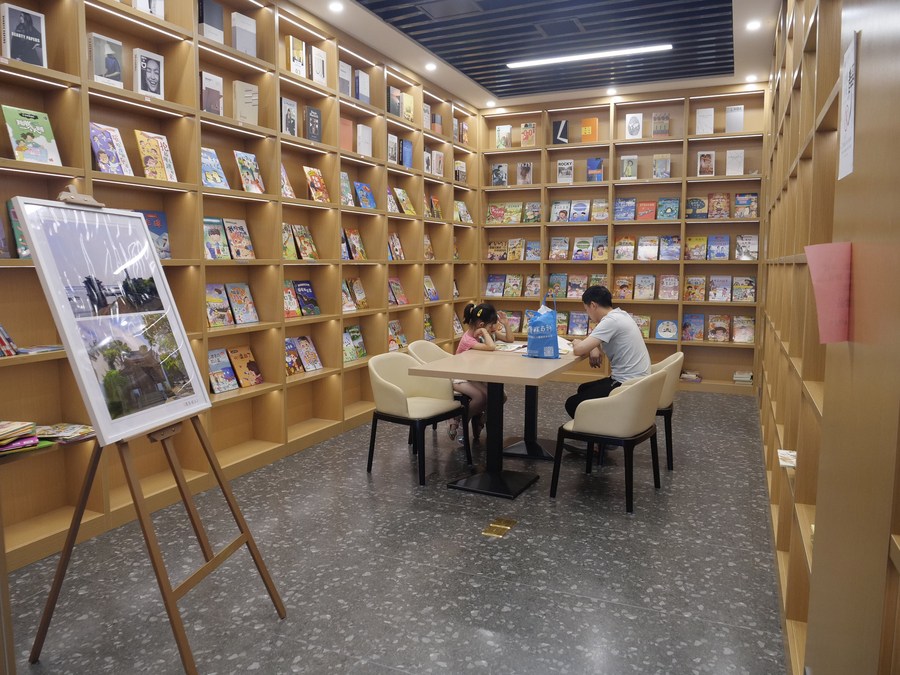
  The picture shows the citizens reading books in the Pipa Bookstore of the Yangtze River National Cultural Park (Jiujiang Section). Xinhua News Agency reporter Guo Jiewen photo

  Show the Millennium context and create a "show belt" of emerging culture. Jiujiang makes full use of the natural scenery and Xunyang cultural characteristics of the Yangtze River coastline to create the "most beautiful coastline" of the Yangtze River National Cultural Park (Jiujiang section). Nowadays, cultural landmarks such as Pipa Pavilion, Xunyang Building and Pipa Bookstore are connected in series, and the "Xunyang River Fun Summer Party" in Zhenbuffalo Square enriches the night economic consumption format.

  Before leaving the bookstore, Yang Jie took a photo and sent it to a circle of friends. The essay wrote: "Read ten thousand volumes of poetry books, visit the cultural Yangtze River, and the happiness index of urban life is up up up!"

  The little "researcher" in the aquarium

  In China finless porpoise bay (Hukou) aquatic biological protection base, there are children everywhere. Next to an aquarium, the reporter heard a young but determined voice.

  "This one is a sturgeon, and this one with an oblique rectangular shape and black stripes is a mullet … …” Zhu Guoyuan, a 9-year-old tourist, took his mother to talk in front of the aquarium. Zhu Guoyuan’s mother said: "He likes all kinds of fish since he was a child, so he just took advantage of the summer vacation to take him to visit."

  China finless porpoise bay (Hukou) aquatic biological protection base is located on the bank of Poyang Lake in Hukou County, Jiujiang City, which integrates aquatic biological protection and popular science education. Since its trial operation on December 31, 2022, it has received more than 150,000 tourists.

  "When I was his age, many creatures in the Yangtze River could only be seen in textbooks. Now it is very different. The environment of the Yangtze River is getting better and better, and there are such protection bases." While speaking, Zhu Guoyuan asked his mother to see his new discovery — — A popular science exhibition machine, choose classification and point name, and display rich graphic, audio and video content in front of you.

  Zhu Guoyuan said, "My classmates call me ‘ Encyclopedia of Fish ’ I hope that when I grow up, I still have the opportunity to continue to study them. "
Shapingba: full chain disposal to prevent garbage "three mixed"

The "three-mixed" problem of domestic waste (mixed input, mixed collection and mixed transportation) is a persistent problem that affects the efficiency of domestic waste classification and recycling. In recent years, Shapingba District has focused on the outstanding problems in the delivery, collection and transportation of domestic waste classification, carried out special rectification work in the front end, middle end and law enforcement end of domestic waste classification, gradually improved the long-term management mechanism, and made effective progress in domestic waste classification.

The front end is accurate.

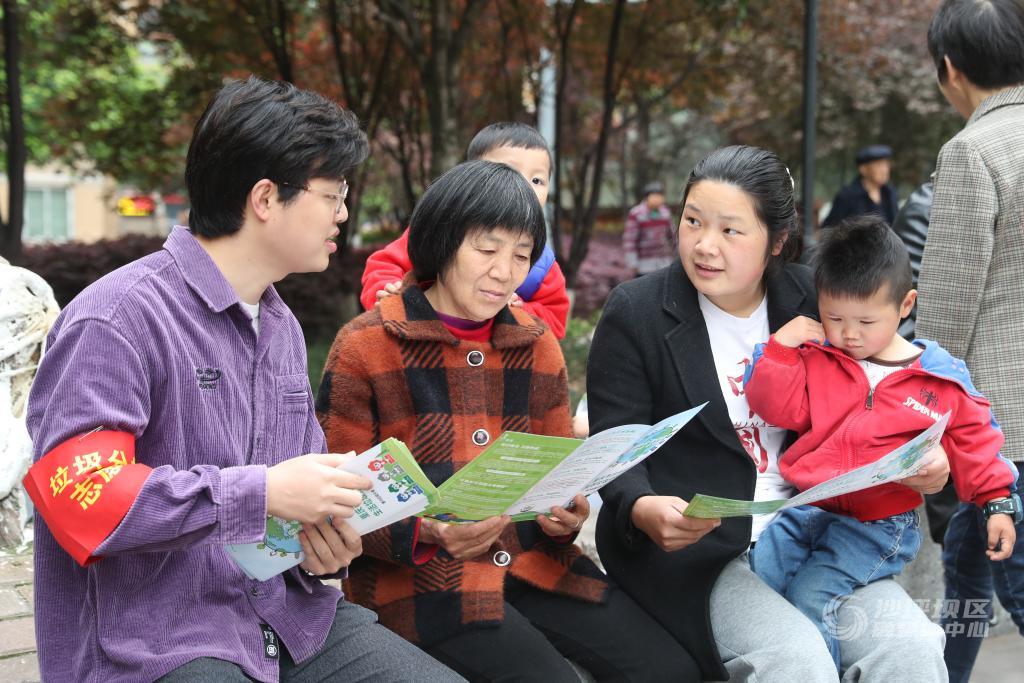
At 7: 00 a.m. on February 28th, in Qingyue Community, Fengwen Street, Shapingba, Peng Bin, a garbage sorting instructor, put on a volunteer vest and armband, and stood beside the centralized garbage sorting point to guide residents to put garbage in a classified way. "Contaminated napkins belong to other garbage and cannot be thrown into recyclable garbage bins." Peng Bin patiently explained the classification to the residents. "Every day from 7: 00 am to 9: 00 am and from 7: 00 pm to 9: 00 pm, it is the peak period of domestic garbage delivery and our busiest time." Peng Bin told reporters. Xuefu Yueyuan public rental housing area has a large population. In order to make the knowledge of domestic waste classification a household name, Peng Bin will also carry out door-to-door publicity and knowledge lecture hall training in his spare time, and strive to pass on the knowledge of domestic waste classification to every resident.

Nowadays, the residents of Yueyuan public rental housing community in Xuefu have gradually developed the habit of sorting domestic garbage. "Now there are three garbage bins standing in the home, which are placed in the kitchen, living room and bedroom respectively. Every time I go out, I will pack them and throw them into the corresponding garbage bins." Resident Yu Xinhui told reporters.

At present, Shapingba District focuses on improving the quality of accurate delivery of kitchen waste, and continues to deepen the publicity of "knocking at the door", strengthen the guidance and persuasion of residents’ classified delivery, and at the same time, support positive incentives such as red and black lists, and strive to improve the quality of front-end classified delivery.

Mid-range transportation is not mixed.

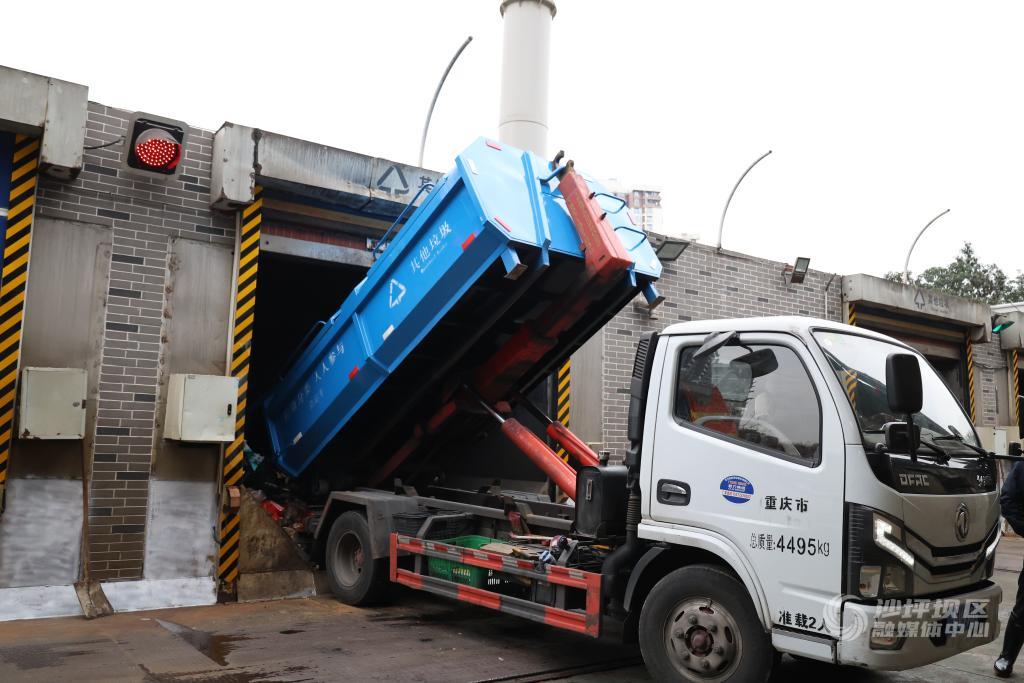
At 8 o’clock in the morning, the kitchen waste collection and transportation vehicle driven by Wang Ping arrived at Xuefu Yueyuan public rental housing community on time and began to prepare for the collection and transportation of kitchen waste. I saw Yang Jun take out a piece of white film and spread it flat on the ground at the rear of the car. This step is to prevent the oil of kitchen waste from dripping on the road. "If non-kitchen waste is found in the bucket during recycling, we will refuse it and dump it into the garbage truck after the cleaning staff reclassifies it." Wang Ping introduced to the reporter.

It is understood that the collection and transportation of kitchen waste in Shapingba District is currently carried by Chongqing Solid Waste Transportation Co., Ltd. The company sends more than 20 professional vehicles for "one-stop" collection and transportation service, and the kitchen waste collected from various communities will be transported to Xiyong garbage primary transfer station and Zouma garbage secondary transfer station for back-end treatment.

The front-end delivery is accurate, and the middle-end delivery is not mixed. The collection and delivery of other garbage will come to the solid waste transfer station on Zhanxi Road from another route. This transfer station is one of the four other garbage transfer and collection stations in Shapingba District, and the domestic garbage trucks near the business circle of Three Gorges Square in Shapingba will be cleared and transferred here.

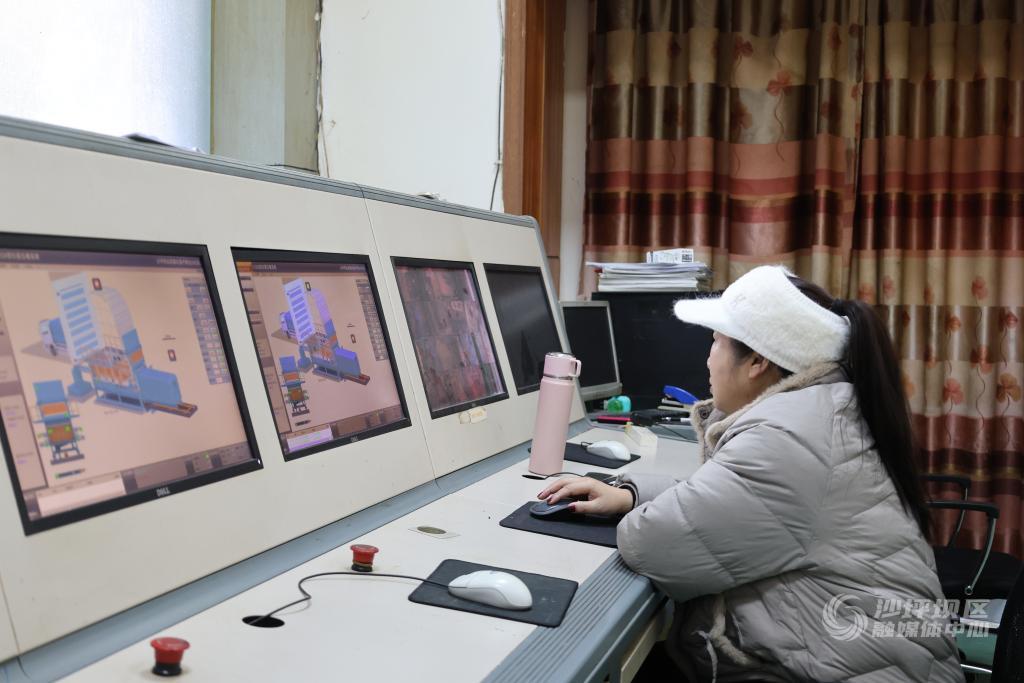
In the main control room of the transfer station, several display screens are lined up, and the operators keep an eye on each screen and observe the dumping port in real time. "If the vehicle is observed to have non-other garbage such as construction waste residue, branches and leaves when it is dumped, the staff will suspend the work of the vehicle and inform the driver to clean it up immediately. The site with serious mixed transportation will refuse the vehicle garbage." He Jian, the stationmaster, pointed to the screen and said.

It is reported that the solid waste transfer station on Zhanxi Road will compress nearly 220 tons of other garbage in one day, and the other garbage after classification and compression will be transferred by designated vehicles to the Zouma garbage secondary transfer station to complete the whole chain collection and transportation process of domestic garbage classification.

Strict law enforcement and supervision

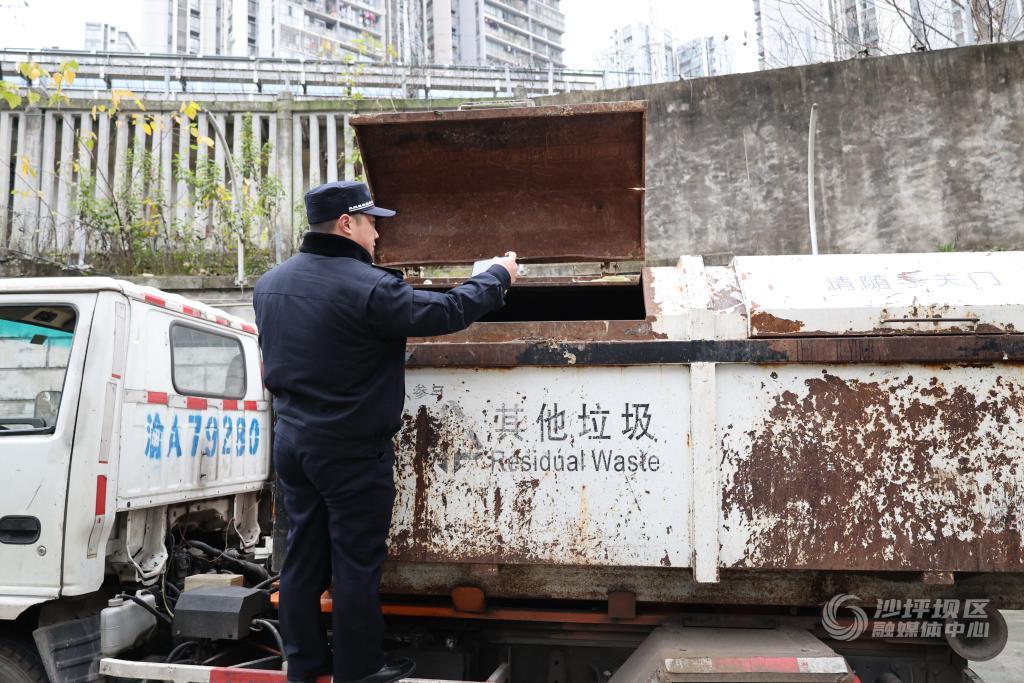
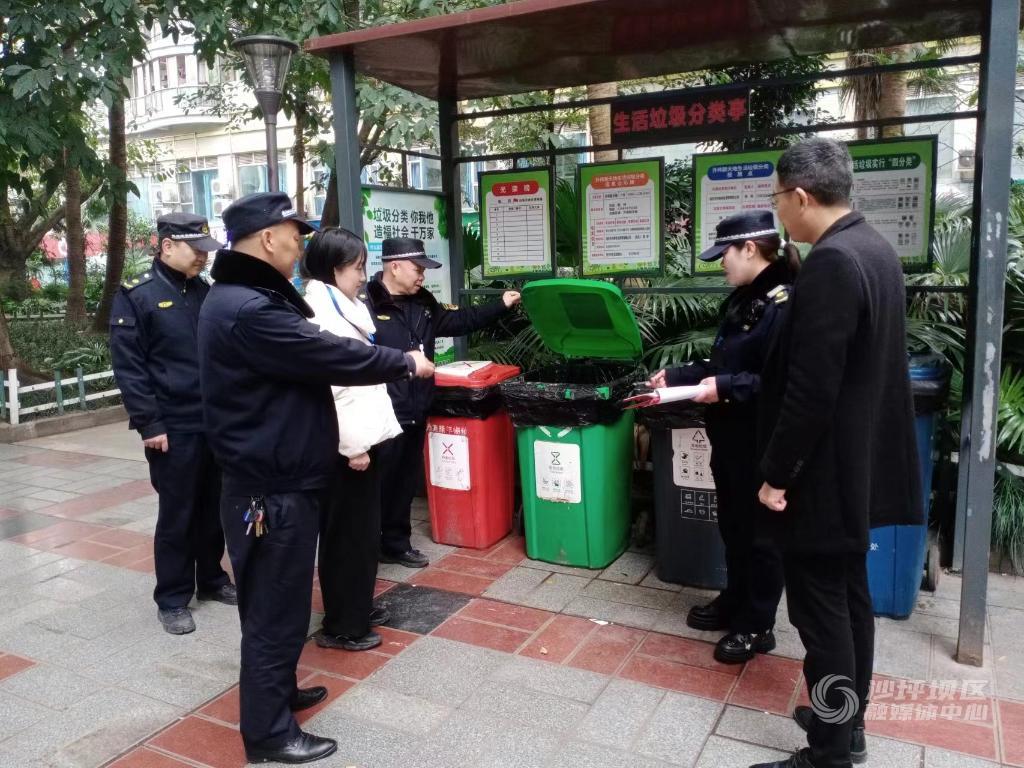
"Your vehicle has vague signs and garbage dripping, please get off and cooperate with it." "Vegetable leaves, tube bones, etc. belong to kitchen waste and cannot be mixed with other garbage." At the vehicle entrance of the solid waste transfer station on Zhanxi Road, Zhang Hua of the Emergency Brigade of the Urban Management Law Enforcement Detachment of Shapingba District made a surprise inspection of the garbage collection vehicles.

According to Zhang Hua, the phenomenon of a small amount of dripping, leaking, unclear transportation garbage label and unclean body will be warned and registered in the first investigation. If there is obvious garbage mixed transportation, they will order the driver to rectify on the spot and impose further administrative punishment after investigation.

It is reported that since the launch of the "three mixed" special rectification campaign of domestic waste in Chongqing, the urban management law enforcement detachment of Shapingba District has taken many measures to continuously promote the implementation of the "Regulations on the Management of Domestic Waste in Chongqing". The detachment adopts various forms of propaganda work, such as "entering organs" and "entering enterprises", and at the same time strengthens supervision and law enforcement and actively carries out law enforcement actions.

The relevant person in charge of the Urban Management Bureau of Shapingba District said that Shapingba District will further deepen the implementation and publicity of domestic waste classification, strengthen the work efficiency at the front end, the middle end of transportation and collection, and the law enforcement end of disposal, promote the formation of a domestic waste treatment atmosphere with the participation of the whole people, and effectively solve the problem of "mixed investment, mixed collection and mixed transportation" of domestic waste.