What is the integrity and authenticity of the Grand Canal in China?
[Editor’s note]
In order to thoroughly implement the spirit of the important instructions of the Supreme Leader General Secretary on the protection of the Grand Canal, our network actively participated in the network theme activity of "Questing for the Grand Canal" organized by the Network Communication Bureau of the Central Network Information Office. With culture as the core, we plan to launch new media products with diverse contents and rich forms, such as "Cloud Appreciating the Grand Canal", "Canal Questions", "Grand Canal March" and "Above the River", and publicize the achievements of canal ecological protection, cultural heritage protection and high-quality economic development in depth, so as to show the new features of the Grand Canal in the new era by comparing the past with the present.
Question 41: What is the integrity and authenticity of the Grand Canal in China?
As a series of heritages, the Grand Canal includes all the necessary factors to show its outstanding universal value, and completely shows the development and evolution process of the canal heritage, with a high degree of integrity in the composition of the heritage.The application for heritage vividly depicts the pattern, route and operation mode of the grain transportation system during the two major breakthrough periods of the Grand Canal in China, and jointly outlines the clear and complete evolution process of the Grand Canal in China since the Spring and Autumn Period. It embodies the creativity of traditional canal engineering and the typicality of technical system; It also fully confirms the use and function of the Grand Canal in China in the history recorded in relevant historical materials, and the various social practical values of the Grand Canal in China at present, and shows the great influence of the Grand Canal on the areas along the route in terms of use, landscape and culture.
The Grand Canal of China meets the requirements of the Operational Guidelines for the Implementation of the World Heritage Convention on the integrity of the heritage.The declared Grand Canal heritage shows the complete historical and spatial evolution pattern of the Grand Canal from the Spring and Autumn Period to the Qing Dynasty. The ten river sections are all representative paragraphs and nodes distributed in the heritage area, with complete and rich heritage types and large enough heritage area to meet the requirements of integrity and no defects.The various components of the Grand Canal heritage have substantial functional connections, making unique and indispensable contributions to the outstanding universal value of the Grand Canal heritage as a whole. Therefore, the Grand Canal heritage meets the integrity requirements.
Generally speaking, the historical pattern of the existing Grand Canal heritage from the Spring and Autumn Period to the Qing Dynasty is basically complete.The first-line rivers and sites of the Beijing-Hangzhou Canal from Beijing to Hangzhou are basically complete. In the south of Jining, the river is continuous, and some new channels coexist with the old ones. There are still continuous rivers in Beijing, Tianjin and Hebei, which play an important role in water conservancy. The Grand Canal in Shandong Province is discontinuous. According to the existing discontinuous rivers and the river remains confirmed by investigation, the main routes and complete evolution history of the Grand Canal in Yuan, Ming and Qing Dynasties can still be determined. The first line of Tongji Canal from Luoyang to Huai ‘an: about 1/3 of the river channel exists, and the sites are dotted. Among them, the existing continuous rivers and sites in Huai ‘an, east of Shangqiu, Henan Province, have been confirmed by archaeological exploration; Luoyang passes through Zhengzhou, Kaifeng and Shangqiu. Due to the historical impact of the Yellow River’s swing and erosion, it is difficult to completely confirm the river ruins. However, the general route of Tongji Canal can still be clearly defined through the partially preserved revetments, bridges and ancient river ruins. The Weihe River system from Luoyang to Linqing evolved from Baigou, Yongji Canal and Yuhe River in history, and it has been continuously used to this day. From Hangzhou to Ningbo, Xixing Canal, Shanyin Old Waterway, Yuyu Canal, Cijiang River, Shazigang and other rivers, together with some sections of Cao ‘e River and Yaojiang River, constitute the main line of the East Zhejiang Canal in history.
The Grand Canal has strong authenticity.The elements bearing the outstanding universal value of the heritage have good authenticity in shape and design, materials and entities, location and layout, and all the heritage elements that still have practical functions have the authenticity of use and function. As an organic whole, the Grand Canal also has good authenticity in spirit and feeling.
At present, the channel in use of the Grand Canal heritage still has vital shipping and water conservancy functions, which reflects the characteristics of the Grand Canal as a living heritage.Due to historical and natural reasons, the remains of rivers, water conservancy facilities and management facilities have real location, environment and materials, which reflect the design, function and technology of the Grand Canal. Urban historical water system, historical blocks and so on have real position, function and pattern, and truly bear the sense of belonging brought by the Grand Canal as the spiritual home of people along the route. The Grand Canal heritage meets the requirements of authenticity.
The heritage of the Grand Canal is well preserved. The middle reach, the Huaiyang Canal, the Jiangnan Canal and the East Zhejiang Canal are still navigable, while other reaches mainly play the functions of flood discharge, water conveyance and irrigation. Some rivers in Huitong reach, Weihe (Yongji Canal) and Tongji Canal (Bianhe River) are in ruins. All heritage sites, including hydraulic facilities, supporting management facilities and related historical and cultural relics, have been well protected.
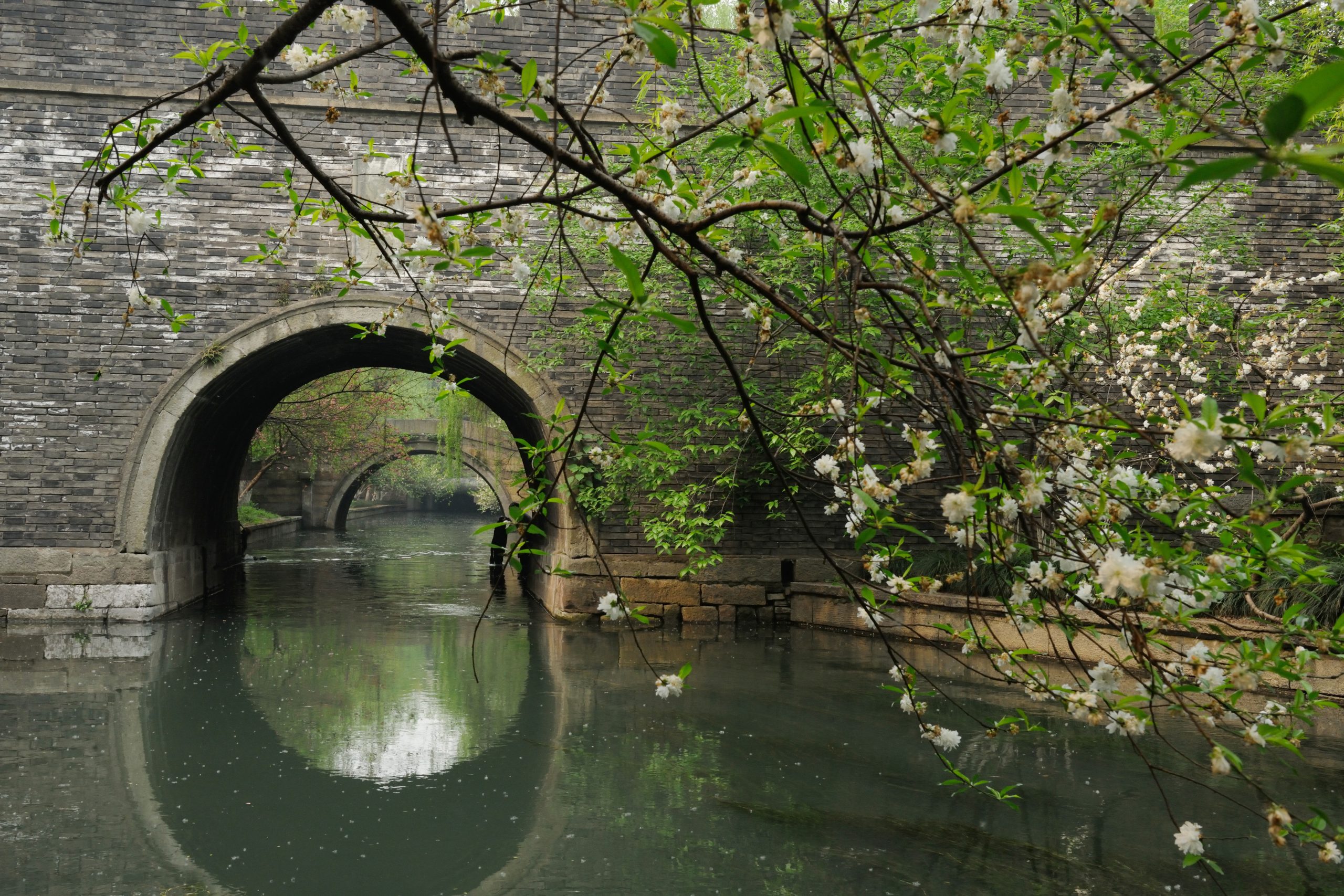
Jiangnan Canal Jiaxing-Hangzhou Section-Fengshan Water Gate
Question 42: What is the boundary of the heritage area of the Grand Canal in China?
The demarcation principle of China’s Grand Canal heritage area refers to the overall planning of China’s Grand Canal protection and the planning of provinces and cities. According to the provisions of the scope of protection of cultural relics protection units and the scope of world heritage areas, the boundary of the heritage area is delineated according to the characteristics of the elements contained in each component and the relationship between the elements. The basic principles of demarcation are as follows:
(1) Rivers with dikes: In principle, they are demarcated according to the toe line of the outer dike, and the heritage area is a banded area including riverbed, floodplain, dike top and dike slopes on both sides.
(2) Rivers and lakes without dikes: In principle, they are demarcated according to the extension of the coastline of rivers and lakes by 5 meters, and the heritage area is the area containing rivers and lakes and revetments.
(3) Hydraulic facilities: they are included in the heritage area of the river where they are located, and are not demarcated separately. If necessary, the river boundary is partially extended to include the whole facility and its lower foundation.
(4) Related ancient buildings: demarcated according to the external boundaries of the buildings (such as courtyard walls and streets).
(5) Historical and cultural blocks: according to the regional boundaries with good features and key protection determined in urban planning.
(6) Sites: In principle, the boundaries of sites (such as river banks and courtyard walls) confirmed by archaeological exploration or excavation are demarcated. River sites include river beds and river banks (if any), warehouse sites include the whole structures, management facilities sites and related ancient buildings sites include the whole buildings, and hydraulic facilities sites include the excavated structures and the distribution range of their underground foundations. [Text of China’s Grand Canal Application for Heritage] chinese heritage Research Institute January 2013] After this division, the area of China’s Grand Canal application for heritage is 20,819 hectares.
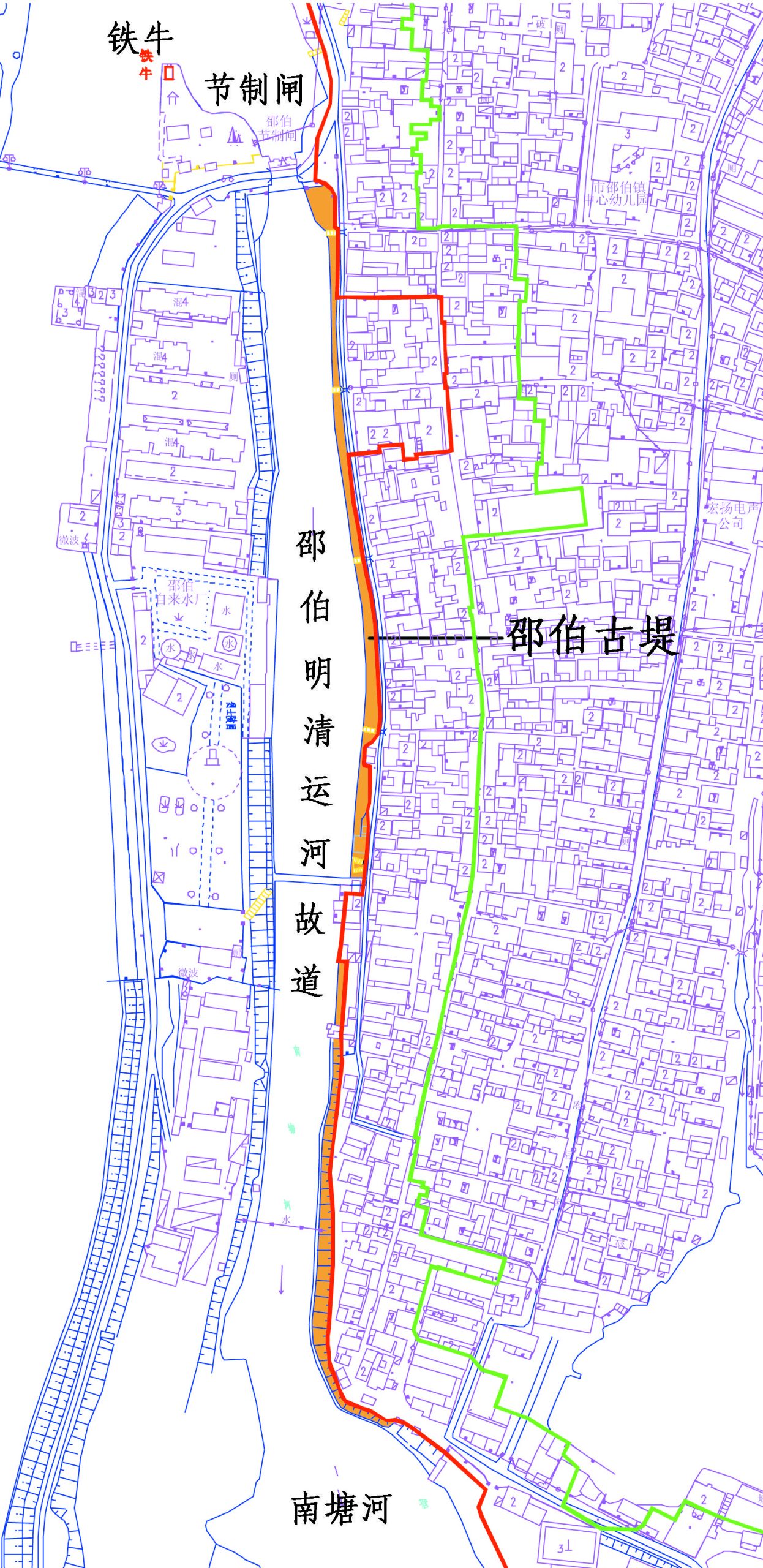
China Grand Canal Heritage Area Map
Question 43: What are the requirements for the protection and management of China’s Grand Canal Heritage Area?
The protection and management of China’s Grand Canal Heritage Area has the following requirements:
(1) In the heritage area of the Grand Canal, except for cultural relics protection, flood control and waterlogging elimination, construction and maintenance of ship locks and navigation channels, protection and maintenance of hydraulic facilities, water conveyance river engineering, port renovation and construction, bridge crossing over the river and other projects, no other construction projects or operations such as blasting, drilling and excavation are allowed.
(2) No facilities that pollute the Grand Canal heritage and its environment shall be built in the heritage area of the Grand Canal, and the existing facilities that pollute the Grand Canal heritage and its environment shall be treated within a time limit.
(3) Activities that may affect the safety of the heritage and its environment shall not be carried out in the heritage area of the Grand Canal, and the existing activities that endanger the safety of the heritage of the Grand Canal and destroy the heritage environment shall be investigated and dealt with in a timely manner.
(4) In the heritage area of the Grand Canal, no historical relics or other cultural relics of the Canal shall be damaged or removed, except for the special circumstances of flood control dispatching, emergency water transfer and engineering emergency rescue.
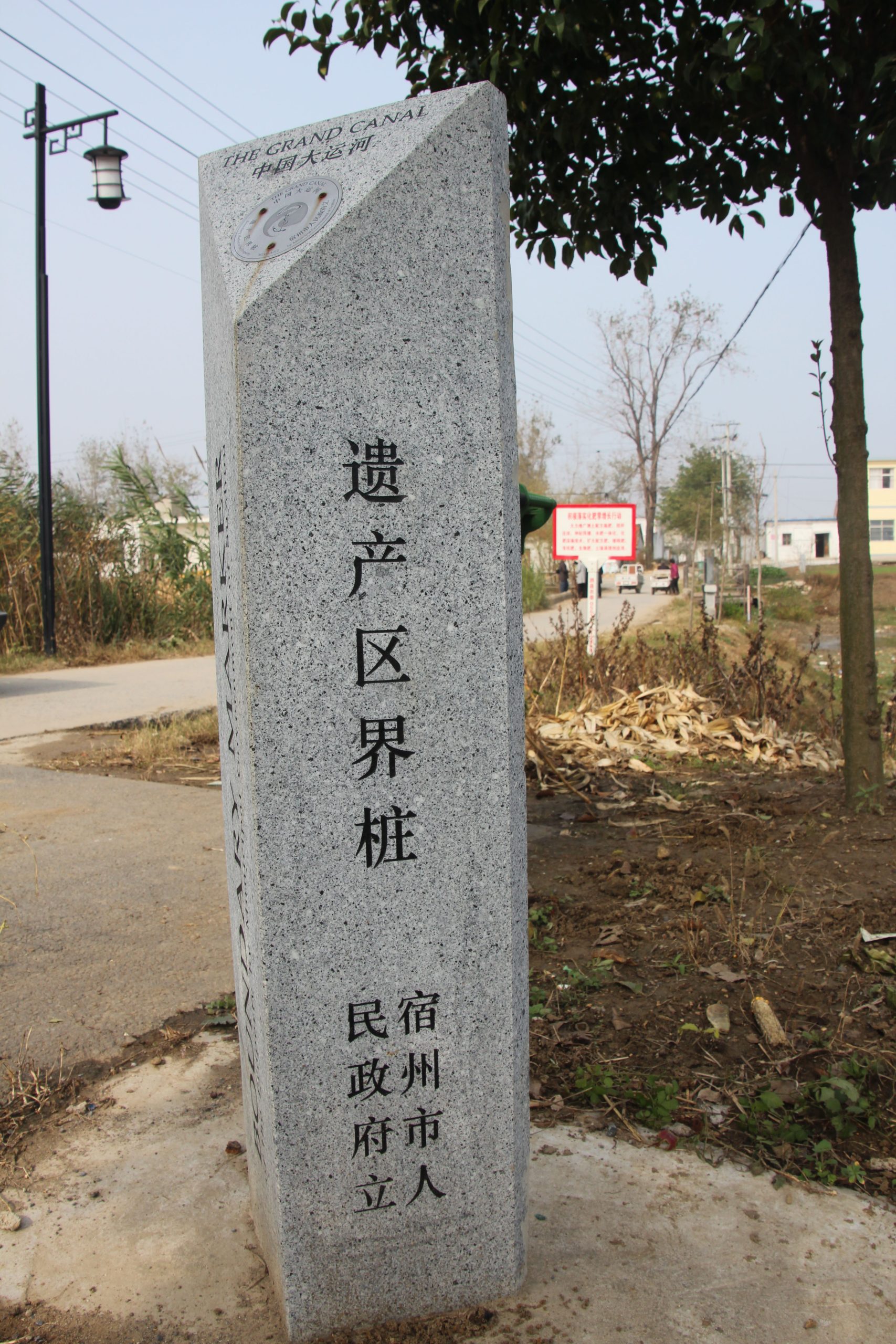
Boundary markers of China Grand Canal Heritage Area
Question 44: How is the buffer zone of the Grand Canal in China divided?
The buffer zone of the Grand Canal in China, in accordance with the provisions of the construction control zone of cultural relics protection units and the scope of the World Heritage buffer zone, aims at controlling the surrounding construction pressure and protecting the landscape harmony between the heritage area and the external environment, and comprehensively considers the background environmental factors related to the heritage elements outside the heritage area, and delimits the buffer zone outside each heritage area. The boundary of the buffer zone is defined according to the spatial form of the heritage areas protected by it, combined with the land use and construction status quo, and the basic principles of demarcation are as follows:
(1) Buffer zone around the banded heritage area: demarcated by extending the boundary of the heritage area by a certain distance to form a corridor-like landscape protection zone along the river, so as to prevent new buildings from oppressing the river and maintain the ecological safety of the river and the harmonious waterfront landscape. In principle, it is located in a densely built-up area (the built-up area of a city or town) and extends 30 meters; Located in the suburbs and rural areas, the expansion is 80 meters; It is located in farmland and a large area of water environment and extends 300 meters. At the same time, if there are more important roads, railways, rivers and heritage areas with appropriate distances, which can be used as boundaries for long-term control and construction, roads, rivers and railways will be used as boundaries.
(2) Buffer area around the dotted and flaky heritage area (buildings, structures, large-scale hydraulic facilities and their sites): draw boundaries according to the features or topography around the heritage area, such as roads, ditches, ridgelines, bridges, etc., and enclose the whole heritage area to form a heritage landscape of a certain scale, so as to protect the sense of space inside the heritage area from interference and maintain the atmosphere of tradition or sites. After this division, the buffer area of the Grand Canal in China is 52,747 hectares.
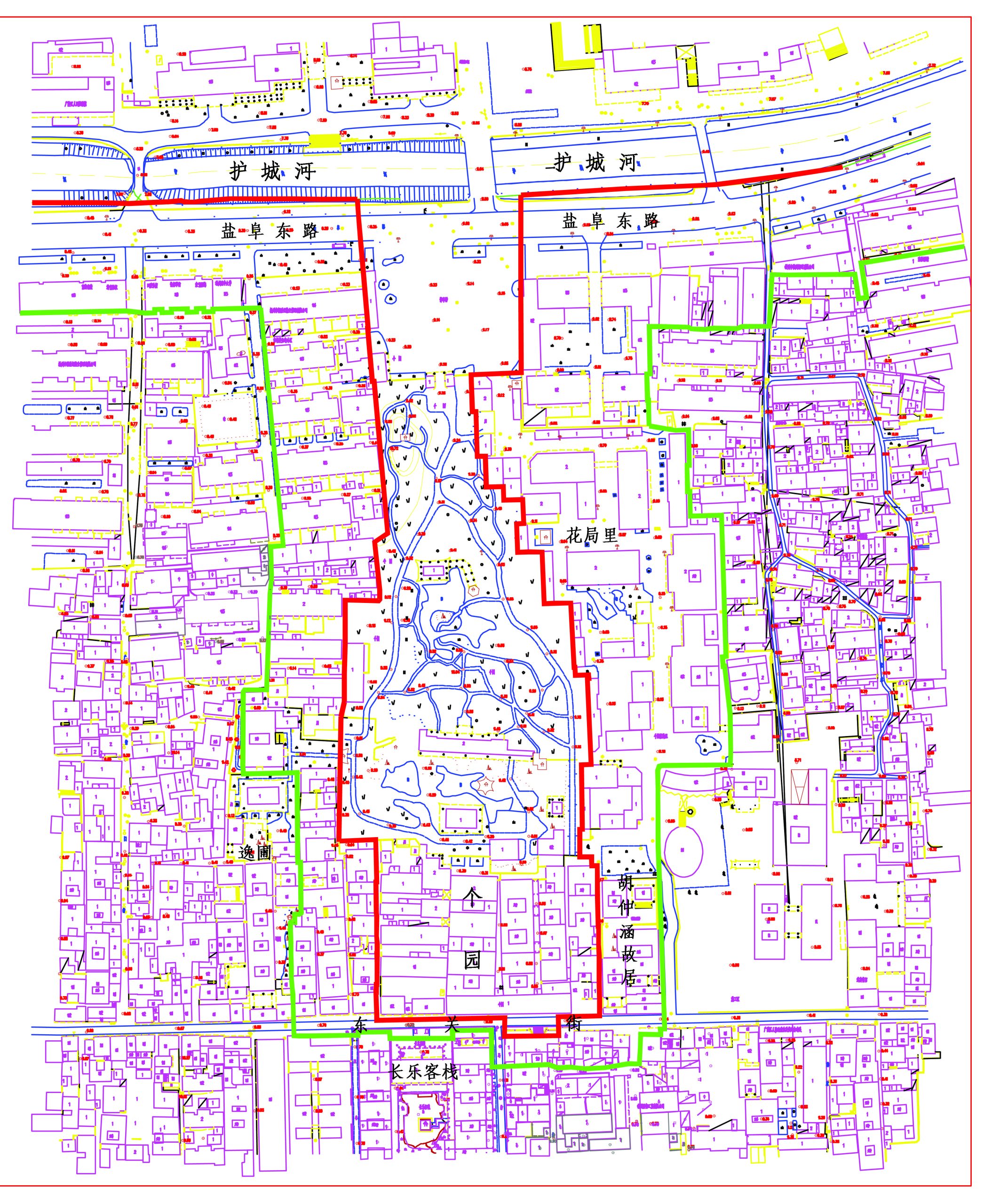
China Grand Canal Buffer Map
Question 45: What are the requirements for the protection and management of China’s Grand Canal buffer zone?
Provisions on the administration of the buffer zone of the Grand Canal in China:
(1) No facilities that pollute the Grand Canal heritage and its environment shall be built in the buffer zone of the Grand Canal, and the existing facilities that pollute the Grand Canal heritage and its environment shall be treated within a time limit.
(2) Activities that may affect the safety of the heritage and its environment shall not be carried out in the buffer zone of the Grand Canal, and the existing activities that endanger the safety of the heritage of the Grand Canal and destroy the heritage environment shall be investigated and dealt with in a timely manner.
(3) To carry out a construction project, the construction unit shall, in accordance with the provisions of Articles 29 to 32 of the Law of People’s Republic of China (PRC) on the Protection of Cultural Relics, report to the cultural relics administrative department of the people’s government of the province or municipality directly under the Central Government in advance to organize the units engaged in archaeological excavation to conduct archaeological investigation and exploration in places where cultural relics may be buried within the scope of the project. If cultural relics are found in archaeological investigation and exploration, the cultural relics administrative department of the people’s government of the province or municipality directly under the Central Government shall jointly agree on protection measures with the construction unit according to the requirements of cultural relics protection; In case of important discoveries, the administrative departments of cultural relics of the people’s governments of provinces and municipalities directly under the Central Government shall promptly report to the administrative departments of cultural relics of the State Council for handling.
(4) The construction land in the buffer zone of the Grand Canal must be incorporated into the local land use master plan and annual plan.
(5) No construction activities damaging the heritage, historical environment and space landscape of the Grand Canal shall be carried out in the buffer zone of the Grand Canal.
(6) In the buffer zone of the Grand Canal, no buildings or structures with styles, volumes, colors and other incongruities with the Grand Canal heritage shall be built.
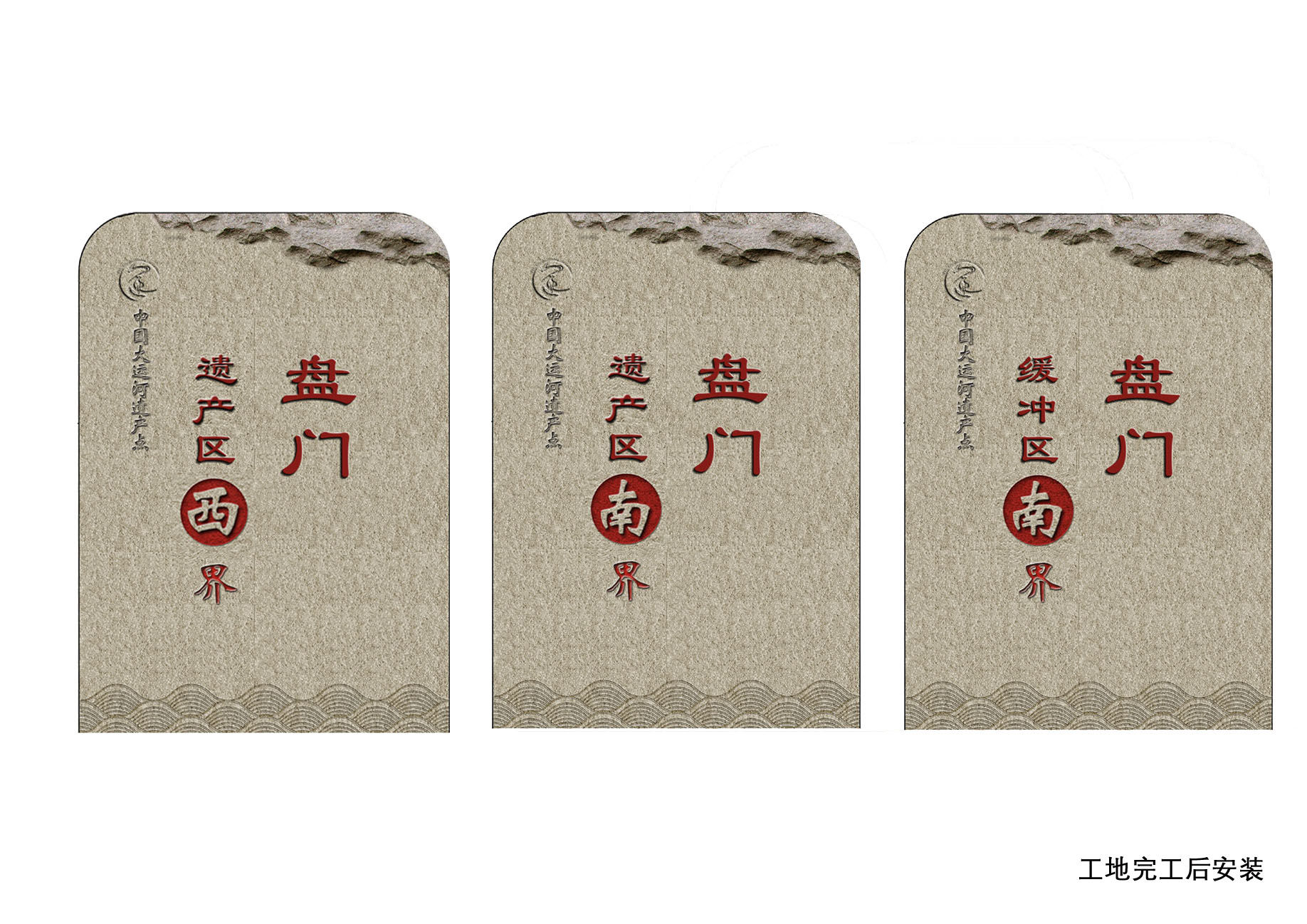
Boundary markers in buffer zone of China Grand Canal
Question 46: What development pressures does China’s Grand Canal heritage face?
With the rapid economic development in China in recent years, the cities along the route are experiencing rapid urbanization and modernization, which makes the Grand Canal of China face certain pressure of urban and rural construction and water conservancy and shipping construction.
One isUrban and rural construction pressureSince the Grand Canal has been a prosperous area of urban development since ancient times, a certain number of buildings have been built along the Canal since the reform and opening up, in the process of rapid economic development and urbanization in China. With the increase in the number of motor vehicles and the need for convenient transportation between cities, some roads and railway bridges across the canal have also been built along the canal. In view of these situations, since 2008, the people’s governments at the provincial and municipal levels along the Grand Canal have organized and published all kinds of conservation plans for the Grand Canal heritage, in which the scope of protection and construction control zones have been delineated, and strict construction approval procedures have been stipulated. The government of the heritage site strictly supervises the construction of the heritage area and buffer zone according to the plan, effectively controlling the building density, height and the construction of traffic facilities.
The second isPressure of water conservancy and shipping constructionDue to the continuation of the water conservancy and shipping functions of the Grand Canal in China, more modern water conservancy and shipping facilities have been built one after another to ensure their use functions. These non-traditional facilities have affected the landscape of the heritage to a certain extent, and the local landscape is not harmonious. In order to cope with this pressure, the relevant construction departments have reached a consensus with local governments that in accordance with the Grand Canal Heritage Protection and Management Master Plan (2012-2030), priority will be given to the use of traditional technologies, traditional materials, traditional structures and traditional crafts adopted in various sections of the Grand Canal heritage history in the future, and the appearance, design, materials and entities, uses and functions of water conservancy and shipping facilities will be identified, respected and preserved.
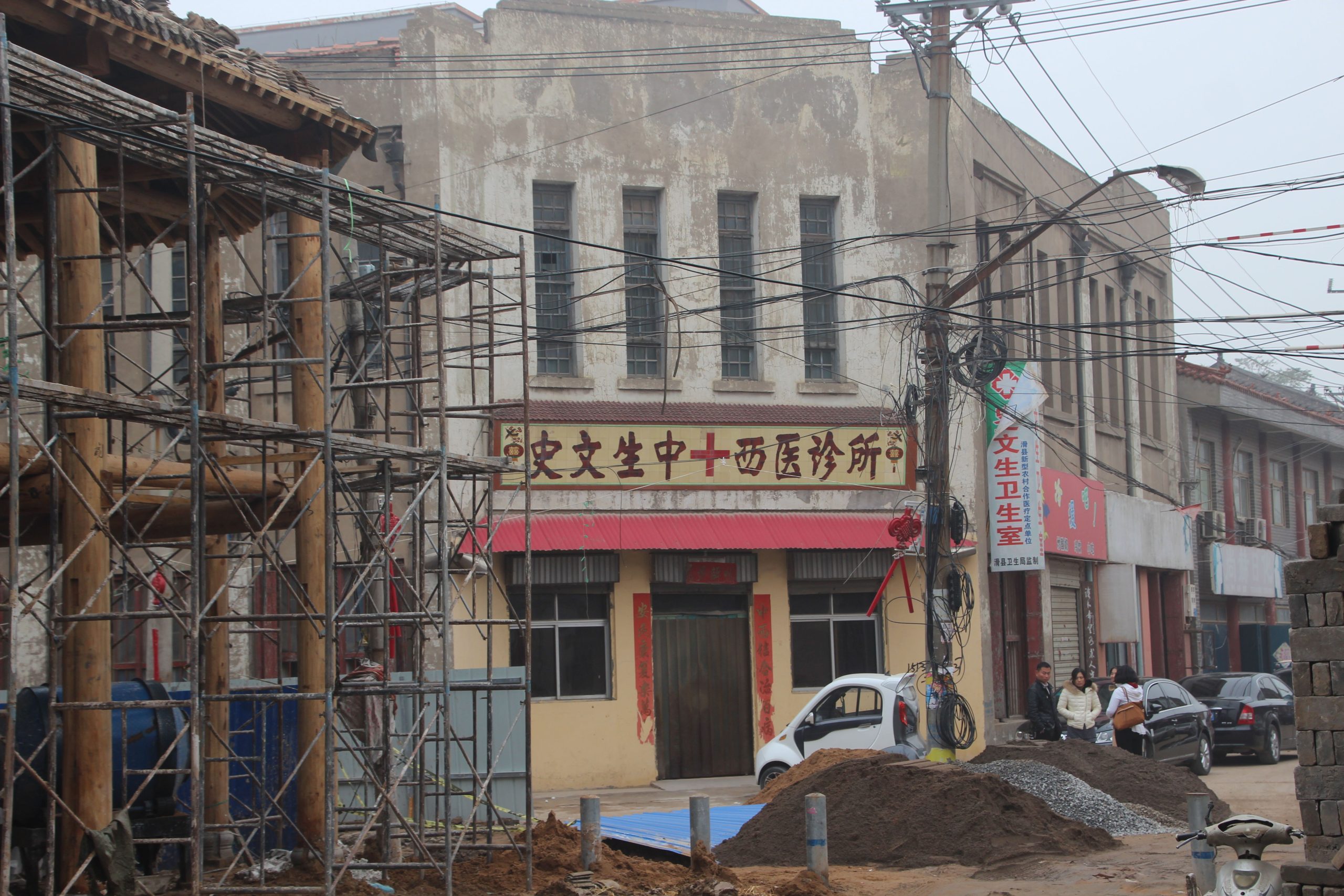
Dense pole lines in the heritage area
Question 47: What is the environmental pressure on the Grand Canal in China? What are the countermeasures?
The ecological environment and environmental quality within the scope of China’s grand canal declaration have been protected in accordance with national standards for a long time, and the overall situation is good.Environmental pressure mainly comes from the changes of water environmental quality, air quality and climate.. According to its functions such as water conveyance and flood discharge, the quality of water environment basically meets the Ⅲ ~ ⅴ standards stipulated in the National Quality Standard for Surface Water Environment (GB3838-2002). The air quality in rural areas and built-up areas reached the first-class standard and the second-class standard stipulated in the Environmental Air Quality Standard (GB3095-1996) respectively.The frequent occurrence of extreme weather, especially rainstorm and drought, caused by climate change has aggravated the pressure of flood control and drainage in the Grand Canal in China, and has had a certain impact on the site.
China’s Grand Canal heritage protection and management institutions shall, in accordance with relevant protection laws and regulations and the Grand Canal Heritage Protection and Management Master Plan (2012— 2030) implements environmental protection in the chapter of heritage environmental protection planning.It mainly includes: regulating water system, allocating river basin and regional water resources; Protect and repair ecological banks; Improve the environment by wetland construction, water exchange or site protection; Restrict land management and construction within the scope of protection zoning; Strictly control pollutants discharged into water bodies; Strengthen the prevention and control of industrial pollution along the canal; Build urban and rural sewage treatment facilities and centralized garbage collection and treatment facilities, and establish a long-term cleaning system; Scientific monitoring, etc.Flood control planning and comprehensive planning have also been formulated in each basin to cope with the pressure of flood control and drainage brought about by climate change.
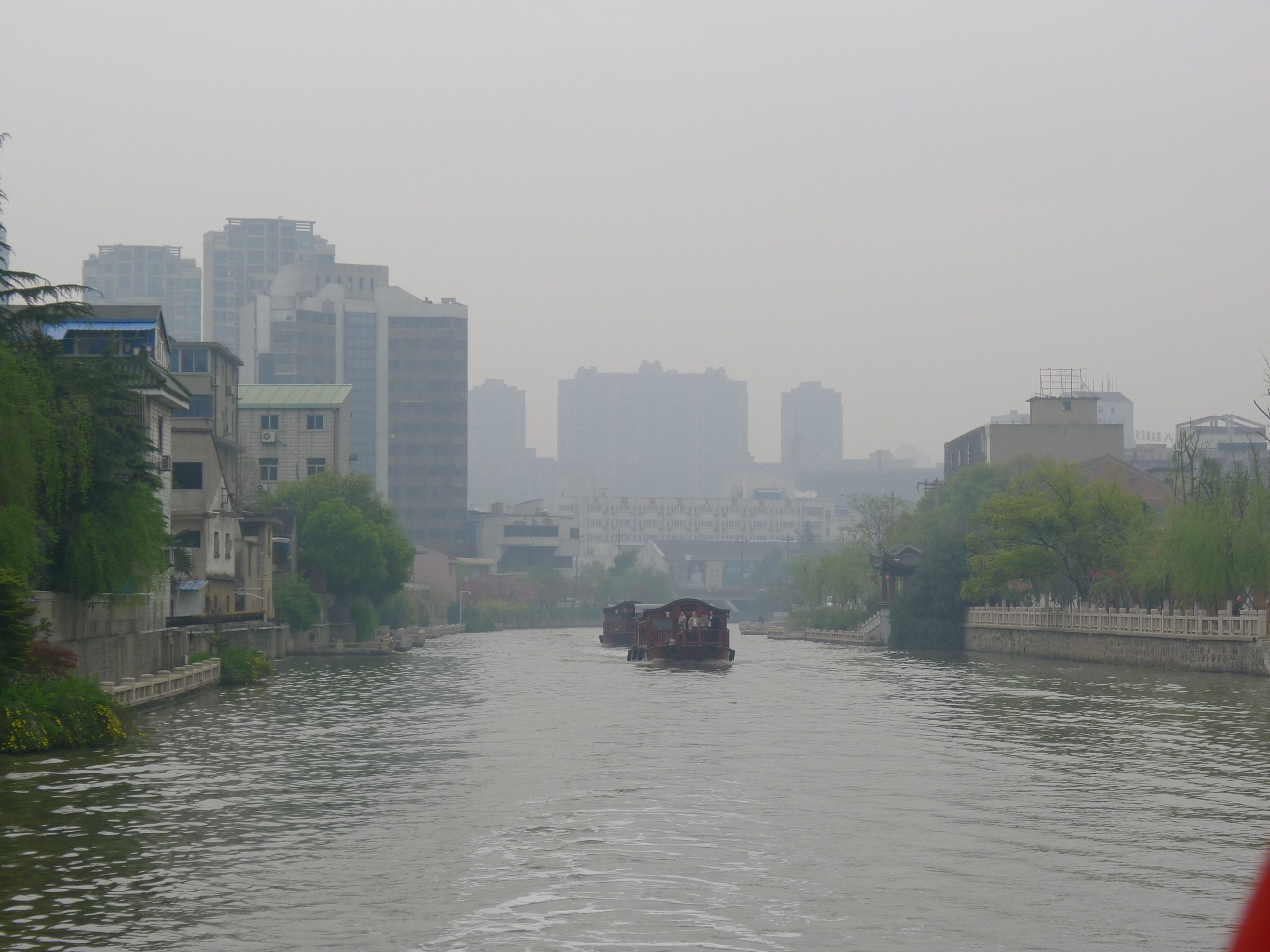
Wusuo canal
Question 48: What natural disasters are facing China’s Grand Canal? What countermeasures have been taken?
The common risks faced by the Grand Canal in China are mainly floods.
In order to cope with the flood disaster, the Ministry of Water Resources of People’s Republic of China (PRC) and the people’s governments of relevant heritage sites have formulated flood control plans at different levels according to the Flood Control Law of People’s Republic of China (PRC) (1998), and detailed flood control schemes have been formulated in the plans. China’s Grand Canal has successively completed flood control projects in its comprehensive management projects since the 1950s.People’s governments at all levels also strictly follow their respective flood control plans to prevent and control flood disasters at three levels: basin, region and city.The concrete measures are mainly embankment treatment and river regulation: the embankment line and the transverse and longitudinal sections of the embankment are designed according to the flood control scheme to strengthen the flood control embankment; In accordance with the requirements of stabilizing the river to make the best use of the flood and prevent ice, bank protection, branch blocking, water diversion, dredging, river widening project and river bend cutting project are implemented for river regulation. In addition to engineering measures, some non-engineering measures have been taken, such as establishing flood forecasting and warning system, strengthening flood area management, formulating flood insurance and emergency measures for exceeding the standard flood. The Grand Canal in China has established an uninterrupted river monitoring, communication and early warning system, and formulated a flood emergency plan. The emergency plan deals with the flood disaster by improving the level of flood forecasting and early warning, increasing flood discharge, and moderately overstocking inland rivers and lakes in the basin. Through the above measures, the effective prevention and control of flood disaster risk in the Grand Canal has been realized.
In addition, in view of the fire risk of the buildings in the application elements, in addition to ensuring fire exits, all heritage sites have been equipped with fire prevention equipment, designated responsible persons, and formulated fire safety management regulations and emergency plans. Through these measures, the requirements of minimizing fire risk and reducing disaster losses can be achieved.
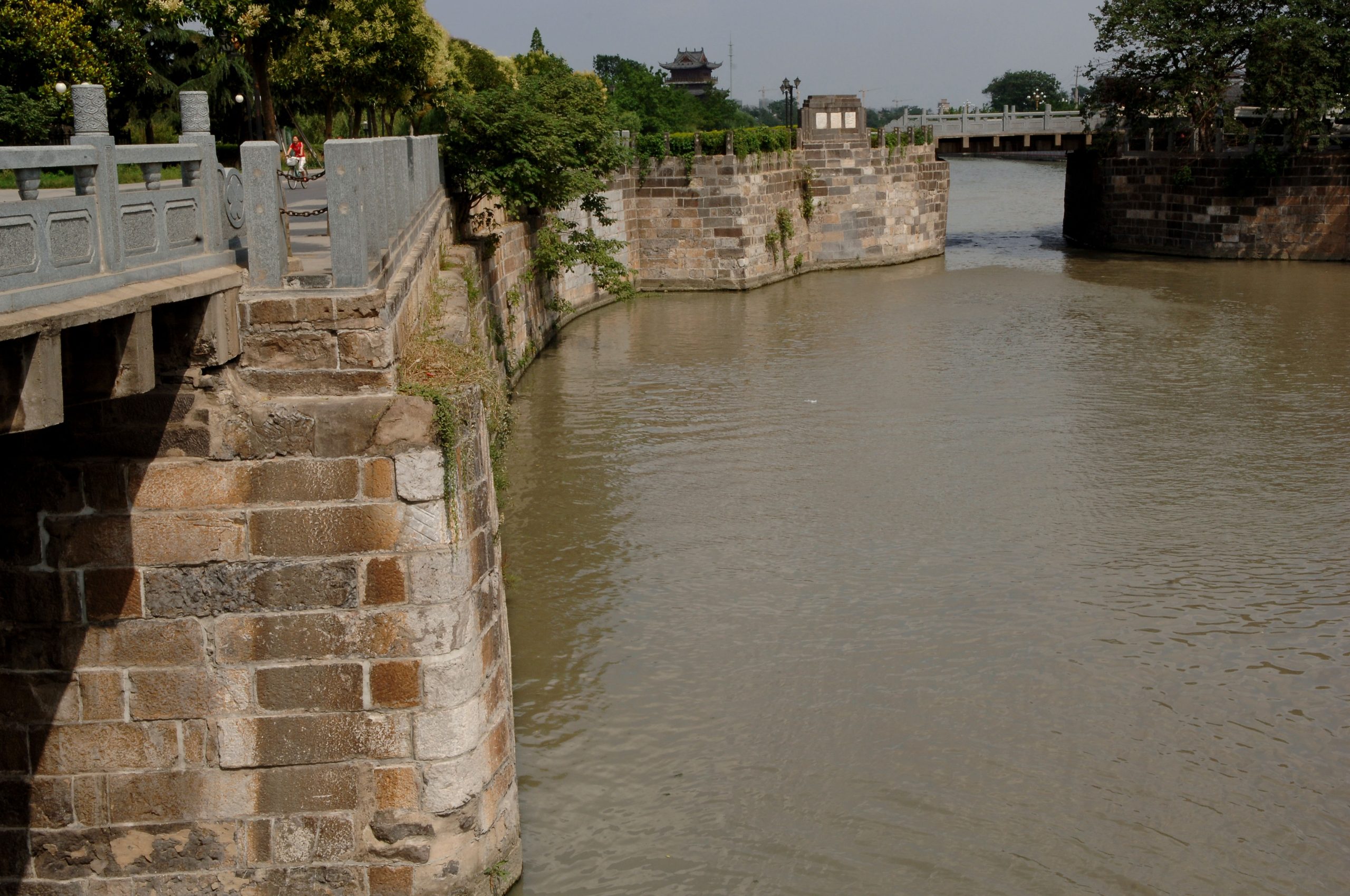
The only preserved stone gate in Huai ‘an section of Huaiyang Canal: Qingjiang Gate.
Question 49: What laws and regulations protect the Grand Canal in China?
As a huge heritage in use, the outstanding universal value, authenticity and integrity of China’s Grand Canal are related to multiple attributes, which makes China’s Grand Canal subject to multiple and three-dimensional legal protection.First of all, we must comply with international conventions such as the Convention for the Protection of the World Cultural and Natural Heritage and the Operational Guidelines for the Implementation of the Convention for the Protection of the World Cultural and Natural Heritage, as well as the requirements of national laws and regulations such as the Law on the Protection of Cultural Relics in People’s Republic of China (PRC), the Regulations on the Implementation of the Law on the Protection of Cultural Relics in People’s Republic of China (PRC), the Administrative Measures for the Protection of World Cultural Heritage of the Ministry of Culture, and the Administrative Measures for the Monitoring and Inspection of China World Cultural Heritage of National Cultural Heritage Administration.. Secondly, the water conservancy management department is responsible for the management of the rivers and embankments of the Grand Canal in China. The Grand Canal in China is also protected by the Regulations on the Management of Rivers in People’s Republic of China (PRC), the regulations on the protection and management of rivers and lakes in provinces and cities along the route, the measures for the implementation of river management and the regulations on the management of water conservancy projects. The heritage elements declared by the Grand Canal in China include five historical and cultural blocks and one historical and cultural town in the national historical and cultural cities, and are also protected by the Regulations on the Protection of Famous Historical and Cultural Cities, Towns and Villages. The heritage elements of the grand canal heritage declaration include a national scenic spot — — Jiangsu Shugang Slender West Lake Scenic Area is protected by the Regulations on Scenic Areas promulgated by the State Council. Nansihu Provincial Nature Reserve is also protected by People’s Republic of China (PRC) Environmental Protection Law and other natural resources protection laws and regulations. The Grand Canal is also protected by various special laws and regulations. For example, the departmental regulation "Measures for the Protection and Management of the Grand Canal Heritage" adopted by the Ministry of Culture in 2012, the Joint Agreement on the Protection of the Grand Canal Heritage jointly formulated and signed by the cities along the Grand Canal in September 2012, and the regional "Measures for the Protection of the Grand Canal Heritage" formulated by the provincial and municipal governments along the route.
In addition to the law,China’s Grand Canal has a complete protection planning system.Including: China Grand Canal heritage management planning, national protection planning, provincial protection planning, prefecture-level protection planning, important point protection planning and various detailed planning. All stages and levels of planning are connected with each other, and each has its own emphasis. Together, an overall policy of comprehensive protection of the Grand Canal heritage has been constructed, and a comprehensive and instructive protection planning system has been formed.
Cover of Protection Planning for Yangzhou Section of Grand Canal
Question 50: What are the management institutions of the Grand Canal in China?
As a linear living heritage, the Grand Canal in China has the characteristics of multi-level and multi-sector management. The declared heritage areas and buffer zones shall be managed by local people’s governments at all levels and river basin management agencies according to their jurisdiction and in accordance with laws and administrative regulations. The competent department of cultural relics in the State Council is in charge of the overall protection of the Grand Canal heritage, and cooperates with the competent departments of land, environmental protection, transportation and water conservancy in the State Council to carry out relevant work within their respective responsibilities according to law.The people’s governments of cities along the Grand Canal shall be responsible for the protection of the Grand Canal heritage within their respective administrative areas, and establish corresponding coordination agencies. The departments in charge of cultural relics, land, environmental protection, transportation, water conservancy, construction, planning, tourism and other cities are responsible for the protection of the Grand Canal heritage within their respective functions and duties.
The heritage protection of the Grand Canal in China is a cross-industry and multi-field work, involving related institutions and many stakeholders in the fields of cultural relics, transportation, water conservancy, environmental protection, land and construction. To this end, governments at all levels in China have established an effective consultation mechanism to coordinate the major issues of many industries involved in the heritage protection of the Grand Canal in China, clarify the division of responsibilities of relevant departments and regions in the heritage protection of the Grand Canal, and strengthen exchanges and cooperation between different fields. At the national level, an inter-ministerial consultation group for the protection and application of the Grand Canal has been established, and at the local level, a corresponding provincial (municipality directly under the Central Government) and municipal leading group for the protection and application of the Grand Canal (consultation group) has been established. Regular meetings have been held to consider major issues such as draft regulations, planning and key work arrangements for the protection of the Grand Canal heritage, so that these tasks can be coordinated in a timely and effective manner.
The people’s governments of cities along the Grand Canal in China have established the Alliance of Cities for the Protection and Heritage Application of the Grand Canal. The city alliance jointly formulated and signed the Joint Agreement on the Protection of the Grand Canal Heritage, which clearly defined the cooperation mechanism of the city alliance and the relevant requirements for the protection of the Grand Canal heritage. If the heritage area crosses administrative boundaries, the local people’s governments at or above the county level adjacent to it will study and solve the cooperation and coordination issues in the protection of the Grand Canal in China through joint meetings of relevant departments and city alliance meetings.
After the successful application of the Grand Canal, on September 26th, 2014, 35 cities along the Grand Canal held a meeting in Yangzhou, renaming the Grand Canal Protection and Heritage Application Cities Alliance as the Grand Canal Heritage Protection and Management Cities Alliance. At the same time, the Grand Canal Joint Declaration World Heritage Office was renamed as the Grand Canal Heritage Protection and Management Office, which was unveiled by National Cultural Heritage Administration.

National Cultural Heritage Administration leaders unveiled the Grand Canal Protection Office.
Author Jiang Shili:
Deputy Director of Yangzhou Press and Publication Bureau.During the application for the World Heritage of the Grand Canal in China, he served as the full-time director of the World Cultural Heritage Office of the Grand Canal and the deputy director of the World Heritage Office of Yangzhou, the leading city, and experienced the process of applying for the World Heritage of the Grand Canal.
(Jiangsu Radio and Television General Station "My Su Net Special",Refuse to reprint, reserve the right to pursue legal responsibility. )